
Introduction
Find The Right CNC Router For You
By Configuration
Match your routing tasks with ATC, 3 Axis, 4 Axis, 5 Axis, Rotary Axis, or Multi Head options.
By Material
Select CNC routers for wood, foam, plastic, metal, or stone to match your material processing needs.
By Level
Find hobby, home, mini, small, commercial, or industrial CNC routers for your production scale.
By Worktable Size
Choose 6090, 6012, 1212, 1325, 1530, 2030, or 2040 CNC routers for your materials.
Applicable Materials
Applicable Industries
How to Choose CNC Routers

Processing Materials
Choose CNC routers based on the materials you process most often, such as wood, MDF, acrylic, plastics, foam, or composites. Different materials have different hardness, density, and cutting resistance. These factors affect machine structure, spindle power, cutting speed, tooling selection, and dust control requirements, so material compatibility should be the first consideration.
Working Area
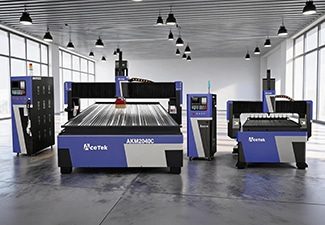
The working area should match your common sheet size, product dimensions, and production workflow. Small CNC routers are suitable for custom parts, samples, signs, and workshops with limited space, while large-format routers are better for furniture panels, doors, cabinets, full-size sheets, and batch production that requires higher efficiency.
Production Volume
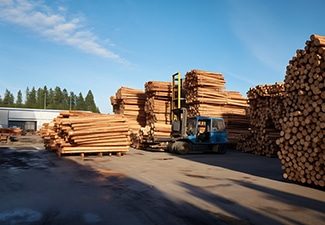
For occasional use, prototyping, or small custom jobs, a basic CNC router may be enough. For daily production or industrial manufacturing, choose a machine with stronger components, faster processing speed, automatic functions, better cooling, and higher structural stability to support continuous operation and maintain consistent machining quality.

Software Compatibility
Check whether the CNC router supports your design software, CAM software, and common file formats. Good software compatibility makes drawing import, toolpath generation, parameter setting, and production management easier. It also helps connect design, programming, and machining more smoothly, reducing communication errors and improving overall production efficiency.
Spindle Power
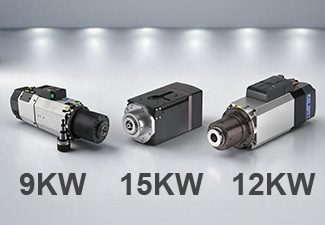
Spindle power affects cutting depth, processing speed, cutting stability, and tool performance. Light engraving or thin material cutting may only require a lower-power spindle, while thick boards, hardwood, dense plastics, and continuous production need a stronger spindle to maintain efficiency, reduce tool stress, and achieve cleaner cutting results.
Machine Structure
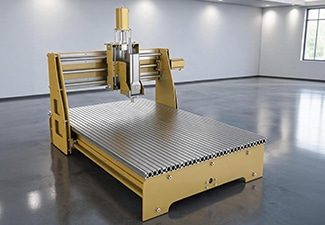
A strong and stable machine structure helps reduce vibration, maintain accuracy, and improve long-term reliability. For heavy cutting, large-format processing, or high-speed production, choose a CNC router with a rigid welded frame, high-quality guide rails, a reliable transmission system, and durable components that can support stable machining over time.
Worktable Type
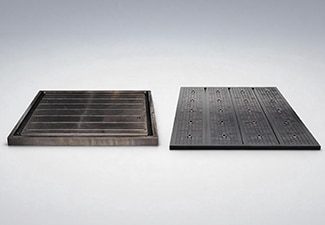
Choose the worktable type according to your material size, clamping method, and production needs. T-slot worktables are flexible for fixing small parts, irregular workpieces, and custom jobs, while vacuum tables are better for holding large sheets quickly and firmly, helping reduce loading time and improve production efficiency.
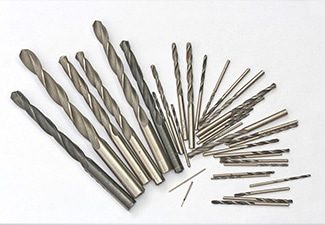
Tool Configuration
Different applications require different router bits, engraving tools, drill bits, carving tools, and cutting tools. Proper tool configuration improves cutting quality, reduces edge chipping, extends tool life, and allows the machine to complete more types of processing. Matching the right tools to the material helps achieve more accurate and consistent results.
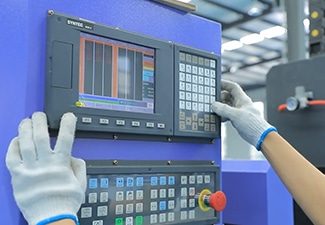
Control System
The control system affects operation convenience, file compatibility, machining accuracy, and production stability. A user-friendly controller allows operators to set parameters, load programs, manage toolpaths, monitor machine status, and reduce operating errors more easily. A reliable control system can also improve workflow efficiency and support smoother daily production.
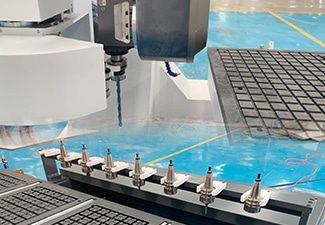
Automatic Tool Changer
An automatic tool changer is useful when one job requires multiple operations, such as cutting, engraving, drilling, grooving, and edge trimming. It reduces manual tool changes, saves labor time, improves machining continuity, and increases efficiency for complex designs, customized products, cabinet production, furniture manufacturing, and batch processing.
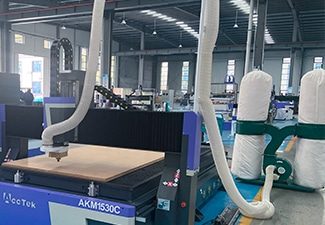
Dust Collection System
CNC routing often produces dust, chips, shavings, and fine particles during cutting or engraving. A good dust collection system helps keep the workshop cleaner, protects guide rails and machine components, improves operator visibility, reduces cleanup time, and creates a safer and more comfortable working environment for long-term production.
Supplier Support
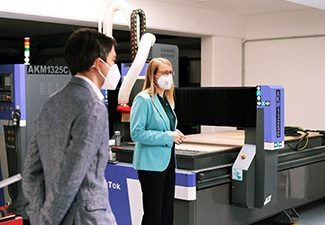
Reliable supplier support is important for machine installation, operator training, troubleshooting, spare parts supply, software guidance, and long-term maintenance. A professional supplier can help you choose the right configuration, solve technical problems faster, reduce downtime, and make the CNC router easier to operate throughout its service life.
Comparison With Other Machines
| Comparison Item | Multi-Head CNC Routers | CNC Milling Machines | Laser Cutting Machines | 3D Printers |
|---|---|---|---|---|
| Working Method | Uses multiple router heads to cut, carve, drill, and engrave several parts or areas at the same time. | Uses rotating cutters to remove material with high control and accuracy. | Uses a focused laser beam to cut, engrave, or mark suitable material surfaces. | Builds objects layer by layer from a digital 3D model. |
| Main Applications | Suitable for furniture parts, cabinet doors, carved panels, signs, reliefs, decorative parts, and batch production. | Often used for compact parts, detailed shaping, molds, and precision components. | Suitable for flat cutting, engraving, marking, signs, patterns, and surface decoration. | Suitable for prototypes, models, samples, display parts, and custom 3D objects. |
| Head Structure | Equipped with two or more router heads for simultaneous or sequential processing. | Usually uses one spindle and one tool at a time, depending on the machine design. | Usually uses one laser head to follow a programmed cutting or engraving path. | Usually uses one print head or printing system to build one job at a time. |
| Production Capacity | Strong for producing multiple identical parts in one cycle, improving output and consistency. | Efficient for accurate single-part processing, but less focused on repeated large-format duplication. | Fast for thin material cutting and surface engraving. | Usually slower because each object is built layer by layer. |
| Workpiece Shape | Works well with flat panels, boards, relief surfaces, cabinet parts, furniture components, and decorative sheets. | Better for smaller blocks and precision-shaped workpieces. | Best for thin sheets and flat materials. | Creates shapes directly without starting from a board or block. |
| Common Materials | Suitable for wood, MDF, plywood, acrylic, plastic, foam, rubber, resin board, and composite boards. | Suitable for wood, plastics, resin boards, modeling boards, and other machinable materials. | Suitable for acrylic, wood, leather, fabric, paper, cardboard, and selected plastics. | Suitable for PLA, ABS, resin, nylon, and other printable materials. |
| Batch Processing | Excellent for repeated carving, drilling, cutting, and engraving of identical or similar parts. | Better for smaller precision jobs rather than multi-part panel production. | Good for repeated flat cutting and engraving jobs. | Better for small-batch custom parts and sample development. |
| Multi-Head Advantage | Multiple heads can work together to reduce cycle time and increase production efficiency. | Usually focuses on precise tool movement rather than multi-head duplication. | High speed comes from laser movement rather than multiple cutting heads. | Output depends on print speed, build volume, and number of printers used. |
| Cutting Depth | Can perform through-cutting, pocketing, grooving, drilling, relief carving, and shaped cutting on suitable materials. | Strong for controlled material removal, pockets, grooves, and detailed features. | Cutting depth depends on material type, thickness, focus, and laser power. | Does not cut material; it forms the full object by adding layers. |
| Work Area | Often available with large-format tables for panels, doors, signs, and furniture parts. | Usually has a smaller working area than large router tables. | Available in different bed sizes, mainly for flat sheet processing. | Build size is usually limited compared with router table size. |
| Surface Finish | Produces clean carved surfaces and routed edges with proper tools, feed rates, and spindle settings. | Can create very smooth and accurate finishes on detailed parts. | Produces clean cutting lines, though some materials may show heat marks. | Surface may show visible layer lines and often needs finishing. |
| Detail Capability | Good for repeated reliefs, grooves, patterns, holes, decorative carvings, and shaped panel designs. | Excellent for fine details and accurate part features. | Excellent for fine lines, text, logos, and delicate engraving. | Excellent for complex shapes, organic forms, and small model details. |
| Design Flexibility | Supports 2D cutting, 2.5D carving, relief work, drilling, engraving, and repeated multi-part routing. | Supports accurate 2D, 2.5D, and 3D machining tasks. | Best for 2D designs, surface patterns, engraving, and flat cutting. | Best for designs that are difficult to create by cutting or carving. |
| Tool Use | Uses router bits, carving bits, engraving bits, drill bits, and other tools matched to each process. | Uses cutters, drills, and other precision cutting tools. | Does not use physical cutting bits. | Uses a nozzle, print head, or resin curing system. |
| Setup Requirements | Requires tool setting, head spacing adjustment, material fixing, worktable setup, and correct toolpath programming. | Requires careful fixture setup, tool selection, and parameter control. | Requires focus setting, power testing, speed adjustment, and exhaust setup. | Requires slicing, material settings, bed leveling, and support design. |
| Operator Skill | Operators need CAD/CAM knowledge, multi-head coordination, tool selection, feed control, and material fixing skills. | Requires strong technical knowledge for accurate cutting and shaping. | Requires file preparation, parameter testing, and safety awareness. | Requires 3D modeling, slicing, calibration, and print troubleshooting. |
| Edge Quality | Edge quality depends on tool sharpness, spindle speed, feed rate, head stability, and material support. | Can produce high-quality edges and accurate surfaces on suitable parts. | Can produce smooth edges on suitable thin materials. | Edges are formed by printed layers and may need sanding or trimming. |
| Waste Generation | Produces chips and dust during cutting, carving, drilling, and engraving. | Produces chips and dust through material removal. | Produces fumes and light residue, so ventilation is important. | Produces little cutting waste, but support structures and failed prints may create waste. |
| Cost Performance | Offers strong value for workshops needing high-output routing, repeated carving, and large-format panel production. | Better value for compact, precision-focused work. | Cost-effective for engraving, marking, and thin sheet cutting. | Cost-effective for prototypes, samples, and low-volume custom models. |
| Overall Advantage | Best for batch routing, repeated carving, cabinet production, furniture parts, decorative panels, and sign making. | Best for compact, detailed, and high-accuracy shaped parts. | Best for fast flat cutting, engraving, and surface decoration. | Best for building complex 3D prototypes and custom model shapes. |
Why To Choose AccTek CNC
High Precision & Efficiency
Our CNC routers are designed to deliver accurate cutting, engraving, drilling, and carving results. With stable motion systems and reliable control, our machines help reduce errors, improve processing speed, and maintain consistent quality during custom and batch production.
Robust And Durable Design
Our CNC routers use strong machine frames, quality guide rails, and reliable transmission components to support long-term operation. The solid structure helps reduce vibration, improve cutting stability, and keep the machine performing well during high-speed and continuous production.
Intelligent Control Systems
Our CNC routers are equipped with user-friendly control systems that make operation easier for both new and experienced users. The machines support smooth toolpath control, stable movement, convenient parameter settings, and compatibility with commonly used design and CAM software.
Flexible Customization
We offer flexible CNC router configurations according to different materials, working sizes, cutting thicknesses, and production needs. Customers can choose suitable spindle power, table type, rotary device, automatic tool changer, drilling unit, dust collection system, and other optional accessories.
Wide Application Range
Our CNC routers can be used in furniture making, advertising signs, woodworking, acrylic processing, foam modeling, crafts, decoration, packaging, and product development. One machine can support many processing tasks, helping customers expand production possibilities and accept more orders.
Complete Technical Support
Our company provides professional support before and after purchase, including machine selection, configuration advice, installation guidance, operation training, and troubleshooting. Our technical team helps customers use the machine correctly, optimize processing parameters, and reduce unnecessary downtime.
Reliable After-Sales Service
We focus on long-term customer use, not only machine delivery. Our company provides spare parts support, maintenance advice, remote assistance, and practical solutions when problems occur, helping customers keep their CNC routers running smoothly and efficiently.
Cost-Effective Production Solution
Choosing Our means investing in a CNC router that balances performance, durability, and value. Our machines help reduce labor costs, improve material use, increase output consistency, and support stable business growth for workshops and production factories.
Customer Reviews
Why To Choose AccTek CNC
Related Resources
How to Improve Efficiency and Precision with Stone CNC Routers
How to Deal with Dust and Debris Generated During CNC Routing?
CNC Routing Techniques for Wood: Hardwood vs Softwood
Maximizing ROI with Small CNC Routers: Tips for Small Businesses
Frequently Asked Questions
How Do Multi-Head CNC Routers Work?
- Digital Design and Programming: The process begins with a CAD design file. The design is imported into CAM software, where the operator creates toolpaths for cutting, engraving, drilling, or shaping. The CAM software defines the machining path, cutting depth, spindle speed, feed rate, tool type, and processing order. After programming, the file is exported as G-code for the CNC controller.
- Multiple Spindle Operation: The main feature of multi-head CNC routers is the use of multiple spindles. These spindles may work together on several workpieces at the same time, or they may be used for different processes depending on the machine configuration. For example, one spindle may cut, another may engrave, and another may drill, reducing the need for frequent tool changes.
- Axis Movement: Most multi-head CNC routers move along the X, Y, and Z axes. The X-axis controls left and right movement, the Y-axis controls front and back movement, and the Z-axis controls up and down movement. The controller coordinates the movement of the gantry, spindle heads, and worktable according to the programmed toolpath.
- Synchronized Processing: In many multi-head machines, all heads perform the same operation at the same time. This is useful for batch production of furniture parts, cabinet doors, signs, decorative panels, crafts, and repeated components. One program can produce multiple identical pieces, greatly improving output.
- Independent or Alternating Heads: Some multi-head CNC routers allow different heads to work independently or switch between tools. This makes the machine suitable for jobs that require several tool types, such as cutting, grooving, drilling, and carving in one workflow.
- Workholding System: Materials are fixed on the table by vacuum, clamps, T-slots, or fixtures. Stable workholding is important because multiple cutting heads create higher cutting forces and require consistent material positioning.
What Is The Price Of Multi-Head CNC Routers?
- Standard Multi-Head CNC Routers: Standard multi-head CNC routers usually cost around $9,000-$12,000. These machines are suitable for users who need to process repeated parts more efficiently. They are commonly used for furniture components, cabinet doors, decorative panels, signs, crafts, relief carving, and batch production of similar workpieces. Multiple spindles can work at the same time, helping increase output without requiring several separate machines.
- High-Configuration Multi-Head CNC Routers: Higher-configuration multi-head CNC routers may cost around $12,000-$15,000 or more. These machines usually have stronger frames, better spindles, higher-quality guide rails, more stable drive systems, and improved control performance. They are better suited for long production hours, larger workpieces, higher accuracy requirements, and more demanding workshop use.
- Number of Spindles: The number of heads is one of the main factors affecting price. A two-head machine usually costs less than a four-head or multi-spindle model. More spindles can improve production efficiency, but they also increase the cost of the machine body, electrical system, control system, and maintenance.
- Machine Size and Structure: Larger working areas require heavier frames, longer guide rails, stronger gantries, and larger worktables. A rigid structure helps reduce vibration and maintain accuracy when multiple heads are cutting at the same time.
- Spindle and Control System: Spindle power, spindle brand, cooling method, motor type, and controller performance all affect the price. Better components usually provide smoother cutting, higher stability, and longer service life.
- Other Cost Factors: Vacuum table, T-slot table, dust collector, air pump, software, tool sets, rotary device, packaging, shipping, installation, training, and after-sales service may also affect the total investment.
What Is The Accuracy Of Multi-Head CNC Routers?
- Positioning Accuracy: Well-built multi-head CNC routers can usually provide positioning accuracy suitable for cutting, engraving, drilling, grooving, and carving. High-quality guide rails, rack and pinion systems, ball screws, servo motors, and rigid frames help the machine move smoothly and follow the programmed toolpath accurately.
- Repeat Positioning Accuracy: Repeat accuracy is very important for multi-head CNC routers because they are often used for batch production. When the same design is processed many times, the machine must return to the same position consistently. Good repeatability helps ensure that furniture parts, cabinet doors, signs, decorative panels, and craft products remain uniform.
- Spindle Alignment Accuracy: Multi-head CNC routers require accurate alignment between each spindle. If one head is slightly higher, lower, or offset from the others, the finished parts may have different cutting depths, uneven engraving, or dimensional differences. Regular spindle calibration is necessary to keep all heads working consistently.
- Cutting Accuracy: Actual cutting accuracy is affected by tool diameter, spindle speed, feed rate, cutting depth, material hardness, and workholding stability. In real production, proper tool selection and suitable cutting parameters are important for achieving clean edges and accurate dimensions.
- Workholding Accuracy: The material must be fixed firmly on the table. Vacuum tables, clamps, T-slot fixtures, or custom jigs can help prevent material movement. If the workpiece shifts during machining, even a highly accurate machine may produce poor results.
- Machine Rigidity: Since multiple heads may cut at the same time, the machine frame must be strong enough to resist vibration and cutting force. A rigid gantry and stable worktable help maintain accuracy during long-time production.
- Maintenance and Calibration: Dust, worn tools, loose parts, poor lubrication, or incorrect spindle spacing can reduce accuracy over time. Operators should regularly clean the machine, check tool wear, calibrate spindle positions, inspect transmission parts, and maintain the guide rails.
Is It Safe To Use Multi-Head CNC Routers?
- Operator Training: Safe operation starts with proper training. Operators should understand the machine structure, controller functions, spindle operation, axis movement, emergency stop, tool setup, workpiece fixing, and basic troubleshooting. Since multiple heads may work at the same time, operators must also understand how each spindle is positioned and controlled.
- Secure Workholding: The material must be fixed firmly before machining. Vacuum tables, clamps, T-slot fixtures, or custom jigs can help prevent movement during cutting. If the workpiece shifts while several spindles are cutting, it may cause inaccurate machining, broken tools, flying debris, or safety risks.
- Correct Tool Setup: Each spindle should use the correct tool and be installed securely. Tools must be checked for sharpness, damage, correct length, and proper clamping. A loose or worn tool can break during high-speed machining and create danger for operators and machine components.
- Program Checking: Before running the machine, operators should preview the toolpath and confirm cutting depth, machining order, tool position, spindle spacing, and work area limits. Wrong programming may cause the tool to cut outside the material, hit clamps, or damage the worktable.
- Protective Equipment: Operators should wear safety glasses, hearing protection, fitted work clothes, and safety shoes. Gloves may be used when handling materials or tools, but they should not be worn near rotating spindles or moving machine parts.
- Dust Collection and Ventilation: Cutting wood, MDF, acrylic, plastic, foam, and composite materials can produce dust, chips, and airborne particles. A proper dust collection system and good ventilation help protect operator health and keep the machine clean.
- Machine Protection and Maintenance: Emergency stop buttons, limit switches, protective covers, warning signs, and clear operating zones help improve safety. Regular cleaning, lubrication, spindle inspection, tool checking, and electrical maintenance are also important.
What Problems Might Occur When Operating Multi-Head CNC Routers?
- Spindle Alignment Errors: One common problem is poor alignment between multiple spindles. If one spindle is slightly offset, higher, lower, or not parallel with the others, the finished parts may have different cutting depths, uneven engraving, or inconsistent dimensions. Regular calibration is needed to keep all heads working accurately.
- Uneven Cutting Results: Multi-head CNC routers are often used for repeated production. If tools have different wear levels, different lengths, or different sharpness, each workpiece may look slightly different. Operators should check all tools before production and replace worn tools in time.
- Tool Breakage: Tool breakage may happen when the feed rate is too fast, the cutting depth is too large, the spindle speed is unsuitable, or the tool is dull. Since multiple heads may cut at the same time, incorrect parameters can cause several tools to fail during one machining cycle.
- Material Movement: If the workpiece is not fixed firmly, cutting accuracy will be affected. Vacuum tables, clamps, T-slot fixtures, or custom jigs should be checked before machining. Poor workholding can cause inaccurate cuts, broken tools, rough edges, or safety risks.
- Programming Errors: Wrong toolpath settings, incorrect spindle spacing, wrong machining order, or unsuitable post-processor settings may cause the machine to cut incorrectly. Operators should preview the program and confirm the working range before running the machine.
- Vibration During Machining: Multiple spindles cutting at the same time can create higher cutting forces. If the machine frame is not rigid enough, the tools are dull, or the material is not supported well, vibration may occur. This can reduce surface quality and shorten tool life.
- Dust and Chip Accumulation: Cutting wood, MDF, acrylic, plastic, foam, and composite materials can produce large amounts of dust and chips. If the dust collection system is weak, dust may affect guide rails, spindles, tools, and electrical parts.
What Skills Are Required To Operate Multi-Head CNC Routers?
- CAD Design Skills: Operators should be able to read or create 2D and 3D design files. They need to check dimensions, cutting lines, hole positions, engraving areas, and part layouts before machining. Good design preparation helps avoid mistakes during repeated production.
- CAM Programming Skills: CAM software is used to create toolpaths for cutting, engraving, drilling, grooving, and carving. Operators should understand how to set machining depth, feed speed, spindle speed, tool type, cutting order, and safe movement paths. For multi-head machines, the program must also match the number of heads and spindle spacing.
- Spindle Setup Skills: Each spindle must be checked and set correctly before production. Operators need to confirm tool length, tool position, spindle height, and alignment between heads. If one spindle is not aligned with the others, the finished parts may have uneven depth or inconsistent dimensions.
- Tool Selection Skills: Multi-head CNC routers may use several tools at the same time or process several identical workpieces with the same tool. Operators should understand tool diameter, cutting edge type, sharpness, tool length, and suitable materials. Worn or mismatched tools can reduce cutting quality and cause inconsistent results.
- Workholding Skills: Materials must be fixed firmly with vacuum tables, clamps, T-slot fixtures, or custom jigs. Since multiple spindles may cut at the same time, stable workholding is very important to prevent movement, vibration, tool breakage, and inaccurate machining.
- Parameter Adjustment Skills: Operators should know how to adjust spindle speed, feed rate, cutting depth, and stepover according to material type, tool size, and required surface quality. Proper parameters help improve efficiency and reduce tool wear.
- Controller Operation Skills: Operators need to understand file loading, machine zero setting, manual movement, spindle control, emergency stop, limit alarms, and basic troubleshooting.
- Maintenance and Safety Skills: Regular cleaning, lubrication, spindle inspection, tool checking, dust removal, and electrical inspection are necessary. Operators should also wear proper protective equipment and follow safe operating procedures.
What Is The Lifespan Of Multi-Head CNC Routers?
- Machine Frame Lifespan: The machine frame usually has the longest service life. A heavy-duty steel structure, stable gantry, and strong worktable can remain reliable for many years. If the machine is installed on a flat floor and protected from vibration, corrosion, and overload, the frame can often last more than 10 years.
- Spindle Lifespan: Spindles are important working parts on multi-head CNC routers. Since the machine has two or more spindles, each spindle should be inspected regularly. Spindle life depends on cutting load, cooling condition, dust protection, tool balance, and daily working hours. Proper operation can help the spindle work for several years before repair or replacement is needed.
- Guide Rail and Transmission Lifespan: Linear guide rails, sliders, ball screws, racks, gears, bearings, and transmission parts affect movement accuracy. These parts can last a long time if they are cleaned, lubricated, and protected from dust and chips. Poor lubrication or heavy dust buildup can shorten their service life.
- Electrical System Lifespan: Controllers, servo drives, motors, sensors, cables, and switches can work reliably for many years if the electrical cabinet is kept clean, dry, and well-ventilated. Stable power supply and proper grounding also help protect electrical components.
- Tool and Consumable Lifespan: Cutting tools, collets, tool holders, dust bags, filters, belts, seals, and other consumable parts need regular replacement. Their lifespan is much shorter than the machine body and depends on material type, cutting parameters, and production volume.
- Maintenance Influence: Daily cleaning, spindle inspection, lubrication, tool checking, dust removal, calibration, and electrical inspection all affect machine life. Multi-head machines also need regular spindle alignment checks to keep each head accurate and consistent.
What PPE Is Needed To Operate Multi-Head CNC Routers?
- Safety Glasses or Face Shield: Eye protection is essential when using multi-head CNC routers. Cutting wood, MDF, acrylic, plastic, foam, and composite materials can create flying chips, dust, and small fragments. Safety glasses with side protection are recommended, and a face shield can provide extra protection during heavy cutting, tool inspection, or machine setup.
- Hearing Protection: Multi-head CNC routers can produce more noise than single-head machines because several spindles may run at the same time. Dust collectors, vacuum pumps, and air compressors can also increase noise levels. Operators should wear earplugs or earmuffs during long production runs to reduce hearing damage.
- Respiratory Protection: CNC routing can create fine dust and airborne particles, especially when processing MDF, plywood, plastic, foam, or composite materials. A strong dust collection system should be used first, but operators may also need a dust mask or respirator depending on the material, dust level, and workshop ventilation.
- Fitted Work Clothing: Operators should wear close-fitting work clothes that do not hang loosely near moving parts. Loose sleeves, scarves, necklaces, long hair, or hanging accessories can become dangerous around rotating spindles and moving machine components. Long hair should be tied back before the operation.
- Safety Shoes: Safety shoes or work boots help protect the feet from dropped tools, heavy workpieces, fixtures, clamps, or machine accessories. Non-slip soles are also useful because dust and chips can make the workshop floor slippery.
- Gloves for Handling Only: Gloves can be used when handling raw materials, sharp-edged parts, tools, or fixtures. However, gloves should not be worn near rotating spindles or moving machine parts because they may get caught and cause serious injury.
- Dust-Resistant Apron or Workwear: In dusty workshops, protective workwear or an apron can help keep chips and dust away from the operator’s body and clothing.