
Introduction
Customized Preventive Maintenance Programs
Every CNC router operates under different conditions. Production hours, processed materials, workshop cleanliness, spindle workload, machine configuration, and operator practices can all influence maintenance requirements. AccTek CNC develops preventive maintenance programs based on the actual operating conditions and application demands of each machine. Maintenance activities can be arranged at suitable intervals according to machine utilization, service history, environmental conditions, and manufacturer recommendations. This allows customers to address developing problems before they interfere with production. Preventive maintenance programs may include:
- Review of machine operating hours and application conditions
- Inspection of major mechanical and electrical components
- Cleaning of processing areas, guide systems, and protective components
- Lubrication of specified transmission and motion components
- Examination of consumable and wear-prone parts
- Verification of machine settings and operating parameters
- Identification of abnormal noise, vibration, temperature, or movement
- Recommendations for component adjustment, servicing, or replacement
- Development of daily, weekly, monthly, and periodic maintenance tasks

Spindle, Tool Holder, and Tooling Maintenance
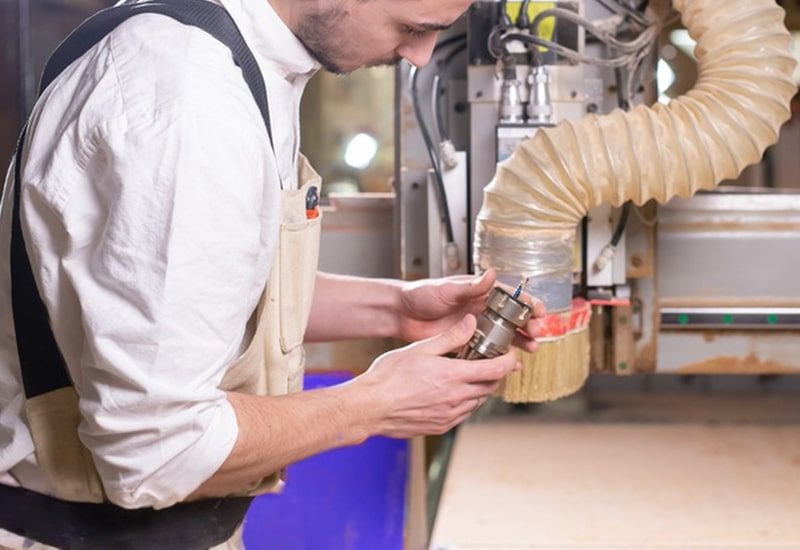
The spindle is one of the most important operating components of a CNC router. Its condition directly influences cutting stability, surface quality, tool life, and production efficiency. Excessive dust, improper tool installation, unbalanced tooling, inadequate cooling, or worn tool-holding components can place unnecessary stress on the spindle. AccTek CNC preventive maintenance includes inspection of the spindle and related tooling system. For automatic tool change CNC routers, additional attention is given to tool magazines, tool-changing mechanisms, tool sensors, and pneumatic components. Spindle and tooling maintenance may include:
- Cleaning the spindle housing and surrounding processing area
- Checking spindle noise, vibration, temperature, and operating condition
- Inspecting collets, tool holders, clamping nuts, and taper surfaces
- Checking cutting tools for wear, damage, contamination, or imbalance
- Verifying correct tool installation and clamping
- Examining spindle cooling fans or water-cooling systems
- Inspecting automatic tool-changing mechanisms where equipped
- Checking tool magazine positions and tool-change accuracy
- Inspecting pneumatic pressure and tool-release performance
- Verifying spindle speed commands and operating response
Electrical and Control System Inspection
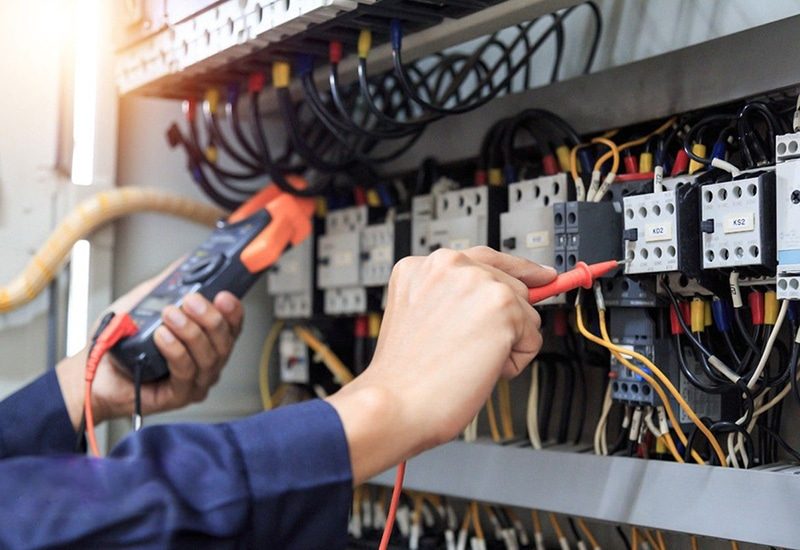
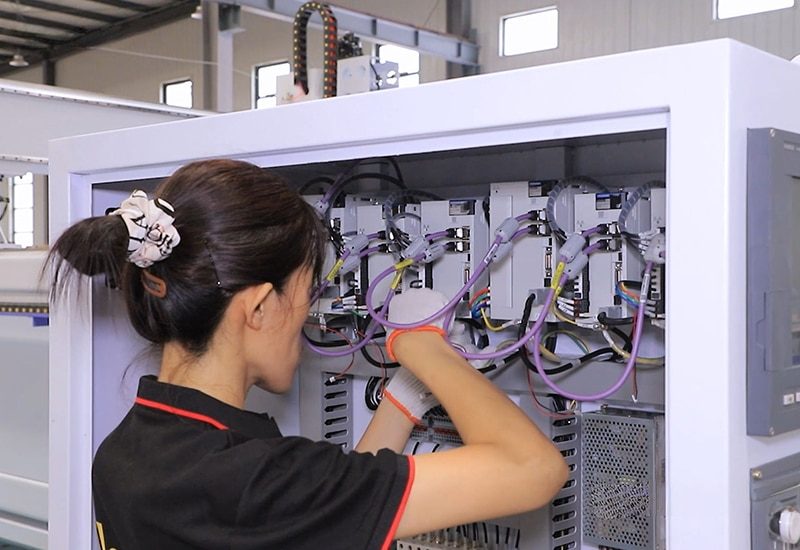
Stable electrical and control systems are essential for safe and reliable CNC router operation. Electrical connections may loosen because of vibration, while dust, heat, moisture, or unstable power conditions can affect sensitive electronic components. Preventive electrical inspections help identify damaged wiring, insufficient cooling, abnormal alarms, and other conditions that could cause intermittent faults or machine stoppages. Maintenance work should be performed only by qualified personnel with appropriate electrical safety procedures. Electrical and control system inspection may include:
- Examining electrical cabinets for dust, moisture, and excessive heat
- Cleaning or replacing cabinet ventilation filters where applicable
- Checking cooling fans and electrical cabinet ventilation
- Inspecting cables, terminals, connectors, and grounding points
- Checking servo motors, stepper motors, drives, and power supplies
- Reviewing controller alarms and machine operating records
- Testing emergency stops, limit switches, and protective devices
- Verifying sensors and proximity switches
- Inspecting cable carriers and moving cables for wear
- Backing up controller parameters and important machine settings
Vacuum Table, Dust Collection, and Auxiliary System Maintenance
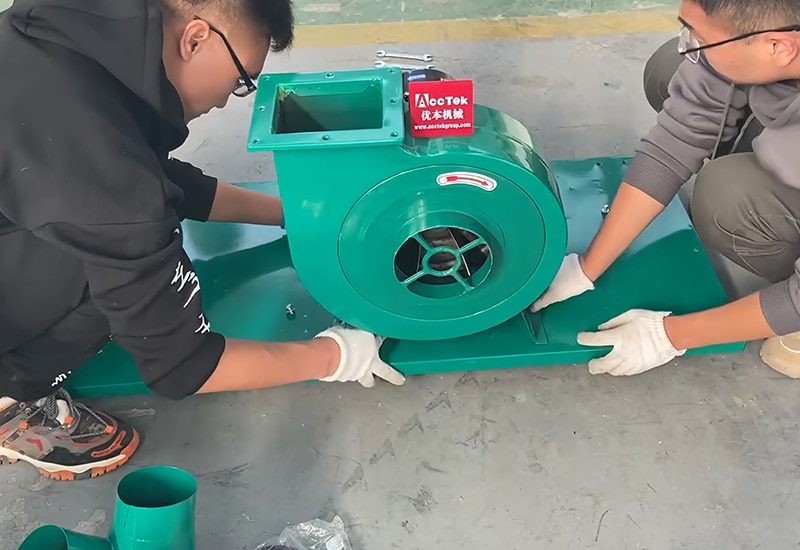
CNC router performance depends not only on the machine itself but also on its supporting systems. Vacuum tables, vacuum pumps, dust collectors, compressed-air systems, lubrication units, and spindle-cooling equipment must operate correctly to maintain stable machining conditions. A weak vacuum can allow material to move during processing, while restricted dust collection can cause debris to accumulate around tools, guide rails, and electrical components. Insufficient air pressure or cooling performance may also affect automatic tool changing and spindle reliability. Auxiliary system maintenance may include:
- Inspecting vacuum table surfaces, seals, zones, and connecting lines
- Checking vacuum pumps for leakage, blockage, noise, or reduced suction
- Cleaning filters and removing accumulated dust or processing debris
- Inspecting dust-collection hoses, connections, brushes, and extraction units
- Checking compressed-air pressure and pneumatic lines
- Inspecting air filters, regulators, and moisture separators
- Verifying automatic lubrication system operation
- Inspecting water-cooling circulation, coolant condition, and temperature
- Checking fans and air-cooling passages on air-cooled spindles
- Confirming stable operation of other machine accessories
Accuracy Verification and Performance Testing
Mechanical wear, collisions, vibration, foundation changes, and prolonged production can gradually influence machine geometry and positioning accuracy. Preventive maintenance should therefore include performance checks to confirm that the CNC router continues to meet the requirements of its intended applications. AccTek CNC technicians can evaluate machine movement, spindle condition, cutting performance, and relevant calibration settings. When necessary, adjustments can be recommended or performed to restore stable operation. Accuracy and performance checks may include:
- Verifying machine leveling and structural stability
- Checking gantry alignment and axis squareness
- Evaluating positioning and repeatability
- Inspecting the worktable for flatness or surface damage
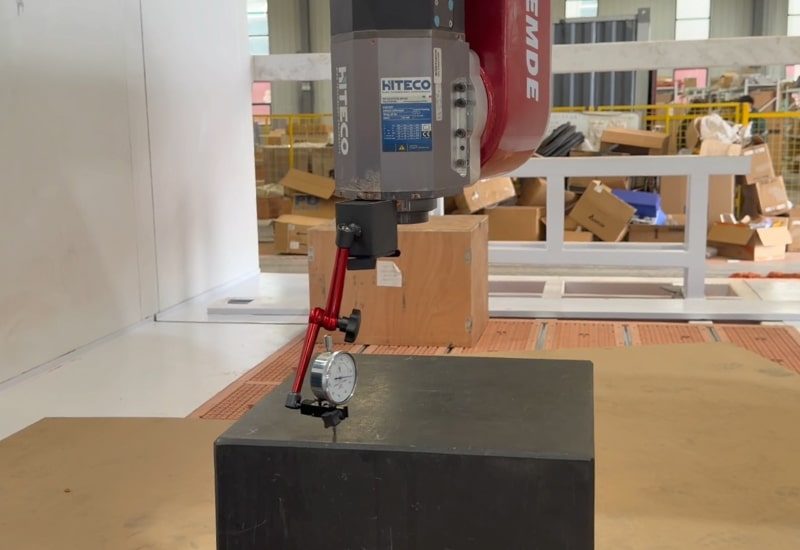
- Checking spindle perpendicularity relative to the worktable
- Verifying tool length sensors and positioning devices
- Testing homing and machine-coordinate functions
- Reviewing cutting parameters and motion settings
- Performing trial machining or test cuts
- Evaluating dimensional accuracy, edge quality, and surface finish
Safety System and Operator Maintenance Review
Preventive maintenance also supports safer CNC router operation. Emergency stops, limit switches, protective covers, extraction equipment, and other safety-related components should be inspected regularly. Operators must understand which routine tasks they can perform and which procedures require qualified technical personnel. Safety and operator maintenance review may include:
- Testing emergency-stop buttons and limit switches
- Inspecting protective covers, guards, and warning labels
- Checking the condition of electrical enclosures and grounding
- Confirming that dust extraction operates correctly
- Reviewing machine cleaning and lubrication procedures
- Verifying safe tool installation and removal practices
- Reviewing startup, shutdown, and inspection routines
- Identifying unsafe maintenance practices or operating habits
- Clarifying maintenance responsibilities for operators and technicians
Machine Health Monitoring and Maintenance Planning
Effective preventive maintenance requires more than individual inspections. Service history, component condition, machine alarms, production hours, and recurring performance changes should be recorded and reviewed over time. AccTek CNC helps customers establish practical maintenance records and schedules that support long-term machine management. This information allows maintenance teams to identify repeated issues, anticipate replacement needs, and prepare spare parts before a component reaches the end of its service life. Maintenance planning support may include:
- Recording completed inspections and service activities
- Tracking component wear and replacement history
- Reviewing machine alarms and recurring faults
- Monitoring changes in accuracy, vibration, temperature, or noise
- Identifying high-risk or heavily used components
- Planning replacement of consumables and wear parts
- Recommending suitable spare parts for routine maintenance
- Adjusting service intervals according to actual machine utilization
- Preparing future maintenance and inspection schedules