

- 12-17 Min Read
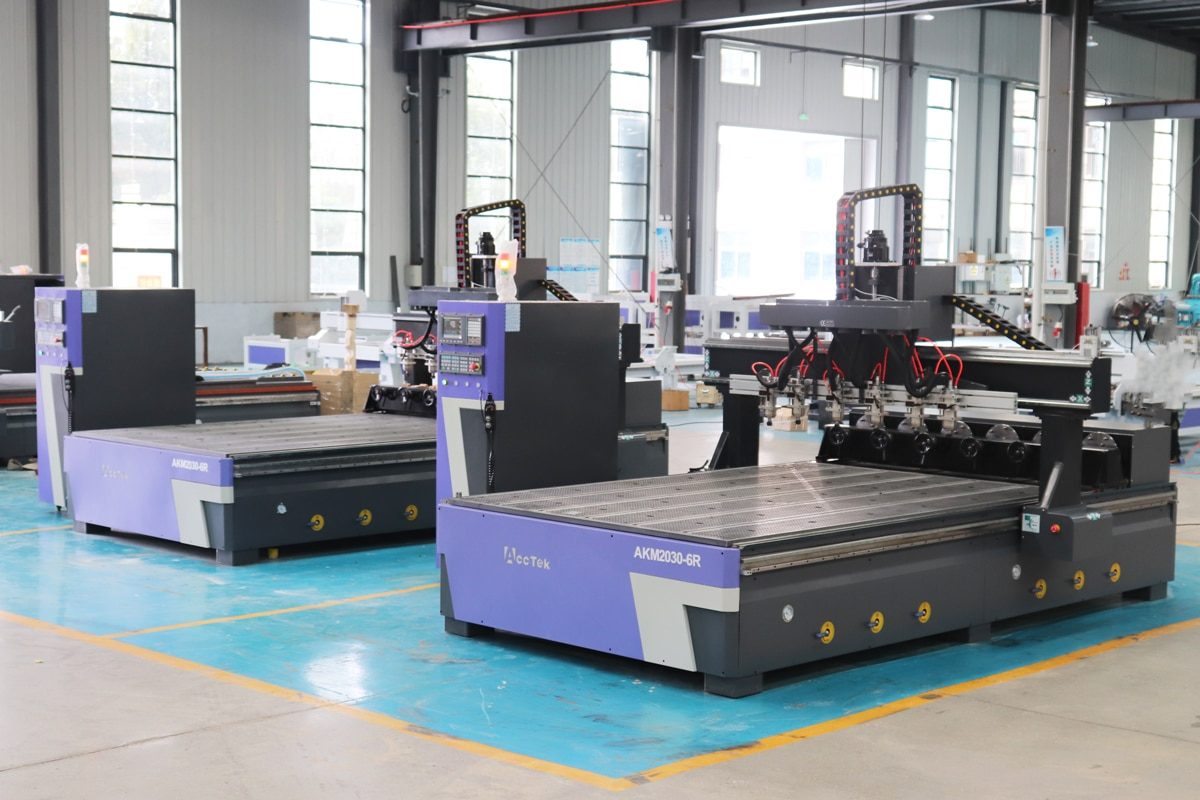
A CNC router is a versatile and powerful tool used across industries ranging from woodworking to metal manufacturing. While many factors influence a machine’s performance, one of the most critical is its size. CNC routers come in a wide range of table sizes, from compact benchtop models ideal for small-scale projects to large-format machines capable of handling massive sheets and heavy materials. The right choice depends not only on the size of the materials you work with, but also on your industry’s production demands, available workspace, and long-term growth plans.
Different industries have unique requirements—what works perfectly for a sign-making shop may be impractical for a furniture manufacturer or a stone fabricator. This guide breaks down the most common CNC router sizes and matches them with the specific needs of various industries, helping you make an informed decision that supports both current projects and future business expansion. Whether you work with wood, metal, plastics, stone, or composites, you’ll gain the knowledge needed to choose a machine that balances productivity, precision, and return on investment.
Understanding CNC Router Dimensions
Selecting the right CNC router size goes beyond just looking at the machine’s overall table dimensions. To make an informed choice, it’s important to understand the different measurements that define a machine’s working capacity. Understanding these critical dimensions and terms helps you better evaluate CNC routers based on your industry’s specific needs.
Key Terms Explained
When selecting a CNC router, you’ll often come across technical terms that describe its capabilities and limitations. Understanding these terms will help you compare models more accurately and choose the right machine for your needs.
- Cutting Area: The maximum workspace where the CNC router can cut, drill, or engrave. It’s usually defined by the X (width), Y (length), and Z (height) axes. A larger cutting area allows you to work with bigger materials or fit multiple pieces in one setup.
- Overall Footprint: The total physical space the machine occupies, including the frame, safety guards, and clearance for operation. The overall footprint is always larger than the cutting area, and it’s a critical factor when planning your workshop layout.
- Gantry Clearance: The vertical distance between the table surface and the underside of the gantry bridge. This determines the maximum height of the material or fixture that can pass under the gantry without obstruction. Higher gantry clearance is important for cutting thick stock or using tall clamps and jigs.
- Travel Speed: The rate at which the machine’s spindle moves along its axes when not cutting. Higher travel speed can reduce cycle times, especially for jobs with multiple toolpaths spread across the table.
- Weight Capacity: The maximum load the CNC router table can safely support, including material, fixtures, and tooling. Heavy-duty applications—such as stone, metal, or thick hardwood—require machines with a higher weight capacity to prevent structural strain and maintain precision.
Bed Size vs. Cutting Area
Although the terms “bed size” and “cutting area” are sometimes used interchangeably, they refer to different aspects of a CNC router’s workspace:
- Bed Size: The physical dimensions of the machine’s worktable surface. This is the total space available for placing materials, regardless of whether the spindle can reach every part of it. Bed size affects how easily you can position large sheets, clamp materials, or set up multiple workpieces at once.
- Cutting Area: The maximum range the machine spindle can move across the table, defined by the X (width), Y (length), and Z (height) axes. The cutting area is often slightly smaller than the bed size due to the machine’s frame design, gantry travel limits, or space reserved for clamps and fixtures.
Grasping the distinctions between bed size, cutting area, and other key dimensions empowers you to choose a CNC router that truly fits your production demands. While the physical table size gives an initial impression of workspace, the cutting area defines the actual machining limits. Understanding these concepts helps avoid common misconceptions about workspace and ensures you select a machine that can handle your materials effectively.
Key Factors Influencing CNC Router Size Selection
Choosing the right CNC router size depends on several important factors unique to your business and industry. Understanding these considerations ensures you select a machine that balances productivity, cost, and space requirements effectively. Here are the primary factors to keep in mind:
Material Size and Thickness
- Cutting Area Requirements: The most straightforward consideration is that the CNC router’s cutting area must be large enough to accommodate your biggest material sheets or parts in a single setup. For example, if you regularly cut 4’×8’plywood sheets, you need a machine with at least a 4’×8′ cutting area to process the sheets without repositioning.
- Gantry Clearance and Z-Axis Travel: Thicker materials require sufficient gantry clearance to fit under the machine spindle without collision. In addition, the machine’s Z-axis travel must be long enough to reach the cutting surface and perform deep cuts if necessary.
Production Volume and Workflow
- High-Volume Production Needs: In large-scale manufacturing environments, production speed and throughput are paramount. Larger CNC routers with expansive tables allow for nesting multiple parts or working on full sheets at once, significantly reducing setup times and increasing output.
- Low-Volume and Custom Workflows: For businesses focused on custom or small-batch production, flexibility and ease of use often outweigh sheer size. Smaller CNC routers offer quicker setup and reduced operational complexity. Their adaptability makes them ideal for bespoke designs and frequent product variation.
Available Workshop Space
- Machine Footprint and Physical Dimensions: The CNC router’s footprint must comfortably fit within your workshop. It’s important to remember that the footprint includes not only the table size but also the frame, gantry, and any peripheral equipment.
- Material Loading and Unloading Space: Loading raw materials onto the CNC router table and unloading finished parts requires additional clearance. For large-format sheets or heavy stock, you’ll need ample space for forklifts, carts, or conveyors to maneuver safely.
- Operator Movement and Safety Clearances: Operators need safe and unobstructed access around the CNC router to perform tasks like setup, monitoring, and maintenance. Safety regulations often specify minimum clearance zones to prevent accidents.
Budget Constraints and Return on Investment (ROI)
- Initial Purchase Cost: Larger CNC routers generally come with higher price tags due to their larger size, more robust components, and advanced features like multi-tool changers or enhanced control systems. Small and mid-size machines tend to be more affordable, making them accessible for startups and small businesses.
- Productivity Gains and Cost Efficiency: Investing in a larger CNC router can lead to significant productivity improvements, such as processing larger materials in fewer setups, nesting multiple parts, or running longer unattended cycles. These efficiencies can reduce labor costs and increase throughput, contributing to faster return on investment.
Balancing these considerations ensures that the machine you choose aligns with your current demands while providing the flexibility and capacity needed for future growth. Ultimately, selecting the right CNC router size lays the foundation for efficient, precise, and cost-effective manufacturing tailored to your industry’s unique requirements.
Common CNC Router Table Sizes
CNC routers come in a variety of table sizes designed to meet different industry needs, material dimensions, and production scales. Understanding the typical size categories can help you identify which machines align with your specific applications. Below are some of the most common CNC router table sizes and their typical uses:
Small Benchtop CNC Routers
Small desktop CNC routers generally have cutting areas ranging from about 2′×2′ to 4′×4′. These compact machines are ideal for small workshops, prototyping, hobbyists, and businesses focusing on intricate or small-scale projects. Here are the advantages:
- Compact and Space-Saving: Their small footprint allows use in limited spaces such as home workshops, classrooms, or offices.
- Affordable: They usually come at a lower price point compared to larger industrial machines, making them a popular choice for startups and educational settings.
- User-Friendly: Often designed with simplified controls and easier setup, they cater well to newcomers learning CNC operation.
- Versatile for Small Projects: Despite their size, many models can handle a variety of materials, including wood, plastics, soft metals, and composites.
Mid-Size CNC Routers
Mid-size CNC routers usually feature cutting areas ranging from 4′×8′ up to about 5′×10′. These machines strike a balance between workspace capacity and footprint, making them popular in many small to medium-sized manufacturing environments. Here are the advantages:
- Versatile Work Area: Large enough to handle standard sheet materials like plywood, MDF, plastics, and metal sheets without repositioning, improving workflow efficiency.
- Balanced Cost and Capability: More affordable than large industrial CNC routers, yet offering robust performance suitable for a wide range of materials and applications.
- Increased Productivity: Supports nesting multiple parts in one run, reducing setup time and increasing throughput.
- Suitable for Diverse Industries: Commonly used in woodworking, cabinetry, signage, composite fabrication, and light metalworking.
Large-Format CNC Routers
Large-format CNC routers generally have cutting areas starting from 6′×12′ and can go up to 10′×20′ or even larger for specialized applications. These machines are designed for handling oversized materials and high-output production needs. Here are the advantages:
- Handles Oversized Materials in One Pass: Capable of processing large panels, composite sheets, or metal plates without the need for repositioning, ensuring precision and efficiency.
- High Production Efficiency: Supports nesting a high volume of parts per sheet, reducing material waste and increasing throughput in large-scale manufacturing.
- Industrial-Grade Performance: Equipped with stronger frames, higher-power spindles, and advanced motion control systems for consistent operation under heavy workloads.
- Customizable for Specialized Industries: Often available with options like automatic tool changers (ATC), vacuum hold-down systems, and multi-spindle setups.
CNC router table sizes range from compact desktop models to large-format machines, each catering to specific production needs. Small machines excel in portability and precision, mid-size units strike a balance between versatility and footprint, and large-format machines deliver unmatched capacity. Understanding the strengths of each size category ensures you can select a machine that aligns with your workflow, available space, and business objectives.
Industry-Specific CNC Router Size Recommendations
Different industries have unique requirements when it comes to CNC router size, driven by the materials they process, the complexity of their designs, and the scale of their operations. A woodworking shop handling large furniture panels will have very different needs compared to a sign-making studio working with acrylic sheets, or a prototyping lab producing small, intricate parts. The following recommendations outline the most suitable CNC router sizes for various sectors, helping you choose a machine tailored to your applications.
Woodworking & Furniture Manufacturing
- Common: 4′×8′ and 5′×10′. Most furniture components — cabinet panels, shelves, doors, and table tops — originate from standard sheet goods such as 4′×8′ plywood or MDF. A 4′×8′ cutting area allows full-sheet processing without repositioning, which saves time and preserves edge alignment.
- High-capacity shops: 6′×12′ or custom large-format beds for oversized panels and long parts. Large-format tables let you nest multiple parts on one sheet, improving material yield and reducing setup time for batch production. Larger beds are valuable for full-size tabletops, long casework, or integrated furniture panels that would otherwise require seams.
Sign Making & Advertising
- Common: 4′×8′ and 5′×10′. Sign makers often work with full sheets of ACM, acrylic, polycarbonate, or PVC, which are commonly sold in 4′×8′ or 5′×10′ formats. Having a router table that matches or slightly exceeds the stock size allows cutting, routing, and engraving without having to split the sheet or reposition it.
- Large-format: 5′×10′ or custom long-bed. Larger beds are particularly useful for wide-format prints mounted on rigid substrates, eliminating visible joins in the final installation. For 3D lettering, deep relief carving, and complex contour cuts, a stable large-format bed ensures precise outlines and smooth curves.
Metal Fabrication
- Typical Sizes: For precision work on sheet metal parts, smaller CNC routers with table sizes around 16″×16″ or 24″×24″ are common. These compact machines are well-suited to fabricating detailed components, prototypes, or small batch runs where large bed space isn’t necessary.
- Rigidity and Stable Bed Support Matter More Than Size: In metal cutting, the stiffness of the machine and stability of the bed are more crucial than having a large cutting area. A rigid frame minimizes vibrations and deflections that can cause inaccuracies, burrs, or poor surface finishes. Stable support prevents workpiece movement during cutting.
Stone, Solid Surface & Countertops
- Common: 4′×8′ and 5′×10′. Stone and solid surface materials like granite, marble, quartz, and Corian typically come in large slabs that demand sizeable CNC router beds for single-pass processing. Correspondingly large cutting beds enable fabricators to process entire slabs in a single pass, reducing the need for repositioning and minimizing seams.
- Gantry Height and Clearance for Thick Slabs: Due to the significant thickness of stone, CNC routers designed for this sector feature elevated gantry heights and ample vertical clearance. This allows the use of long cutting tools, diamond-tipped bits, and polishing attachments required for shaping and finishing heavy slabs without obstruction.
- Heavy-Duty Frames and Bed Support: Given the extreme weight of stone slabs, CNC routers in this industry must incorporate robust, heavy-duty welded steel frames and reinforced bed supports. The bed structure needs to distribute the load evenly to prevent deflection, which could compromise cutting accuracy.
Prototyping & Small-Scale Manufacturing
- Compact desktop CNC routers with cutting areas around 16″×24″ to 24″×24″. Prototyping and small-scale manufacturing often require high precision and flexibility rather than large cutting areas. Smaller table sizes allow for easier setup, faster changeovers, and lower investment costs, making them ideal for iterative design processes, custom parts, and low-volume runs.
- Mid-size machines ranging from 2′×4′ (24″×48″) up to 4′×4′ (48″×48″). They support moderate batch sizes and a wider range of materials without occupying excessive workshop space.
Selecting the right CNC router size for your industry is a strategic decision that balances material handling, precision, production capacity, and workspace constraints. Whether you’re crafting fine furniture, fabricating metal parts, or producing large architectural stone panels, matching machine dimensions to your specific applications enhances efficiency and quality. Armed with these tailored recommendations, you can confidently choose a CNC router that delivers optimal performance, cost-effectiveness, and scalability for your industry’s unique challenges.
Matching CNC Router Size to Your Business Needs
Choosing the right CNC router size goes beyond simply picking the biggest or smallest machine available. It requires a careful evaluation of your specific business needs. A well-matched CNC router not only optimizes efficiency and product quality but also ensures a smoother workflow and better return on investment. To make an informed choice, it’s essential to evaluate several key factors tailored to your business operations.
- Assessing Material Type and Maximum Sheet Size: Begin by identifying the types of materials you most commonly work with and their typical dimensions. For example, woodworking shops often handle 4′×8′ plywood sheets, while metal fabricators may work with smaller aluminum panels. Your CNC router’s cutting area must accommodate the largest sheet or part size you intend to machine, ensuring full processing without frequent repositioning.
- Evaluating Workspace Limitations and Floor Layout: Physical space constraints play a major role in machine selection. Consider your available workshop floor area, access routes for material handling, and clearance for operator movement. Larger CNC routers require more room not only for the machine footprint but also for safe workflow and maintenance access. Optimizing floor layout can improve efficiency and reduce material handling time.
- Balancing Machine Cost vs. Productivity Gain: While larger CNC routers offer greater capacity and throughput, they also come with higher initial investment, maintenance, and operating costs. Analyze your production volume and project complexity to determine if the productivity gains from a bigger machine justify the expense. Sometimes, a mid-size CNC router combined with efficient workflow and nesting software can meet your needs more cost-effectively.
- Planning for Future Expansion or Larger Projects: Anticipate your business growth and potential new project types when choosing machine size. Investing in a slightly larger CNC router than your current requirements can provide flexibility for future product lines or larger materials. However, avoid over-sizing, which can lead to unnecessary capital tied up in underutilized equipment.
Finding the right CNC router size is about striking the optimal balance between capacity, cost, and practical constraints. By thoroughly evaluating your material dimensions, workshop space, production volume, and anticipated expansion, you position your business to maximize efficiency and scalability. A well-matched CNC router not only meets today’s requirements but also supports evolving projects and growth opportunities, making it a valuable cornerstone for your manufacturing success.
Additional Factors Beyond Size
While CNC router size is a primary consideration, numerous other factors significantly influence the machine’s performance, integration, and overall value. From installation logistics and material handling to power requirements and operator ergonomics, these additional elements can impact your day-to-day operations and long-term productivity. Considering these elements alongside size ensures a smoother operation and better return on investment.
- Machine Weight and Installation Requirements: Heavy CNC routers with robust frames provide stability and precision but may require reinforced flooring and specialized installation equipment. Plan for the logistics of moving and setting up the machine in your workshop to avoid delays and unexpected costs.
- Transporting Materials To and From the Machine: Consider your shop layout, availability of forklifts, carts, or conveyors, and clear pathways to facilitate smooth material flow. Large-format machines often need dedicated material handling systems to optimize productivity.
- Power Supply and Ventilation Needs: High-powered spindles and auxiliary systems demand adequate electrical infrastructure. Ensure your facility’s power supply matches the machine’s requirements. Additionally, effective ventilation or dust extraction systems are beneficial for operator health and machine longevity, especially when working with wood, composites, or metals.
- Maintenance Access and Operator Comfort: Design your workspace to provide easy access for routine maintenance, tool changes, and troubleshooting. Comfortable operator stations, good lighting, and safety features improve productivity and reduce fatigue, contributing to consistent quality and safer working conditions.
- Tooling and Accessory Compatibility: The availability and compatibility of tooling, tool changers, dust collection accessories, and software features impact your machine’s versatility and workflow. Choose CNC routers that support your preferred tooling systems and integrate well with your CAD/CAM software to maximize efficiency.
Incorporating considerations beyond size into your CNC router selection process enhances not only machine functionality but also workplace efficiency and safety. By addressing installation needs, material flow, power infrastructure, maintenance accessibility, and tooling compatibility upfront, you set the foundation for a smoother operation and better return on investment. Together with the right machine size, these additional factors complete the picture for a successful CNC router integration.
Summarize
CNC router size directly impacts productivity, precision, and profitability across diverse industries. From compact desktop models suited for prototyping and small-scale manufacturing to expansive large-format CNC routers designed for woodworking and stone processing, understanding industry-specific needs ensures optimal machine selection. Balancing material dimensions, production volume, workspace constraints, and budget considerations allows businesses to maximize efficiency while minimizing costs and operational challenges. For more tips on operating the machine, read “How to Achieve the Expected Performance of a CNC Router“.
For businesses seeking a reliable CNC router supplier, AccTek CNC stands out as a trusted manufacturer in China. With a comprehensive range of standard CNC router sizes and the capability to produce fully customized machines, AccTek can meet the needs of diverse industries—from woodworking and sign making to metal fabrication and stone processing. Each machine is engineered for precision, durability, and efficiency, backed by expert technical support and after-sales service. Whether you need a compact desktop unit or a large-format production workhorse, AccTek CNC delivers tailored solutions to help your business achieve superior cutting performance and long-term value.