

- 15-19 Min Read
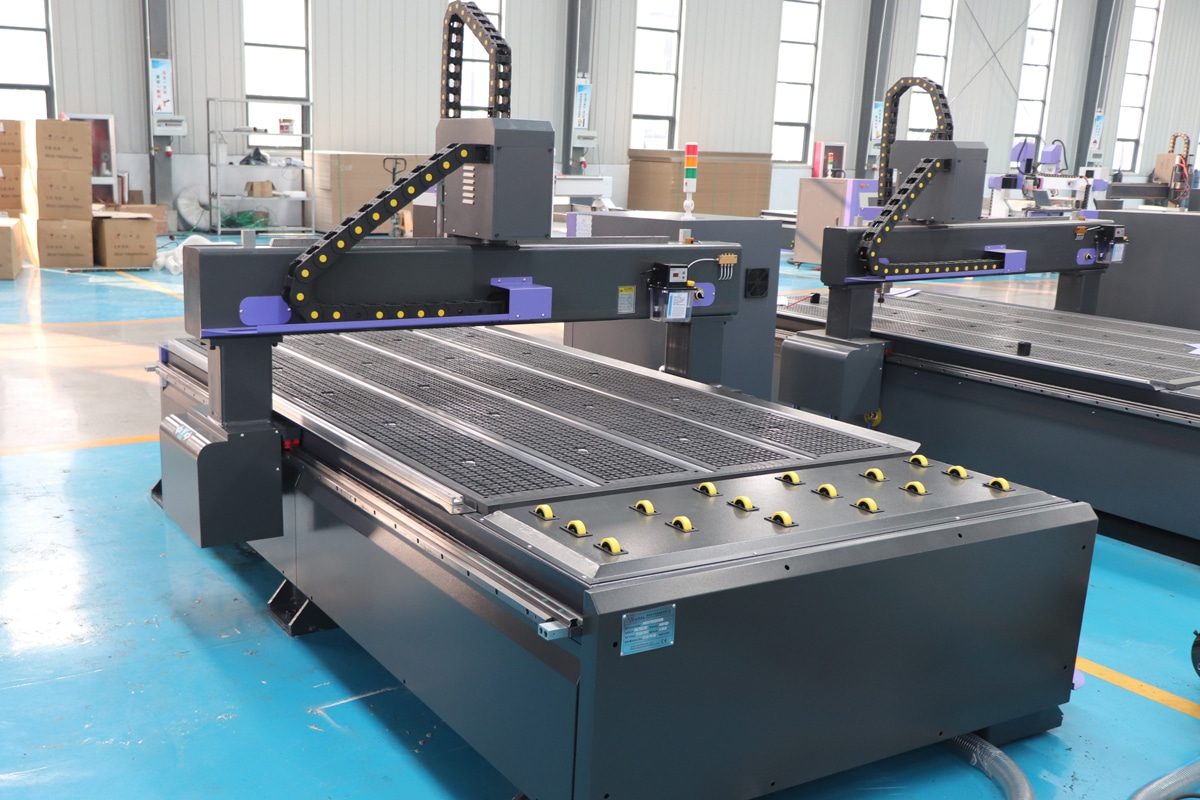
Regarding CNC routers, the drive system is one of the key factors determining the machine’s precision, speed, durability, and overall performance. Acting as the mechanism that moves the router along its axes, the drive system directly influences how smoothly and accurately the machine operates. From rack and pinion systems known for their speed and cost-efficiency, to ball screws prized for high precision, each type of drive system comes with its own strengths and limitations. In this article, we’ll break down the key differences between the most common CNC router drive systems, helping you make a more informed and confident decision.
Overview of CNC Router Drive Systems
The drive system in a CNC router refers to the mechanical components that move the machine’s cutting tool or worktable along the X, Y, and Z axes. It works by converting the rotational motion generated by motors into precise linear motion, enabling the tool to follow programmed paths with high accuracy.
Detailed Functions of the CNC Router Drive System
The drive system is directly responsible for executing movement commands and ensuring the CNC router performs with precision and efficiency. Its functions go far beyond simple motion and contribute to multiple aspects of machine operation. Here’s a detailed look at its key functions:
- Converting Motor Power into Linear Motion: At the heart of the drive system is the conversion of rotary motion from motors into precise linear movement.
- Enabling High-Precision Positioning: The drive system ensures that the CNC router can move and stop at exact positions.
- Maintaining Consistent Speed and Feed Rates: The drive system regulates speeds smoothly across movements, ensuring the machine performs reliably even in high-speed operations.
- Supporting Load Handling and Stability: The drive system must support and move the weight of the gantry or worktable while maintaining stability and alignment.
- Ensuring Smooth, Vibration-Free Motion: To achieve high-quality finishes, the drive system minimizes vibration and mechanical noise.
The CNC router drive system is responsible for converting motor signals into controlled, precise movements that determine the quality, speed, and efficiency of machining operations. It’s a foundational element that connects software commands to real-world results.
Impact on Movement Accuracy, Speed, and Durability
As the mechanism responsible for movement along the X, Y, and Z axes, the drive system directly affects how accurately, quickly, and reliably the machine performs. Below is a detailed look at how different drive systems influence motion accuracy, speed, and durability.
- Accuracy: Motion accuracy refers to the CNC router’s ability to follow programmed tool paths with exact precision. Ball Screw Drives are known for their exceptional accuracy. Their design minimizes backlash, making them ideal for tasks requiring fine detail. In contrast, rack and pinion or belt systems may introduce slight inaccuracies over long distances.
- Speed: Speed impacts productivity; the faster the drive system, the more efficient the manufacturing process. Rack and pinion and belt drives are well-suited for high-speed operations, especially in large-format applications. Ball Screw Drives can achieve moderate speeds, but their efficiency drops over long distances due to mechanical friction and the risk of “screw whip”.
- Durability: Durability relates to how well the drive system resists wear and maintains performance over time, especially under heavy use. Rack and pinion systems are known for their ruggedness, while belt drives may stretch over time. Ball Screws are durable when sealed and used in clean environments, but they require regular lubrication and protection from dust and debris to avoid wear.
The drive system is a crucial determinant of how well a CNC router performs in different applications, balancing the trade-offs between precision, speed, and longevity.
Rack and Pinion Drive System
The rack and pinion drive system consists of a straight gear (rack) and a round gear (pinion). As the motor rotates the pinion, it engages with the rack to create linear motion along the axis. This system is commonly used on the X and Y axes of large-format CNC routers because it can cover long distances efficiently.
Advantages
The rack and pinion drive system is widely used in CNC routers, especially those designed for large-format cutting and heavy-duty applications. It offers a strong combination of speed, durability, and cost-effectiveness. Below are the key advantages of using a rack and pinion transmission system in CNC routers:
- High Speed Over Long Distances: Rack and pinion systems can achieve very high travel speeds, making them ideal for operations where fast positioning and quick job cycles are required.
- Strong Load-Carrying Capacity: Rack and pinion systems can handle heavy gantries and cutting heads with minimal performance loss. This makes them ideal for CNC routers working with dense materials, where substantial force is applied during cutting.
- Durable and Rugged Design: These systems are mechanically simple and robust, able to withstand heavy use with minimal risk of breakdown. When properly maintained, these systems can operate reliably for years, even in demanding industrial environments.
- Lower Cost in Large-Scale Applications: Compared to ball screw drives, rack and pinion systems are more cost-effective for large machines. They offer a good balance between speed and accuracy without inflating machine costs, especially for machines with extended travel lengths.
- Easy Maintenance and Repair: Rack and pinion components are relatively easy to inspect, replace, and service. With proper lubrication and tensioning, they can operate reliably over long periods.
Disadvantages
While the rack and pinion drive system offers many benefits, it also comes with some inherent limitations. Here’s a detailed breakdown:
- Potential for Backlash: One of the most common drawbacks is mechanical backlash, which refers to the small amount of play or looseness between the gear teeth of the rack and pinion. This can lead to slight inaccuracies in positioning, particularly when changing direction.
- Not Ideal for Ultra-Precision Work: While accurate enough for many tasks, they cannot match the fine precision offered by ball screw or linear motor systems. This makes them less suitable for applications that require fine engraving or micromachining.
- Requires Proper Alignment and Installation: Any misalignment between the rack and pinion gear can cause binding, uneven wear, vibrations, and reduced accuracy. Skilled technicians are often needed during setup and maintenance to ensure optimal performance.
Best Applications
The rack and pinion drive system is a popular choice in the CNC router industry due to its ability to deliver high-speed, long-distance, and cost-effective motion. Below is a detailed overview of the key application areas:
- Large-Format Woodworking: For cutting plywood sheets, MDF, or other large panels quickly. These systems can handle long travel distances efficiently and maintain adequate accuracy for furniture making, cabinetry, and construction components.
- Sign Making and Advertising: Rack and pinion-driven CNC routers are widely used to produce 3D signs, letters, logos, and display boards made from materials like wood, acrylic, PVC, and foam. The system’s fast travel capabilities help improve production efficiency for high-volume orders.
- Metal Fabrication (Light to Medium Duty): For cutting thinner sheet metals, rack and pinion systems offer a rugged yet cost-effective alternative. Paired with a plasma on a CNC router or hybrid system, this setup handles metal cutting tasks where extreme precision isn’t critical.
- Cabinet and Furniture Manufacturing: In automated cabinet and furniture factories, rack and pinion systems are ideal for batch cutting, profiling, and nesting operations. Their ability to move across large tables at high speeds reduces cycle time and boosts throughput.
The rack and pinion drive system is a popular choice for industrial CNC routers that need speed and scale more than ultra-high precision. With proper installation and maintenance, it provides a reliable and cost-effective motion solution.
Ball Screw Drive System
A ball screw drive system converts rotary motion from a motor into linear motion using a precision-machined screw and a ball nut filled with recirculating ball bearings. As the motor rotates the screw, the ball nut moves along it smoothly with minimal friction, allowing for precise control of position and movement.
Advantages
The ball screw drive system is highly regarded for its exceptional precision, efficiency, and smooth motion, making it a preferred choice for CNC routers used in high-accuracy applications. Below is an in-depth look at the key advantages of ball screw systems:
- High Precision and Repeatability: Ball screw drives offer extremely high accuracy, typically with positioning errors as low as a few microns. This is due to the rolling contact between the screw and nut, which eliminates most of the backlash seen in other systems like rack and pinion or belt drives
- Smooth Motion with Minimal Friction: The use of recirculating ball bearings between the screw and nut ensures exceptionally smooth linear motion with minimal friction. This helps maintain consistent motion and improves the quality of cuts.
- Efficient Power Transmission: Ball screw systems can achieve efficiencies of 85–95%, meaning more of the motor’s power is effectively used to move the cutting tool or table.
- Excellent Load Handling for Vertical Axes: The self-locking nature of ball screws (in certain configurations) and their precise control make them especially suitable for the Z-axis, where they can hold the tool head in place even when the motor is off.
- Minimal Backlash (or Correctable Backlash): Backlash in ball screw systems is extremely low by design. Some advanced setups include preloaded ball nuts that virtually eliminate any backlash. This enhances bidirectional accuracy and clean transitions during direction changes.
Disadvantages
While ball screw drive systems are widely valued for their accuracy and smooth motion, they are not without limitations. Below is a detailed breakdown of the key drawbacks:
- More Expensive Than Other Systems: Ball screws are costlier to manufacture and install than rack and pinion or belt drive systems, especially in large-format machines.
- Limited Travel Length for High Speed: Over long distances, ball screws may experience “screw whip” (vibration caused by fast rotation), which limits their practical length and speed—making them less ideal for large-format CNC routers.
- Sensitive to Dust and Contaminants: Ball screws require a clean operating environment or protective sealing. Dust, chips, or debris can enter the nut assembly and degrade performance or cause failure.
- Regular Lubrication and Maintenance Required: To prevent premature wear and maintain smooth motion, ball screws need frequent lubrication and cleaning. Compared to rack and pinion systems (which are more forgiving), ball screws demand more attention.
Best Applications
Ball screw drive systems are favored in applications that demand exceptional precision, smooth motion, and consistent repeatability. Here’s an in-depth look at the best use cases for ball screw-equipped CNC routers:
- High-Precision Engraving and 3D Carving: Ball screw systems are the go-to choice for fine engraving, inlay work, and intricate 3D carving. The near-zero backlash and smooth linear motion allow for detailed lines and intricate textures.
- Mold and Die Making: Mold and die making demands extreme dimensional accuracy and high surface quality both of which ball screw drives provide. These systems can machine intricate cavity shapes and complex contours with minimal deviation, ensuring a perfect fit between mold components.
- Z-Axis Control in CNC Routers: Even in machines that use other drive types for X and Y axes, the Z-axis is often equipped with a ball screw due to the need for vertical stability and precise depth control. Ball screw drives prevent tool head drift under gravity, maintain consistent cutting depths, and offer excellent holding force when the spindle is stationary.
The ball screw drive system is the preferred choice when accuracy and smooth motion are more important than speed or long-distance travel. It is commonly used in precision-focused CNC routers, particularly for Z-axis control and applications demanding exact repeatability.
Lead Screw Drive System
A lead screw drive system uses a threaded screw shaft (the lead screw) and a matching nut to convert rotary motion into linear motion. Unlike ball screws, lead screws do not have ball bearings; instead, the nut slides directly along the threads of the screw. This creates a simple, cost-effective system for controlled movement.
Advantages
While lead screw drive systems may not offer the high speed or precision of ball screws or rack and pinion systems, they present several unique advantages that make them well-suited for specific CNC applications.
- Low-Cost and Simple Construction: Lead screw systems are easy to manufacture and install, making them ideal for budget-friendly CNC routers or entry-level machines.
- Self-Locking Capability: Due to the high friction between the screw and the nut, lead screws can be naturally self-locking, depending on the thread pitch and material pairing. This means the system can hold its position when the power is off.
- Quiet Operation: Lead screws tend to operate quietly, with less noise than gear-based systems like rack and pinion.
- Compact and Lightweight: Their lower mass and simple construction reduce overall machine weight, contributing to better portability and easier handling for small-scale operations.
Disadvantages
While lead screw drive systems are valued for their affordability and simplicity, they come with notable limitations that restrict their use in high-performance or industrial CNC applications.
- Lower Precision Compared to Ball Screws: Without ball bearings, lead screws generate more friction and are prone to backlash, which reduces their accuracy and repeatability over time.
- Faster Wear and Shorter Lifespan: The sliding contact causes more wear on both the nut and screw, especially in high-speed or high-load applications.
- Heat Buildup from Friction: At high speeds, the increased friction leads to heat generation, which can cause thermal expansion and dimensional inaccuracy.
- Limited Speed and Efficiency: The mechanical efficiency of lead screws is much lower (20–70%) than ball screws, making them unsuitable for fast motion or high-duty cycles.
Best Applications
Lead screw drive systems are best suited for applications that do not demand high speed, long travel distances, or ultra-high precision.
- Hobbyists and DIY CNC Routers: These users typically focus on small-scale projects, where ultra-precision isn’t critical. The low cost and simple design of lead screws make them appealing for personal workshops or casual fabrication without the need for industrial-grade performance.
- Light-Duty Engraving and Routing: For applications involving engraving, light routing, or surface marking on soft materials (such as wood, plastic, or foam), lead screws offer sufficient precision and motion control.
- Z-Axis on Budget CNC Machines: The Z-axis often benefits from the self-locking nature of lead screws. While other axes may use rack and pinion or belts, the Z-axis lead screw helps hold the cutting tool securely in place without the need for expensive counterbalancing systems.
- Educational and Training Machines: In schools, technical institutes, and CNC training programs, lead screw-equipped routers are often used to demonstrate CNC principles without the cost or complexity of high-end systems.
The lead screw drive system offers an affordable and simple motion solution for low-demand CNC applications, especially for hobbyists, educators, or light-duty users. It’s not suitable for high-speed or precision-critical work, but its ease of use and cost-effectiveness make it a popular choice for entry-level setups.
Belt Drive System
A belt drive system in a CNC router uses a timing belt that loops around two pulleys, one connected to a motor and the other to a moving axis component. As the motor turns, it drives the belt, which moves the gantry or tool head along the X or Y axis. Timing belts have teeth that mesh with grooved pulleys to prevent slipping, providing consistent motion control for light to medium-duty applications.
Advantages
Belt drive systems offer several key advantages that make them an excellent choice for specific CNC router applications. They are particularly valued for affordability and quiet operation, making them well-suited for light-duty work and budget-conscious setups.
- Quiet Operation: With no metal-on-metal contact, belt systems operate quietly, which is beneficial for environments where noise is a concern, like offices, schools, or home workshops.
- Cost-Effective: Belt drive systems are generally inexpensive compared to ball screws or linear motors. They are economical to produce, install, and maintain, making them ideal for budget-conscious users.
- Low Maintenance: Belts do not require lubrication, and their smooth operation reduces wear on motors and bearings. They are easy to replace when worn, and overall maintenance is minimal.
Disadvantages
While belt drive systems offer notable advantages such as affordability, they also come with several important limitations. These disadvantages affect their suitability for precision-critical or heavy-duty CNC applications.
- Limited Precision and Higher Backlash: Belts can stretch slightly over time, leading to loss of positioning accuracy and increased backlash. This makes them less suitable for precision-critical applications.
- Wear and Degradation: Belts are subject to mechanical wear and can degrade due to environmental factors such as heat, dust, or humidity. They may need more frequent replacement than rigid mechanical systems.
- Load Capacity Limitations: Belt drives are not ideal for moving heavy gantries or loads. Under high force or resistance, they can lose steps or cause skipped movements, affecting machining accuracy.
Best Applications
Belt drive systems are ideal for CNC router applications that prioritize low cost, quiet operation, and ease of maintenance over extreme precision or heavy-duty performance. Their characteristics make them especially well-suited to light-duty and budget-conscious tasks.
- Sign Making: Belt drive systems offer the speed and affordability needed to cut letters, shapes, and logos quickly while maintaining acceptable levels of accuracy.
- Light-Duty Woodworking: For general woodworking tasks such as cutting, engraving, or profiling softwoods, MDF, or plywood, belt-driven CNC routers provide sufficient accuracy with excellent cutting speed.
- Acrylic, Plastic, and Foam Cutting: Belt drive systems are highly effective in cutting lightweight, non-metallic materials. These materials generate low cutting resistance, allowing belt systems to move quickly and cleanly.
- Entry-Level and Educational CNC Machines: In schools, maker spaces, and training centers, belt-driven routers are a popular choice due to their low noise, low cost, and simple maintenance.
Belt drive systems are ideal for applications that require affordability and simplicity rather than tight tolerances or heavy-duty capability. They are commonly found in entry-level CNC routers, particularly in industries like signage, plastics, and education, where ease of use and cost efficiency are key priorities.
Factors to Consider When Choosing a Drive System
Choosing the right drive system is a critical step in configuring a CNC router that aligns with your production needs, accuracy goals, and operational budget. Below are the key factors you should consider when choosing the appropriate drive system:
Required Accuracy and Resolution
The level of precision your application demands is one of the most important factors in drive system selection:
- Ball Screw Systems offer high resolution and repeatability, often in the micron range, making them suitable for precision work such as mold making and fine engraving.
- Rack and Pinion Systems provide moderate to high accuracy, and with proper tensioning and dual pinion designs, they can meet the requirements of many industrial applications, though they’re not ideal for micron-level detail.
- Belt Drive Systems offer lower resolution, sufficient for tasks like cutting signs, woodworking, and soft material machining, but not appropriate for tasks that demand ultra-precise contours or small tolerances.
- Lead Screw Systems fall somewhere in between but are prone to backlash and wear, limiting their long-term accuracy.
Machine Size and Travel Length
The physical size of your CNC router and the distance each axis needs to travel play a critical role in determining which drive system is appropriate:
- Ball Screw Systems are best suited for compact machines or short-stroke axes (especially Z-axis) due to their high precision. However, at longer lengths, ball screws can suffer from “screw whip” (vibration caused by high-speed rotation), limiting their effectiveness in large-format machines.
- Rack and Pinion Systems are ideal for large-format routers with long strokes (e.g., over 1.5 meters on the X/Y axis). They maintain consistent performance across longer distances without speed limitations, making them suitable for sheet processing and industrial production.
- Belt Drive Systems also handle moderate travel lengths well and are a good fit for mid-sized machines, but over long distances, they may stretch and lose tension, affecting accuracy.
- Lead Screw Systems are typically used in small or desktop CNC routers due to speed limitations and greater wear over long travel lengths.
Budget Constraints
Your available budget significantly affects your drive system choice. Always weigh performance benefits against overall system cost, including future maintenance and part replacement.
- Lead Screw and Belt Drive Systems are the most budget-friendly, making them popular in hobbyist, entry-level, or educational machines.
- Rack and Pinion Systems offer a balance of performance and cost, ideal for mid-range commercial machines.
- Ball Screw Systems are typically the most expensive due to their precision manufacturing and higher component quality, making them better suited for high-end machines or specialized production lines.
Material Type and Workload
The type of material being machined and the intensity of the workload also determine which drive system is best:
- Ball Screws handle high-resistance materials (like aluminum, copper, or steel) and precision workloads well, as they offer smooth, controlled motion and hold position under force.
- Rack and Pinion Systems are suitable for heavy-duty workloads on materials like hardwood, plywood, or mild steel, and can move large gantries or cutting heads efficiently.
- Belt Drives are best used for lightweight materials (foam, plastic, MDF) and low-resistance cuts, as they may slip or stretch under high cutting forces.
- Lead Screws are ideal for light workloads, and primarily used in applications where materials are soft and speeds are low (e.g., plastics, softwood, or foam).
Maintenance Capabilities
Consider your ability to perform regular maintenance, which varies across drive systems:
- Ball Screw Systems require frequent lubrication, protection from dust, and careful alignment. They offer excellent long-term performance but demand consistent care.
- Rack and Pinion Systems need periodic cleaning, proper gear alignment, and occasional tensioning. They are more rugged and easier to maintain than ball screws.
- Belt Drive Systems are low-maintenance, needing only tension checks and occasional replacement, ideal for users who prefer simple upkeep.
- Lead Screw Systems require moderate maintenance but wear faster and may need nut replacements more often.
Choosing the right drive system depends on what you prioritize most—precision, speed, size, cost, or ease of maintenance. Matching the system to your application ensures you get the best performance and value from your CNC router.
Summarize
The choice of CNC router drive system directly affects the machine’s performance, efficiency, and long-term reliability. Ball screws offer exceptional precision, while rack and pinion systems excel in speed and scalability. Lead screws and belt drives provide more cost-effective options for light-duty applications. By understanding the differences between them and making informed trade-offs, you can choose a drive system that supports both the technical demands and economic goals of your CNC operation.
When choosing a CNC router drive system, consulting with a reputable manufacturer can help ensure that the selected solution meets your specific application needs. AccTek CNC, a professional CNC router manufacturer, offers a diverse range of machines tailored to various industries, including woodworking, metalworking, signage, and prototyping. Our commitment to customer support and technical guidance makes us a valuable partner in achieving efficient and reliable CNC operations.