

- 13-18 Min Read
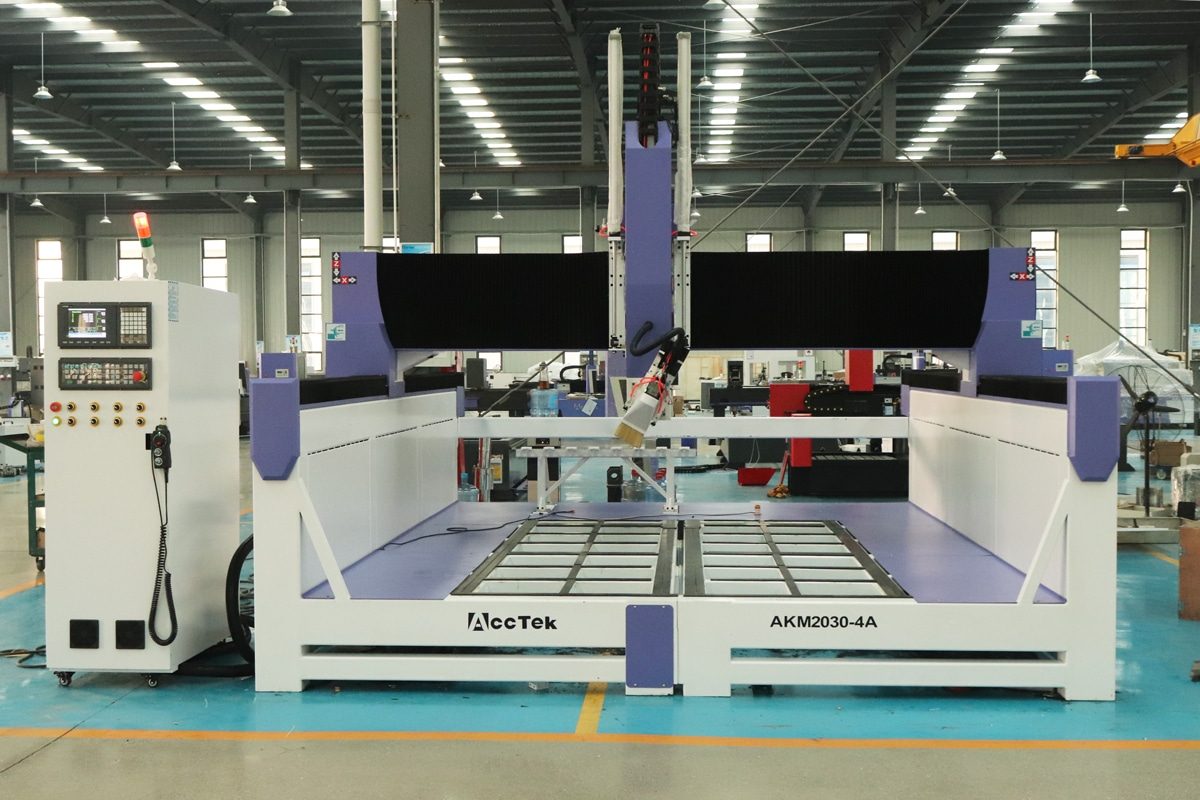
In the world of precision machining, the versatility and efficiency of CNC routers are undeniable. Among the most advanced configurations, the 4-axis CNC router with a swing head stands out as a powerful tool, capable of achieving complex geometries and intricate designs that were once impossible with traditional 3-axis machines. By adding a fourth axis of movement, along with the ability to rotate the head, this system opens up new possibilities for cutting, engraving, and milling a variety of materials with unprecedented precision.
However, to truly maximize the potential of a 4-axis CNC router with a swing head, operators must understand not only the machine’s capabilities but also the techniques that unlock its full range of functions. In this article, we’ll share valuable tips and best practices to help you get the most out of your 4-axis CNC router with a swing head. From machine setup and tool selection to advanced techniques and troubleshooting, our goal is to equip you with the knowledge needed to achieve flawless results and increase productivity.
Understanding the 4-Axis CNC Router with Swing Head
A 4-axis CNC router is a sophisticated tool that extends the capabilities of traditional 3-axis CNC routers by adding an axis of movement, typically referred to as the fourth axis. This added functionality makes it possible to perform more complex operations on workpieces, allowing for greater precision and the ability to create intricate shapes, contours, and designs. But what sets a 4-axis CNC router with a swing head apart is the unique ability of the router head to rotate, further enhancing the machine’s versatility. Let’s dive deeper into the key features and functions that make these machines so powerful.
Key Features and Components
- The 3 Main Axes: Like any traditional CNC router, a 4-axis machine operates along the standard X, Y, and Z axes, which control movement in three-dimensional space—left to right (X), forward and backward (Y), and up and down (Z). These axes are the foundation for most cutting, milling, and engraving processes.
- The Fourth Axis (A-axis): The addition of a fourth axis enables rotational movement around the X or Y axis. This allows the CNC router to approach a workpiece from multiple angles without requiring repositioning or re-fixturing, which is particularly useful for complex parts.
- The Swing Head: A swing head refers to a rotating spindle or router head that can pivot or tilt at different angles, usually in the X-Y plane. This rotational capability provides the machine with additional flexibility, enabling it to work on complex parts with complex geometries.
How the Swing Head Works
The swing head on a 4-axis CNC router adds an extra dimension to traditional 3-axis machining. It allows for angular rotation, which means the cutting tool can be positioned at any angle relative to the workpiece, providing greater flexibility and accuracy. Here’s how it works:
- Rotational Movement: The swing head can rotate along the fourth axis (usually the A-axis), allowing it to access multiple sides of the workpiece without having to reposition or reset the part. This rotational movement enables complex cuts and detailed carving that a standard 3-axis CNC router would struggle with.
- Dynamic Machining: As the machine rotates the swing head, it can move in tandem with the three main axes. This dynamic capability means you can cut, mill, and engrave intricate designs and contours that would be impossible with a fixed, stationary spindle.
Common Applications of the 4-Axis CNC Router with Swing Head
- Engraving and Milling: The swing head allows for multi-angle engraving, making it perfect for detailed signage, artwork, or customized designs where precision at varying angles is crucial.
- 3D Carving: The ability to rotate the tool on the fourth axis opens up possibilities for creating 3D carvings in a wide range of materials, including wood, stone, and plastic. This makes the swing head invaluable in artistic projects, custom woodworking, and sculpture.
- Model Making: A 4-axis CNC router is a tool for the efficient manufacture of both ship hull models and car models. The combination of four axes of movement, along with the added functionality of a swing head, allows for multi-dimensional cutting and carving.
Understanding the mechanics of the 4-axis CNC router with a swing head reveals just how much more versatile and capable it is compared to standard routers. By adding rotational movement and tool flexibility, this system enables operators to create more intricate, multi-dimensional designs with greater ease and precision. Whether you’re engaged in detailed engraving, 3D carving, or complex part fabrication, the swing head’s ability to access workpieces from multiple angles and reduce the need for part repositioning offers significant improvements in both efficiency and accuracy. With this foundational knowledge, operators can unlock the true potential of the 4-axis CNC router, paving the way for a wide array of advanced machining possibilities.
Benefits of a 4-Axis CNC Router with Swing Head
The 4-axis CNC router with a swing head is an advanced machining tool that offers a range of benefits, particularly for industries that require high precision and versatility in their production processes. With the ability to work on multiple axes and rotate the cutting tool at various angles, these machines provide capabilities far beyond those of traditional 3-axis CNC routers. Let’s explore some of the key advantages of using a 4-axis CNC router with a swing head:
- Increased Precision and Detail: One of the most significant benefits of a 4-axis CNC router is its ability to achieve high levels of precision and intricate detail. The rotational movement provided by the fourth axis enables the machine to perform angled cuts, contours, and 3D shapes that would be difficult or impossible with a 3-axis machine. This added capability ensures that parts and designs have flawless precision, even when dealing with complex geometries.
- Enhanced Versatility: With a swing head, the 4-axis CNC router provides the flexibility to work on a wide variety of materials and parts from multiple angles without requiring frequent repositioning of the workpiece. This flexibility allows operators to tackle a diverse range of projects, from customized components to complex artistic designs, all within the same machine.
- Improved Efficiency and Productivity: The rotational capabilities of a 4-axis CNC router reduce the need for multiple tool setups or repositioning of the material. This leads to faster production times, reduced human error, and more efficient workflows. By reducing the amount of time spent manually adjusting or setting up workpieces, operators can focus on the finer details of the project, rather than the logistics of the process.
- Ability to Handle Complex and Intricate Projects: The combination of rotational and linear movement opens up a wide array of possibilities for complex machining. The swing head enables the machine to perform angled cuts, multi-directional milling, and precise 3D carving. Additionally, the 4-axis machine can cut and shape materials in ways that traditional routers cannot, leading to more creative design possibilities and the ability to push the boundaries of what’s possible.
- Reduced Setup Time and Increased Part Accuracy: Traditional CNC routers often require parts to be removed and repositioned multiple times during machining. With a 4-axis CNC router featuring a swing head, parts can be machined from all necessary angles without ever having to be removed from the machine bed. This not only reduces the setup time but also ensures greater consistency and precision between cuts.
The 4-axis CNC router with a swing head offers significant advantages over traditional machines, enabling operators to produce more precise, complex, and intricate parts with increased efficiency. By eliminating the need for multiple setups and offering the flexibility to machine from various angles, it ensures faster production times, reduces errors, and opens up new possibilities for creative design. Whether you’re in sign-making, furniture production, or complex 3D sculpture, this advanced CNC router can be a game-changer, unlocking new levels of productivity and quality for your business.
Tips for Operators: Maximizing Efficiency and Precision
Operating a 4-axis CNC router with a swing head requires both technical expertise and an understanding of how to optimize machine capabilities for maximum efficiency and precision. Whether you’re a beginner or an experienced operator, the following tips will help you get the most out of your 4-axis machine, ensuring high-quality results and smooth production processes.
Proper Machine Calibration and Setup
A successful operation begins with ensuring the machine is correctly calibrated. Calibration is beneficial for maintaining accuracy and preventing errors that can affect the final product.
- Check Alignment: Ensure that the X, Y, Z, and A axes are properly aligned. Misalignment can cause parts to be cut inaccurately or lead to machine wear.
- Set Tool Offsets Correctly: Proper tool offsets ensure the tool reaches the right depth and angle during machining. Double-check these offsets before starting any project to avoid cutting errors.
- Verify Swing Head Positioning: The swing head must be properly set up and calibrated to avoid incorrect angles and miscuts. Confirm that the rotation limits are within safe and functional ranges for your specific task.
Selecting the Right Tools and Materials
Choosing the correct tools and materials for your project is beneficial for optimizing both machine performance and part quality.
- Match Tools to Material: For example, carbide end mills are ideal for harder materials like aluminum or metal, while high-speed steel (HSS) is suitable for softer materials such as wood or plastic.
- Use the Right Cutting Tool Geometry: For precision work, ensure that the tool geometry suits the task. Smaller, finer tools are needed for detail-oriented tasks like engraving, while larger tools work better for rough milling.
- Optimize Material Size: Ensure that your material is properly sized for the job and securely fixed in place to prevent movement that could lead to inaccuracies.
Optimizing Feed Rates and Speeds
Adjusting the feed rates and spindle speeds according to the material and tooling can dramatically impact both the quality of the cut and the life of the tool.
- Match Speed to Material: Softer materials such as plastics or wood may require faster feed rates, while harder materials like metal need slower speeds for better cutting precision and tool life.
- Adjust for Tool Type: Different tools have different optimal speeds. For example, high-speed steel (HSS) tools work best at lower speeds, while carbide tools perform better at higher speeds.
- Fine-tune Feed Rates for Detail: When working on fine detail or intricate designs, reduce the feed rate to allow the router more time to make precise cuts.
Using Tool Path Simulation Software
Tool path simulation software is a powerful tool for testing the cutting process before engaging the machine, helping avoid costly mistakes and ensuring the desired result.
- Test G-code: Simulate the tool paths in CAD/CAM software to detect any potential errors or collisions before running the program on the machine. This is particularly important for 4-axis operations where the swing head and tool movement are more complex.
- Optimize Tool Movement: Use the simulation to optimize tool movement and minimize the number of tool changes or unnecessary reorientations during the machining process. This will save both time and material costs.
Regular Maintenance and Care
Routine maintenance is helpful in keeping your 4-axis CNC router running smoothly and ensuring the longevity of both the machine and the tools.
- Clean Regularly: Keep the machine free from dust, debris, and coolant buildup. Regular cleaning prevents parts from wearing down prematurely and ensures smooth motion along all axes.
- Lubricate Moving Parts: Apply appropriate lubrication to all moving parts, especially the swing head and rotary axis. Lack of lubrication can lead to wear and malfunction, especially during extended use.
- Inspect for Wear and Tear: Frequently inspect the machine for any signs of wear, such as looseness in the swing head or unusual vibrations. Addressing these issues early can prevent larger mechanical problems down the road.
Monitor and Adjust Cutting Parameters in Real-Time
Constantly monitor the cutting process and adjust parameters as needed to ensure optimal performance throughout the operation.
- Listen for Unusual Sounds: Pay attention to any unusual sounds such as grinding or rattling, which may indicate that something is off, such as improper tool choice, misalignment, or incorrect speeds.
- Monitor Tool Wear: Regularly check the condition of your cutting tools, particularly when working with tough materials. Worn tools can affect both the quality of the cut and the finish of the workpiece.
- Real-Time Adjustments: If your machine offers it, use automatic tool compensation or real-time adjustments to fine-tune feeds, speeds, and other parameters while the machine is running.
Maximizing the efficiency and precision of your 4-axis CNC router with a swing head requires attention to detail in every phase of the process, from initial setup to regular maintenance. By following these best practices, you can ensure that your machine operates at peak performance. With these tips in hand, operators can confidently tackle a wide range of intricate projects, reducing errors, saving time, and achieving superior results every time.
Advanced Techniques for Experienced Operators
For operators who have mastered the basics of 4-axis CNC routing, advancing to more complex techniques can significantly expand the scope of what you can achieve with your machine. By mastering advanced programming and precision milling strategies, experienced operators can unlock new levels of efficiency, accuracy, and creativity. These techniques allow for the creation of more intricate designs, faster production times, and the ability to tackle projects that require the utmost precision.
Complex 4-Axis Programming
Advanced CNC programming is a must for operators looking to push the limits of what their 4-axis machine can achieve. Understanding how to program intricate tool paths and utilize the full functionality of the swing head is key to mastering complex machining tasks.
- Mastering G-code for 4-Axis Operations: For intricate designs, it is needed can control rotational movements through G-code. Operators should be familiar with advanced G-code commands like G68 for coordinate rotation, which enables the programming of precise angular tool paths.
- Using CAM Software for Complex Tool Paths: With CAD/CAM software, operators can design more complex parts and generate tool paths that incorporate both 3D machining and the rotational capabilities of the fourth axis. This allows for the creation of highly detailed and customized components, such as engraved artwork or contour-shaped molds.
- Program Angular Cuts and Angled Milling: A critical advantage of 4-axis machining is the ability to create angled cuts and mills. By programming the swing head’s rotation and adjusting the cutter path, operators can machine complex features like beveled edges or sloped surfaces.
Integrating Automation with 4-Axis CNC Routers
To further increase efficiency, experienced operators can integrate automated material handling systems into their workflow. This level of automation is particularly useful for high-volume production environments where reducing labor and cycle time.
- Automated Loading and Unloading: Implement automated systems that can load and unload materials without requiring manual intervention. This can drastically reduce cycle times and allow for continuous production without downtime between shifts.
- Use Automated Tool Changers: If your machine supports it, use an automated tool changer to reduce the time spent manually changing tools between operations, especially when working on complex multi-step jobs.
Advanced Troubleshooting and Fine-Tuning
Even with years of experience, CNC operators must be able to identify and troubleshoot issues quickly to minimize downtime and maintain high-quality production.
- Minimizing Vibration and Tool Deflection: Excessive vibration can compromise precision and finish quality. Make adjustments to the spindle speed and feed rate, and ensure that the workpiece is securely clamped. Use vibration-damping fixtures for sensitive operations.
- Fine-Tuning Toolpath Optimization: If parts are not coming out as expected, take a closer look at your toolpath. Use path optimization techniques, such as adaptive milling, to reduce unnecessary movements and improve the cutting process.
- Temperature and Material Management: Some materials may expand or contract under heat, affecting cut quality. Keep an eye on the material temperature and adjust cutting speeds accordingly to avoid warping or thermal damage.
Implementing these advanced techniques, experienced operators can maximize the potential of their 4-axis CNC router, tackling more complex and detailed projects with increased efficiency and precision. From mastering multi-axis programming to integrating automation and fine-tuning toolpaths, these strategies open up new possibilities for higher-quality production and innovation. As you continue to explore and refine these advanced methods, you’ll be able to push the boundaries of what’s possible in CNC machining, delivering exceptional results and staying ahead in an increasingly competitive industry.
Troubleshooting Common Issues
While a 4-axis CNC router with a swing head is a powerful and versatile tool, operators may occasionally encounter issues that can impact machining accuracy, efficiency, or overall performance. Understanding common problems and knowing how to troubleshoot them is beneficial for minimizing downtime and maintaining high-quality results. Whether you’re dealing with vibrations, tool wear, misaligned cuts, or machine malfunctions, addressing these challenges quickly and effectively is key to keeping your operations running smoothly.
Vibration and Instability During Machining
Excessive vibration during machining can lead to inaccuracies, poor surface finish, and even premature wear on the tools or machine components. This issue is often caused by improper machine setup, tool selection, or the material being machined. Here are the solutions:
- Check and Secure Workholding: Ensure that the workpiece is securely fastened and that the machine bed is level. Use vibration-damping materials or fixtures if necessary.
- Adjust Feed Rates and Speeds: Experiment with slower feed rates and spindle speeds to minimize vibrations, particularly when working with hard materials or fine details.
- Inspect Tool Condition: Verify that the tools are properly balanced and not excessively worn. Use new or well-maintained tools for precision tasks.
- Use Rigid Tooling: Opt for stiffer cutting tools, such as solid carbide, to improve stability during cuts.
Inconsistent or Poor Surface Finish
A rough or inconsistent surface finish is a common issue when working with complex cuts, particularly with multi-axis operations. This can be a result of incorrect machining parameters, tool wear, or insufficient machine calibration. Here are the solutions:
- Optimize Cutting Parameters: Adjust feed rates, spindle speeds, and stepovers based on the material and tool type. For finer cuts, reduce the step-over distance to improve surface smoothness.
- Use Fresh Tools: Worn or damaged tools can create rough surfaces. Replace tools regularly or sharpen them when necessary.
- Check Machine Calibration: Regularly calibrate the machine’s axes and swing head to ensure consistent accuracy during milling.
- Improve Cooling/Lubrication: Ensure the correct coolant is being used for the material being machined. Proper cooling reduces tool wear and prevents overheating, which can affect surface quality.
Tool Wear and Breakage
Excessive tool wear or premature breakage can occur when machining harder materials or using incorrect cutting parameters. This can lead to downtime, costly replacements, and damage to the workpiece. Here are the solutions:
- Choose the Right Tool for the Job: Always match tools to the material you’re cutting. For example, use carbide tools for metals and HSS tools for softer materials like wood.
- Adjust Cutting Parameters: Slow down feed rates or spindle speeds if you notice excessive wear. Consider using chip load optimization to extend tool life.
- Use Proper Cooling and Lubrication: Ensure sufficient coolant is applied to reduce heat buildup, especially when machining metals. Proper lubrication also reduces friction and wear on the tool.
- Monitor Tool Condition: Regularly inspect tools for wear and replace them before they become too damaged to prevent breakage or poor part quality.
Inaccurate Part Dimensions
If parts are coming out with inaccurate dimensions or misaligned cuts, it can result in wasted material, increased production time, and rejected parts. This is usually caused by misalignment, calibration issues, or incorrect machining settings. Here are the solutions:
- Check Workpiece Alignment: Ensure the workpiece is aligned properly on the bed and that all clamping systems are securely holding it in place. Misalignment can cause shifts during machining.
- Verify Tool Offsets and G-Code: Double-check your tool offsets, as well as the G-code generated by your CAM software. Incorrect offsets or programming errors can lead to misaligned cuts.
- Calibrate the Machine Regularly: Regularly check and calibrate your CNC machine, especially the fourth axis (swing head), to ensure accuracy over time.
- Prevent Overheating and Deflection: Lower cutting speeds or use different tool paths to reduce the chance of deflection. Ensure tools are rigid and not susceptible to bending under load.
Troubleshooting common issues with a 4-axis CNC router with a swing head requires a combination of technical knowledge, preventative maintenance, and attention to detail. Regular machine checks, correct tool and material selection, and optimizing cutting parameters are essential practices for keeping your CNC router in top condition and maintaining efficient operations. By staying proactive and understanding the potential causes and solutions to these issues, operators can ensure smoother workflows and better end products.
Summarize
Maximizing the potential of a 4-axis CNC router with a swing head requires a combination of technical knowledge, careful machine setup, and a strategic approach to machining processes. Implementing best practices, from calibration and tool selection to advanced techniques like multi-axis milling and automation integration, can significantly enhance both the quality and speed of production. By following the tips outlined in this article, operators can confidently tackle even the most complex machining projects, ensuring that their 4-axis CNC router becomes an invaluable asset in achieving precision, innovation, and productivity.
For operators looking to take their machining capabilities to the next level, AccTek CNC routers offer the perfect combination of precision, reliability, and versatility. With a range of models designed to handle everything from intricate sign-making to complex 3D carving and multi-axis machining, AccTek’s CNC routers are built to meet the demands of a variety of industries. Whether you’re working with wood, metal, plastic, or stone, AccTek’s advanced CNC routers ensure high-quality results every time. Explore AccTek CNC routers today to elevate your production efficiency, expand your design possibilities, and achieve unmatched precision in all your machining projects.