

- 10-15 Min Read
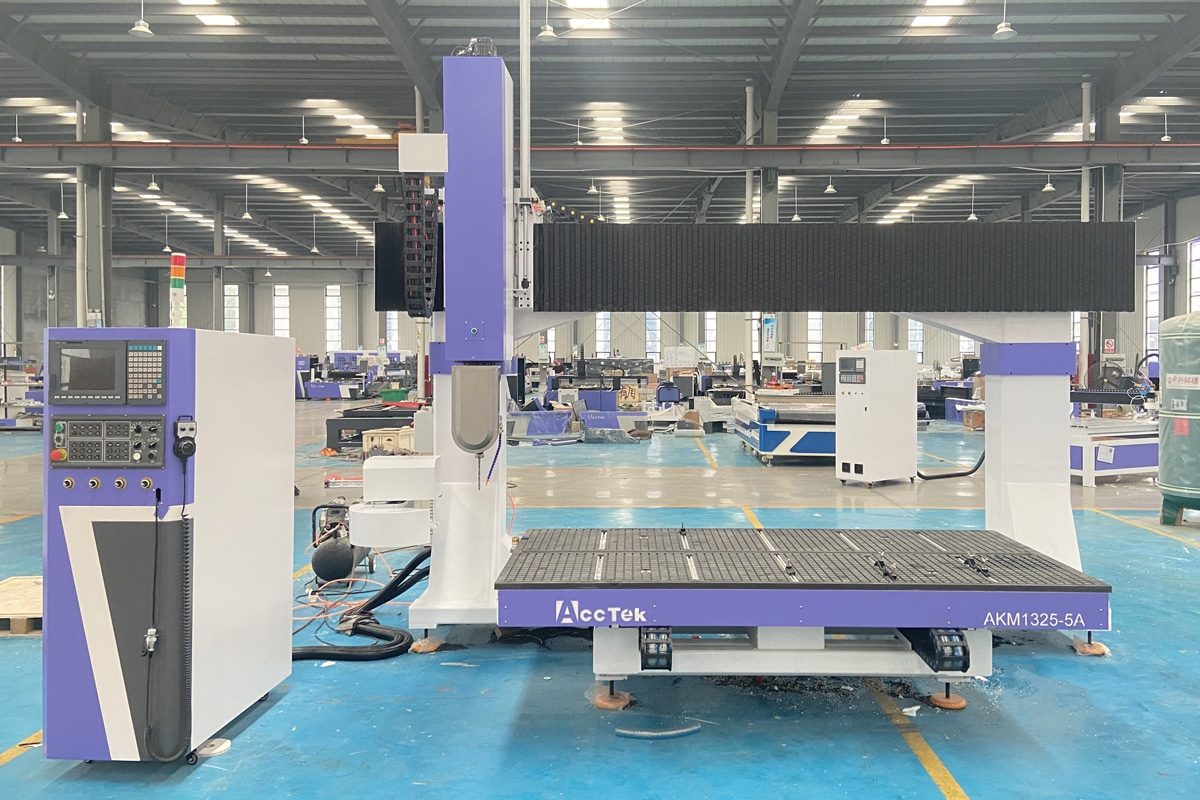
CNC router technology has transformed the way industries approach manufacturing, offering unmatched precision, efficiency, and versatility. At the heart of these machines lies a key factor that defines their capability—the number of axes they operate on. The progression from 3-axis to 5-axis CNC routers represents more than just additional movement; it reflects a major leap in design possibilities, production efficiency, and competitive advantage for manufacturers.
While 3-axis CNC routers remain a reliable choice for standard applications, the development of 4-axis and 5-axis systems has unlocked new levels of creativity and complexity, allowing businesses to take on once unimaginable projects. This article explores the advancements in CNC router technology, tracing the journey from 3-axis machines to today’s cutting-edge 5-axis systems. By understanding this evolution, manufacturers can better appreciate the opportunities modern CNC technology offers and make informed decisions about the right equipment for their needs.
Understanding CNC Router Axes
To truly understand the capabilities of a CNC router, one must grasp the concept of axes. The axes define the directions in which a cutting tool or workpiece can move, and they form the foundation for the machine’s precision, flexibility, and range of applications. Each axis represents one degree of freedom, and the combination of multiple axes determines the complexity of shapes the machine can produce. From the basic linear X, Y, and Z movements to the advanced rotary axes, each additional axis expands what a CNC router can achieve.
Linear Axes
In CNC routers, axes define the directions in which the cutting tool or workpiece can move. The most fundamental axes are linear axes, which form the basis of all CNC machining:
- X-Axis: Horizontal movement from left to right across the worktable.
- Y-Axis: Horizontal movement from front to back along the worktable.
- Z-Axis: Vertical movement, moving the cutting tool up and down.
Together, these three axes allow the CNC router to perform 2D and basic 3D operations, such as cutting, carving, engraving, and drilling. Movements along these axes are precisely controlled by the CNC system, enabling high accuracy and repeatability in manufacturing. The X, Y, and Z axes provide the foundational movements that allow a CNC router to shape materials, and they form the starting point for more advanced multi-axis systems.
Additional Axes
In CNC routers, additional axes refer to rotary movements beyond the standard X, Y, and Z linear axes. These extra axes allow the cutting tool or the workpiece to tilt or rotate, enabling more complex machining operations without needing to reposition the material manually.
- A-Axis: Rotation around the X-axis.
- B-Axis: Rotation around the Y-axis.
- C-Axis: Rotation around the Z-axis.
By incorporating these extra degrees of motion, CNC routers move beyond basic 3-axis cutting and can perform advanced 3D contouring, undercuts, and multi-sided machining in a single setup.
Axes are the defining element of CNC router technology. While the X, Y, and Z axes handle standard linear movements, rotary and additional axes unlock multi-dimensional machining, enabling complex shapes and intricate designs. Recognizing the differences between linear and rotary axes helps users appreciate the evolution from simple 3-axis systems to highly versatile 5-axis machines, laying the groundwork for selecting the right CNC router for specific industrial applications.
The Foundation: 3-Axis CNC Routers
3-axis CNC routers represent the foundation of modern CNC machining, offering precise and reliable cutting along three linear axes: X, Y, and Z. Understanding the advantages and limitations of 3-axis routers provides valuable insight into the starting point of CNC technology and sets the stage for appreciating the advancements offered by 4-axis and 5-axis systems.
Applications
3-axis CNC routers excel in applications that involve flat or moderately contoured surfaces, repetitive patterns, and moderate 3D shaping. They are ideal for small- to medium-scale production, prototyping, and industries where affordability and reliability are key priorities. Common applications include:
- Woodworking and Furniture Production: Creating cabinetry, furniture components, and decorative patterns.
- Sign Making and Engraving: Producing 2D or shallow 3D signs in wood, plastic, or acrylic.
- Basic Prototyping: Carving foam or plastic for product models.
- Simple 2D and 2.5D Machining Tasks: Ideal for low-complexity parts where high precision is required but multi-axis movement is unnecessary.
- Arts and Crafts: Producing intricate decorative patterns and carvings.
Advantages
3-axis CNC routers offer an excellent balance of precision, reliability, and affordability, making them ideal for standard manufacturing tasks where advanced multi-axis capabilities are not required. The main advantages are:
- Simplicity and Ease of Use: Straightforward design makes programming and operation easier than multi-axis machines.
- Affordability: Compared to multi-axis systems, 3-axis routers are more cost-effective, making them accessible for small to medium-sized businesses.
- Precision and Reliability: Provides accurate, repeatable cuts for 2D and basic 3D tasks. Stable performance ensures consistent quality across multiple workpieces.
- Versatility for Standard Applications: Precision: They offer accurate cutting and carving for a wide range of materials, including wood, plastic, foam, and soft metals.
- Lower Maintenance Requirements: Fewer moving parts and simpler mechanics result in easier upkeep.
Limitations
While 3-axis CNC routers provide reliability and cost-effective precision, their limited motion restricts them to simpler geometries and standard applications. Here are its limitations:
- Restricted Geometries: Can only perform cutting and shaping along the X, Y, and Z axes. Unable to machine complex angles, undercuts, or multi-sided parts without repositioning the workpiece.
- Multiple Setups Required: Complex 3D or multi-sided parts often require several repositionings and additional clamps, increasing production time.
- Limited Flexibility: Not suitable for highly intricate designs or parts that require tilting the tool for angled cuts. Less efficient for industries that demand advanced 3D machining.
While 3-axis CNC routers are limited to basic geometries and linear movements, they excel in applications that demand precision, reliability, and cost-effectiveness. Their straightforward design makes them ideal for small to medium-scale production, prototyping, and industries that do not require complex multi-angle machining. Serving as the foundation of CNC technology, 3-axis CNC routers provide the essential knowledge and experience needed to transition to more advanced multi-axis systems.
The Transition: CNC Routers with Rotary Axis
As manufacturers looked for more flexibility beyond the limitations of 3-axis CNC routers, the addition of a rotary axis emerged as a practical solution. This upgrade, often referred to as a 4-axis CNC router, enables the machining of cylindrical and curved components with greater precision and efficiency. By allowing the workpiece to rotate during cutting, these machines open up new design possibilities while maintaining a balance between cost and functionality.
Applications
Adding a rotary axis expands the capabilities of a standard 3-axis CNC router, enabling it to handle curved or cylindrical parts with greater efficiency and precision. Common applications include:
- Furniture Manufacturing: Crafting chair legs, table legs, and decorative columns. Engraving intricate designs on curved wooden components.
- Signage and Engraving: Producing 3D engravings on cylindrical or rounded surfaces.
- Prototyping and Product Development: Machining rounded prototypes in wood, plastic, or soft metals. Reducing the number of setups compared to a 3-axis machine.
- Artistic and Decorative Work: Producing custom ornamental designs with rotational features.
- Low- to Medium-Complexity Industrial Parts: Engraving or machining cylindrical components for mechanical applications.
Advantages
By adding a rotary axis, 4-axis CNC routers strike a balance between affordability and flexibility. They expand machining capabilities to include cylindrical and curved components while maintaining user-friendly operation and cost-effectiveness. The main advantages are:
- Greater design possibilities for moderate 3D contours.
- Enhanced 3D Machining: While still primarily a linear system, the rotary axis allows more complex contours and engravings.
- Reduced Repositioning: Eliminates the need to manually rotate the workpiece for multi-sided machining, saving time and reducing errors.
- Improved Efficiency and Precision: Single-setup operations maintain alignment accuracy, resulting in smoother finishes and higher-quality parts.
- Expanded Design Possibilities: Allows for more detailed engravings, patterns, and 3D contours on cylindrical or rounded surfaces.
- Cost-Effective Step Up from 3-Axis: Offers greater versatility than a 3-axis CNC router without the higher investment required for a 5-axis system.
Limitations
Although 4-axis CNC routers greatly improve versatility over 3-axis systems, they remain limited compared to full 5-axis machines. They are best suited for cylindrical or moderately complex parts, but may fall short for industries that demand highly intricate, multi-angle machining.
- Restricted Multi-Angle Machining: While the rotary axis allows cylindrical work, it cannot perform the full range of tilting and angled cuts that a 5-axis CNC router can achieve.
- Programming Complexity: Requires more advanced programming than a standard 3-axis CNC router, which can increase setup time for beginners or small shops.
- Higher Cost than 3-Axis Machines: More expensive than entry-level 3-axis CNC routers, though still more affordable than 5-axis systems.
CNC routers with a rotary axis represent an important step forward in the evolution of machining technology. They extend the capabilities of traditional 3-axis systems to include cylindrical and rotational work, making them highly valuable for industries such as furniture, signage, and decorative manufacturing. While they do not offer the full versatility of 5-axis machines, 4-axis CNC routers provide an excellent middle ground—enhancing productivity, reducing setups, and expanding design flexibility without the steep learning curve or cost of higher-axis systems.
The Breakthrough: 5-Axis CNC Routers
As industries demanded more complex designs and higher precision, CNC router technology took a major leap forward with the development of 5-axis systems. Unlike 3-axis and 4-axis machines, 5-axis CNC routers allow the cutting tool to move along the X, Y, and Z axes while simultaneously rotating on two additional axes (typically A and B). This combination allows the cutting tool to tilt and rotate around the workpiece, accessing complex angles and surfaces without repositioning. The result is maximum flexibility and efficiency, enabling intricate machining in a single setup.
Applications
5-axis CNC routers are designed for industries that demand high precision, complex geometries, and efficient production. Their ability to machine from multiple angles in a single setup makes them invaluable in advanced manufacturing. Common applications include:
- Art and Sculpture: Artists and sculptors use 5-axis CNC routers to create intricate and detailed works of art. The ability to machine from multiple angles allows for the creation of complex and realistic sculptures that would be difficult to achieve by hand.
- 3D Model: The 5-axis CNC router machine is used for 3D milling in mold making, especially for car body making, boat mold building, and other 3D modeling projects.
- Prototyping and Model Making: In industries ranging from product design to architectural modeling, 5-axis CNC routers are used to create prototypes and models of various shapes and sizes with high accuracy. These machines can accurately replicate intricate designs, allowing for rapid prototyping and iterative design processes.
Advantages
5-axis CNC routers provide the highest level of precision, efficiency, and flexibility, making them a valuable asset for manufacturers looking to enhance their machining capabilities and improve efficiency. The 5-axis CNC router has many advantages, which are specifically reflected in the following aspects:
- Unmatched Design Flexibility: Capable of machining freeform surfaces, undercuts, and intricate geometries that lower-axis machines cannot handle.
- Single-Setup Efficiency: Multi-angle machining in one setup reduces repositioning, saving time and minimizing human error.
- Superior Accuracy and Surface Finish: Delivers tight tolerances and smoother finishes, reducing the need for extensive post-processing.
- Faster Production Cycles: Increases throughput by combining complex operations into one machining process.
- Competitive Advantage: Enables manufacturers to take on advanced projects, expand into new markets, and meet demanding client requirements.
Limitations
While 5-axis CNC routers offer unparalleled capabilities, their cost, complexity, and maintenance demands make them best suited for industries with advanced manufacturing needs. For simpler projects, a 3-axis or 4-axis system often provides a more practical and cost-effective solution.
- High Investment Cost: Significantly more expensive than 3-axis and 4-axis machines, both in purchase price and maintenance.
- Complex Operation and Programming: Requires advanced CAD/CAM software and skilled operators, which increases training and labor costs.
- Longer Learning Curve: Programming and setup are more challenging, making it steeper training requirements for beginners or small shops.
- Higher Maintenance Requirements: Additional moving parts and sophisticated systems increase the need for regular upkeep and technical support.
- Overcapacity for Simple Projects: For basic cutting, engraving, or 2D tasks, a 5-axis machine may be unnecessary and inefficient compared to lower-axis options.
5-Axis CNC routers stand at the pinnacle of CNC routing technology, offering unmatched flexibility, speed, and precision. They empower manufacturers to produce complex, high-quality parts in a single setup, dramatically reducing production time and errors. While the cost and complexity of these systems may limit their accessibility, their advantages far outweigh the drawbacks for industries that demand cutting-edge performance. 5-Axis CNC routers represent the future of advanced manufacturing, bridging the gap between innovative design and flawless execution.
Technological Innovations Driving CNC Router Evolution
The evolution of CNC router technology has been driven by continuous innovations that enhance precision, efficiency, and versatility. From improved hardware components and cutting tools to advanced software and automation, these technological breakthroughs have transformed CNC routers from simple cutting machines into intelligent, multi-axis systems. Understanding these innovations provides insight into how modern CNC routers can tackle increasingly complex designs while reducing production time and improving overall quality.
- Advanced CAD/CAM Software: Modern design and programming software enables a seamless transition from digital models to machine instructions. Features such as simulation, collision detection, and toolpath optimization reduce programming errors and improve productivity.
- High-Speed Spindles and Cutting Tools: Improved spindle technology allows faster cutting speeds and better surface finishes, while innovations in tooling materials (such as carbide and diamond-coated bits) increase durability and expand material compatibility.
- Automation and Smart Controls: Integration of automated tool changers, probing systems, and adaptive controls reduces manual intervention and enhances accuracy. Some CNC routers now feature AI-assisted monitoring to adjust feed rates and detect anomalies in real time.
- Improved Drive Systems: Advancements in servo motors, linear guides, and ball screws have improved positioning accuracy, speed, and reliability, enabling smoother motion across multiple axes.
- Multi-Axis Capabilities: The shift from 3-axis to 4-axis and 5-axis systems reflects a push toward more complex geometries, reduced setups, and enhanced design freedom. These innovations allow manufacturers to expand into industries with demanding tolerances.
- Connectivity and Industry 4.0 Integration: Modern CNC routers are increasingly connected to smart factory systems. Features like remote monitoring, cloud-based data management, and predictive maintenance tools enable higher efficiency and reduced downtime.
Technological innovations have played a pivotal role in advancing CNC router capabilities. High-speed spindles, sophisticated CAD/CAM software, multi-axis motion, and smart automation systems have collectively expanded what manufacturers can achieve, enabling faster, more accurate, and more complex machining than ever before. These advancements not only enhance productivity but also empower businesses to take on challenging projects and meet the demands of modern industry, setting the stage for the next generation of CNC technology.
Choosing Between 3-, 4-, and 5-Axis CNC Routers
Selecting the right CNC router directly impacts production efficiency, part quality, and overall business performance. With options ranging from 3-axis to 5-axis systems, each type offers distinct capabilities, advantages, and limitations. Understanding the differences in motion, precision, and flexibility—as well as considering production volume, part complexity, and budget—helps businesses choose the system that best aligns with their operational needs and long-term goals.
Business Considerations
Investing in a CNC router is not just a technical decision—it’s a strategic business choice. Companies must weigh multiple factors to ensure that the machine supports production goals, delivers a return on investment, and aligns with long-term growth.
- Cost and Budget: 3-axis CNC routers are the most affordable and have low maintenance costs. 4-axis CNC routers with rotary axes are moderately priced, providing a balance between functionality and cost. 5-axis CNC routers represent a significant investment but deliver maximum versatility and efficiency.
- Production Needs and Volume: Determine the type and quantity of parts to be produced. High-volume or highly complex parts may justify investment in 5-axis systems, whereas lower-volume or simpler designs may be well-served by 3- or 4-axis CNC routers.
- Workforce and Training: Assess the skill level of operators and programmers. Advanced systems require specialized training in CAD/CAM software and multi-axis machining. Factor in training costs and potential downtime during the learning curve.
- Part Complexity: 3-axis machines efficiently produce flat or mildly contoured parts. 4-axis CNC routers enable machining of curved or cylindrical components without multiple setups. 5-axis systems excel at producing 3D complex parts with freeform surfaces.
When to Upgrade from 3-Axis to 5-Axis CNC Routers
Upgrading from a 3-axis CNC router to a 4- or 5-axis system is a strategic decision that depends on production needs, part complexity, and long-term business goals. Here are the key indicators that an upgrade may be necessary:
- Increasing Part Complexity: Rotational or cylindrical features are becoming common in your production workflow. Parts require multi-angle machining or freeform surfaces that a 3-axis machine cannot achieve efficiently.
- Requires Greater Efficiency and Consistency: Frequent multiple setups on a 3-axis machine are slowing production and increasing the risk of errors. A 4- or 5-axis system allows single-setup machining, improving throughput and consistency.
- Expanding Product Lines or New Markets: Your business plans to take on more complex projects that cannot be efficiently handled by 3-axis systems. Entering markets that demand advanced machining capabilities may justify the investment.
- Cost-Benefit Considerations: The efficiency gains, reduced labor, and improved quality from a higher-axis machine outweigh the additional upfront cost. Long-term ROI supports upgrading, especially if your existing 3-axis CNC router limits growth or competitiveness.
Choosing between 3-, 4-, and 5-axis CNC routers requires balancing capabilities, cost, and production requirements. While 3-axis machines are ideal for simpler parts and smaller budgets, 4-axis CNC routers offer additional flexibility for cylindrical or moderately complex components. For highly intricate, multi-surface designs, the 5-axis system provides unmatched precision and efficiency. Upgrading from 3-axis to 5-axis CNC routers becomes necessary when part complexity, production volume, precision requirements, and market demands exceed the capabilities of a 3-axis system. By carefully assessing production volume, part complexity, and financial considerations, manufacturers can select the right system to optimize performance, quality, and long-term growth.
Summarize
The progression from 3-axis to 5-axis CNC routers demonstrates how technological advancements have expanded the possibilities of modern manufacturing. Each stage—from the foundational 3-axis systems to the versatile 4-axis and highly precise 5-axis machines—offers unique advantages suited to different production needs, part complexities, and industry applications. Understanding these developments helps businesses make informed decisions when selecting the right CNC router, ensuring they remain competitive and capable of meeting the evolving demands of today’s manufacturing landscape.
For manufacturers seeking reliable and high-performance CNC routers, AccTek CNC is a trusted partner. Specializing in 3-axis, 4-axis, and 5-axis CNC routers, in addition to standard models, AccTek provides custom CNC solutions tailored to meet specific production requirements. Backed by professional technical support, AccTek ensures that customers can maximize the performance and reliability of their CNC routers. With a focus on precision, durability, and user-friendly operation, our CNC routers provide businesses with the tools they need to enhance productivity, achieve superior quality, and stay competitive in an evolving market.