

- 12-17 Min Read
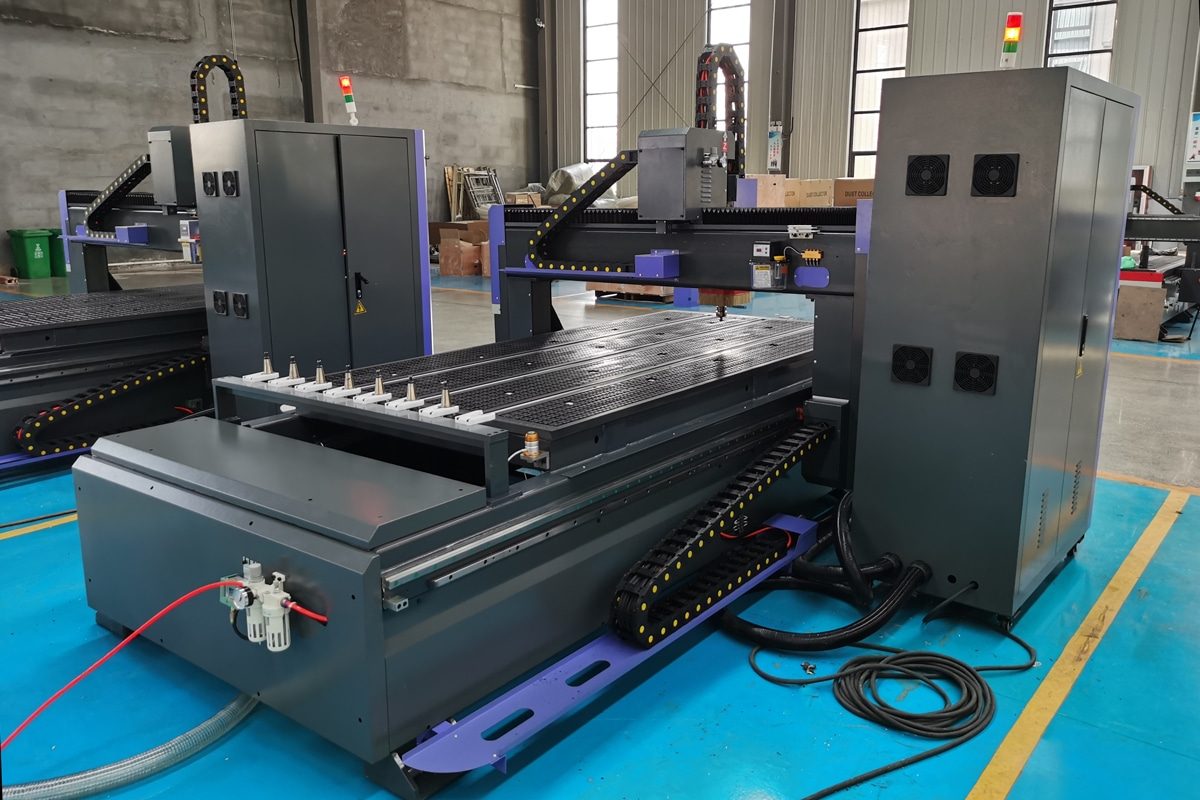
ATC CNC routers have become an essential tool in modern manufacturing and woodworking environments. Unlike standard CNC routers, ATC models are equipped with a built-in tool-changing system that allows the machine to automatically switch between different bits during a job. This capability eliminates the need for manual intervention, significantly increasing efficiency, accuracy, and workflow continuity. As a result, ATC CNC routers are especially valuable in settings where complex, multi-step machining tasks are common.
But not every project requires the advanced functions of an ATC system. While the benefits are clear, the real value comes when the machine is matched with the right type of work. What kinds of projects truly make the most of an ATC CNC router’s capabilities? In this article, we’ll explore the types of applications where ATC CNC routers shine the brightest, helping you determine whether this powerful technology is the right fit for your needs.
What Is an ATC CNC Router?
An ATC CNC router is a type of computer-controlled cutting machine equipped with an Automatic Tool Changer system. This feature allows the machine to automatically switch between different tools during a single machining operation without manual intervention. Before exploring which projects are best suited for ATC CNC routers, it’s important to understand the basics of these machines and how they differ from standard CNC models.
Core Features of an ATC CNC Router
What makes the ATC CNC router so suitable for complex, high-volume projects stems from two key features.
- Automatic Tool Change Mechanism: It enables the machine to switch between multiple tools during a single job without manual intervention. This system typically includes a tool holder and a programmable spindle that picks up and drops off tools as needed. The process is fast, precise, and fully integrated into the machining workflow.
- Multi-Tool Capability: An ATC CNC router can hold and use several different tools. This makes it ideal for complex projects that involve a variety of cutting, drilling, and engraving tasks. The ability to automate tool changes allows for smoother transitions between operations and consistently high-quality results.
Typical Tool Magazine Types and Capacities
ATC CNC routers use different types of tool magazines to store and organize cutting tools, and the type of magazine often depends on the machine’s design, size, and application. The two most common tool magazine types are linear and carousel.
- Linear Tool Magazine: This design arranges tools in a straight line, typically mounted at the rear or side of the machine bed. It’s common on smaller or mid-sized CNC routers and is favored for its simple structure and easy maintenance. Tool changes occur by moving the spindle to the magazine’s location. The typical capacity of this tool magazine is 4 to 12 tools.
- Carousel Tool Magazine: This type uses a rotating disk or arm that holds tools in a circular arrangement, usually mounted near the spindle or on the machine’s gantry. It allows for faster tool changes since the spindle doesn’t need to travel far. This type is more common in high-end or industrial-grade CNC routers. Its typical capacity is 8 to 20+ tools.
Key Advantages of ATC CNC Routers
ATC CNC routers offer several significant benefits over standard CNC machines, especially in professional and high-volume production environments. Here are the key advantages that make them a valuable investment:
- Improved Efficiency and Productivity: With faster tool changes and less downtime, ATC CNC routers can complete complex jobs more quickly.
- Greater Precision and Consistency: Automatic tool changes ensure that each tool is positioned accurately every time, maintaining consistent cutting quality across different steps of a job.
- Versatility for Complex Projects: The ATC CNC router can handle a wide variety of tasks in a single job setup, including cutting, drilling, engraving, pocketing, and more. This makes them ideal for complex or layered designs.
- Reduced Operator Fatigue and Error: By automating the tool-changing process, these machines lessen the workload on operators, reducing fatigue and minimizing the chance of mistakes during long or repetitive jobs.
An ATC CNC router combines the core benefits of CNC technology with the added efficiency of automatic tool changing. For businesses or workshops handling complex, varied, or large-scale projects, an ATC CNC router offers a clear advantage in performance and precision. As we move forward, we’ll explore what types of projects truly benefit from these capabilities and when an ATC router becomes a worthwhile investment.
Project Types Best Suited to ATC CNC Routers
ATC CNC routers excel in environments where precision, efficiency, and multi-step operations are required. Their ability to switch between tools automatically makes them particularly well-suited for projects that involve complex workflows, varied tooling, and high production demands. Here are some of the most common project types that benefit the most from ATC CNC router technology:
Multi-Tool Workflows
ATC CNC routers can handle multi-tool workflows quickly and precisely.
- Cabinetry and Furniture Production: A single cabinet panel might require several distinct operations. An ATC CNC router can start the job with a roughing bit to remove large volumes of material, automatically switch to a ball-nose bit for smooth contouring, and finish with a drill bit for precise holes.
- Multi-Part Assemblies: In furniture or fixture manufacturing, it’s common to produce parts that must fit together precisely. These parts often require different tools for mortising, through-cutting, engraving, and countersinking. With an ATC system, the machine can complete all operations on each piece in a single pass.
Batch Production & Medium-Volume Runs
ATC CNC routers are ideal for batch production and medium-volume runs where consistency and efficiency are key.
- Custom Sign Sets: Sign production may involve multiple operations like engraving, profiling, and cutting from different materials. An ATC CNC router can switch between V-bits, end mills, and engraving tools automatically, allowing the entire set to be produced quickly and with consistent detail across every piece.
- Small Furniture Runs: Producing 10–50 units of the same chair, table, or shelving unit is common in small-scale manufacturing. With an ATC system, you can automate this entire process for each part, ensuring precision and reducing total cycle time.
Intricate & Detailed Woodworking
ATC CNC routers are exceptionally well-suited for fine woodworking projects that demand high precision, multiple tool changes, and intricate detail.
- Decorative Moldings: Custom architectural moldings often feature intricate profiles, curves, and layered textures. An ATC CNC router can begin with a roughing tool to shape the base profile, then automatically switch to finer bits for carving grooves, flutes, or ornamental details.
- Inlay Work: Creating detailed inlays in furniture, signage, or decorative panels requires extreme precision. An ATC CNC router can use a series of tools—one to rough out the pocket, another for fine edge finishing, and a third for cutting the inlay itself.
- 3D Carving and Relief Work: Creating intricate 3D patterns, sculptures, or relief panels requires different bit types for roughing and fine finishing. With an ATC router, users can automate these transitions for smoother results and reduced machining time.
Composite and Multi-Material Fabrication
ATC CNC routers are highly effective for projects involving composites and mixed materials, where different tool types are required to handle the varying properties of each material.
- Architectural Models: Scaled building models often combine materials like MDF, acrylic, styrene, and foam board to represent textures, windows, and structural elements. An ATC CNC router can automatically switch between spiral bits, plastic-specific cutters, and engraving tools to cut clean lines, fine details, and intricate parts across different materials.
- Layered Signage: Custom signage often involves stacking and shaping multiple layers of different materials—such as wood backers, acrylic letters, aluminum accents, and engraved overlays. An ATC CNC router allows you to process each material with the correct tool in a single setup, maintaining perfect alignment and clean finishes.
Prototyping & Iterative Design
ATC CNC routers are a powerful asset in prototyping and iterative design workflows. With automatic tool changes, ATC routers streamline the process of testing and adjusting designs.
- Product Mockups: Whether for consumer goods, packaging concepts, or custom parts, mockups often combine different textures and contours. A single project might call for rough shaping with a large bit, surface finishing with a ball-nose tool, and fine detailing with a V-bit. The ATC system automates these transitions, making it easy to go from digital design to physical model in a matter of hours.
- Functional Prototypes: Prototypes intended for real-world testing must be built to precise tolerances. Using various tool types and operations, an ATC CNC router can handle complex geometries and layered machining steps that simulate production-grade quality. This makes it possible to test fit, function, and form quickly, then make design adjustments with minimal downtime.
ATC CNC routers are best suited for projects that involve a variety of tools, multiple processing steps, and a need for speed and consistency. Their ability to automate tool changes, maintain precision across diverse materials, and streamline multi-step processes makes them a valuable asset for both production environments and custom design work. By matching the machine’s capabilities to the right types of projects, users can unlock higher output, better quality, and greater return on investment.
Projects Less Well Suited to ATC CNC Routers
While ATC CNC routers offer significant advantages for complex and multi-step jobs, not every project requires their advanced capabilities. In fact, for certain applications, a standard CNC router may be more practical, cost-effective, and efficient. Here are some types of projects that are generally less well suited to ATC routers:
- Simple, Single-Tool Jobs: Projects that require only one cutting operation don’t take advantage of an ATCCNC router’s tool-changing system, such as a basic 2D cutout, a single-depth engraving, or a straightforward profile. In these cases, the added cost and complexity of an ATC machine may not offer a worthwhile return on investment.
- Low-Volume, One-Off Projects: For occasional, one-time jobs that don’t require speed or tool automation, a manual tool change setup may be more than sufficient. If you’re only producing a few pieces with minimal machining steps, the time saved with an ATC CNC router is unlikely to outweigh the higher machine and maintenance costs.
- Very Small Workpieces or Hobby Projects: Small-scale hobby projects, especially those using soft materials like foam, thin plywood, or acrylic sheets, typically don’t need the precision or automation provided by an ATC system. Additionally, these jobs often involve shorter run times and lighter tool usage, where a basic desktop or entry-level CNC router is more appropriate.
- Budget-Constrained Operations: Workshops or businesses just starting out may find that a non-ATC machine better fits their budget and current workload. While ATC CNC routers provide long-term efficiency, the initial investment is higher, and that cost is best justified in higher-volume or multi-tool operations.
While ATC CNC routers are powerful machines, they’re not the best fit for every situation. When evaluating whether an ATC system is right for your workflow, it’s essential to consider project complexity, production volume, and overall tool usage. For simpler jobs or occasional work, a standard CNC router may be the more practical choice.
Considerations When Choosing an ATC CNC Router
Investing in an ATC CNC router can significantly enhance your workshop’s productivity and versatility—but choosing the right model requires careful evaluation. Here are several key factors to consider before making your decision:
Project Requirements
Before investing in an ATC CNC router, it’s important to assess your typical project requirements to ensure the machine aligns with your workload and production goals.
- Project Size and Volume: If you’re producing medium to high volumes of identical or similar parts, an ATC CNC router can significantly reduce production time by automating tool changes and allowing continuous operation. High-throughput environments benefit the most from the time saved per cycle.
- Complexity of Operations: Projects that require multiple machining steps are ideal for ATC CNC routers. The ability to switch between tools automatically makes multi-step workflows much more efficient. The more complex your parts, the greater the benefit you’ll see from automated tool handling and reduced setup time.
- Precision Tolerances and Surface Finish Needs: If your projects demand tight tolerances or smooth surface finishes, an ATC CNC router can help maintain consistent accuracy across operations. Automated tool calibration, consistent spindle control, and reduced human error all contribute to better part quality.
Machine Performance
When selecting an ATC CNC router, evaluating machine performance is just as important as understanding your project requirements. The following features directly impact how well the machine will integrate into your workflow and handle your materials with speed, precision, and reliability:
- Tool-Changer Capacity: The number of tools your ATC system can hold determines how complex your jobs can be without manual intervention. Linear magazines are simpler and common on smaller machines, while carousel types offer faster tool changes and are ideal for higher production volumes. Be sure the capacity (typically 6 to 12 tools) aligns with the complexity of your projects.
- Software and Control Integration: The performance of an ATC CNC router depends heavily on the compatibility between the control system and your CAM software. Look for controllers (such as Syntec, FANUC, or Mach3/Mach4) that support automated tool-changing commands, toolpath optimization, and tool-offset management. Also, check for post-processor support for your ATC features.
- Material and Bit Types: Your choice of machine should match the range of materials you work with. Different materials require different types of bits, and the machine’s spindle speed, torque, and rigidity must be suited to those tools. A well-matched ATC system ensures that all bits in the tool library can operate efficiently at the correct feed rates and cutting depths without sacrificing cut quality or tool life.
Initial Cost vs. Operational Benefit
The best choice depends on how well the machine’s capabilities align with your long-term production goals and job demands.
- Initial Investment: ATC CNC routers represent a larger upfront investment compared to standard CNC machines. While the initial price may include a higher-end spindle, automatic tool changer, advanced control system, and larger tool magazine, these features translate into significant time savings, labor reduction, and production efficiency.
- Return on Investment Over Time: For workshops handling frequent, complex, or medium-to-high volume jobs, the time saved per job adds up quickly. This results in lower cost per part, fewer errors, and greater throughput—all of which contribute to a faster return on investment. While the initial cost may seem high, the operational gains often pay for the machine over time.
- When a Lower-Cost CNC Might Be More Practical: If your workload consists mostly of simple, one-tool projects or occasional custom jobs, a standard CNC router might offer better short-term value without the added cost. In these cases, the benefits of an ATC system might not justify the added cost.
Selecting the right ATC CNC router involves more than just comparing technical specs. It requires a clear understanding of your typical workload, the complexity of your machining operations, and your growth expectations. By carefully assessing project requirements, machine features, software compatibility, and overall budget, you can choose a machine that not only meets your current needs but also supports your future productivity and business expansion.
Tips for Optimizing ATC Projects
ATC CNC routers offer powerful automation and efficiency, but unlocking their full potential requires more than just advanced hardware—it demands smart workflows and proactive machine management. Here offers practical tips to help you streamline operations, reduce downtime, and get the most value from your ATC CNC router.
- Plan Toolpaths Strategically: Efficient toolpath planning can drastically reduce cycle times. Group operations by tool type to minimize unnecessary tool changes and prioritize roughing before finishing passes. Use your CAM software to simulate tool changes and identify areas for optimization.
- Group Similar Operations Together: Combine similar machining operations across different parts to reduce tool changes mid-job. This batching approach increases efficiency, especially in production environments.
- Maximize Tool Magazine Usage: Make full use of the available slots in your tool magazine. Load tools commonly used across different jobs to reduce downtime between projects. If possible, standardize tool setups for repeat jobs to streamline production and reduce setup time.
- Calibrate Tools Regularly: Ensure each tool is accurately measured and calibrated using a tool length sensor. This not only improves precision but also avoids costly mistakes in depth cutting, engraving, or drilling—especially when switching between tools mid-job.
- Optimize Feed Rates and Spindle Speeds: Match the tool and material with the appropriate feed rate and spindle speed. Use manufacturer recommendations as a baseline, then fine-tune through testing to balance speed, quality, and tool longevity.
- Use High-Quality Tooling: Invest in durable, sharp, and application-specific tools. Replace dull or damaged tools promptly to maintain cut quality and avoid machine wear. For demanding materials, such as composites or metals, high-performance tooling is required.
- Maintain Your Machine: Regularly inspect and maintain the tool changer, spindle, and pneumatic systems to prevent failures or misfires during operation. Clean dust and debris from the tool holders and collets to maintain smooth, reliable tool swaps.
- Keep Software and Post-Processors Up to Date: Ensure your CAM software and machine controller firmware are fully updated and compatible. Using the right post-processor for your ATC CNC router guarantees smooth communication of tool-change commands and efficient execution of jobs.
- Perform Dry-Run Simulations: Before launching a live job, run a dry simulation to verify tool-change order, clearance paths, and potential collisions. This helps catch programming errors early and ensures the machine executes tool changes safely and efficiently.
- Train Your Operators Well: Provide training on tool management, job setup, and software usage to help staff maximize the machine’s capabilities and prevent errors.
Effective use of an ATC CNC router depends on both machine capabilities and thoughtful workflow planning. By applying these practical tips, you can get the most out of your machine, ensuring smoother workflows, longer tool life, and more profitable production. A well-optimized ATC setup doesn’t just save time; it raises the quality and consistency of every project you run.
Frequently Asked Questions (FAQs)
If you’re exploring how an ATC CNC router fits into your shop, these insights are a great starting point.
Is an ATC CNC router worth the investment for a small shop?
If your projects involve frequent tool changes, multiple operations, or if you’re aiming to grow production capacity, the long-term time and labor savings can quickly justify the upfront cost—even for a small shop.
What's the typical tool capacity of an ATC CNC router?
Tool magazine capacity varies by model. Most machines offer between 4 to 12 tool positions, but some industrial models can support 16 or more. The configuration may be a linear rack, carousel, or rotary arm.
Can I upgrade a standard CNC router to an ATC system later?
In most cases, retrofitting a standard router with an ATC system is not practical or cost-effective due to the complexity of integration. It’s usually better to purchase a machine that is factory-designed for ATC use.
Can I run an ATC CNC router without using the changer?
Yes, you can run an ATC CNC router without using the automatic tool changer, but doing so limits the machine’s full capabilities. If you only need a single tool for a simple job, you can manually load that tool and run the program without triggering the ATC system. In fact, many users do this for basic or one-off tasks to avoid unnecessary tool changes.
Is CAM programming for ATC much harder?
CAM programming for ATC CNC routers is not necessarily harder—it’s just more detailed. The core principles of CAM remain the same, but because you’re working with multiple tools, you’ll need to include some additional steps. Most modern CAM software makes tool assignment and sequencing intuitive with visual interfaces and tool libraries.
Summarize
ATC CNC routers are a powerful solution for shops and businesses that handle complex, multi-step projects across wood, plastics, composites, and more. Their ability to automate tool changes not only saves time but also enhances precision and consistency. While they may not be necessary for very simple or single-tool jobs, the long-term benefits of an ATC system can far outweigh the initial investment for many users. By understanding which project types align best with ATC capabilities, you can make smarter equipment decisions and elevate your production workflow. Continue reading “A Guide to Selecting the Right ATC CNC Router for Your Needs” for a systematic approach to choosing a machine.
If you’re considering adding an ATC CNC router to your workshop or production line, AccTek CNC is a manufacturer well worth your attention. With years of experience in CNC technology, AccTek offers a range of high-quality ATC CNC routers designed to handle everything from intricate woodworking to demanding batch production. Our machines are engineered for precision, reliability, and efficiency—making them ideal for projects that require multiple tooling operations or consistent output across runs. Whether you’re producing custom furniture, signage, or complex prototypes, AccTek provides the tools and technical support needed to elevate your machining capabilities.