

- 12-17 Min Read
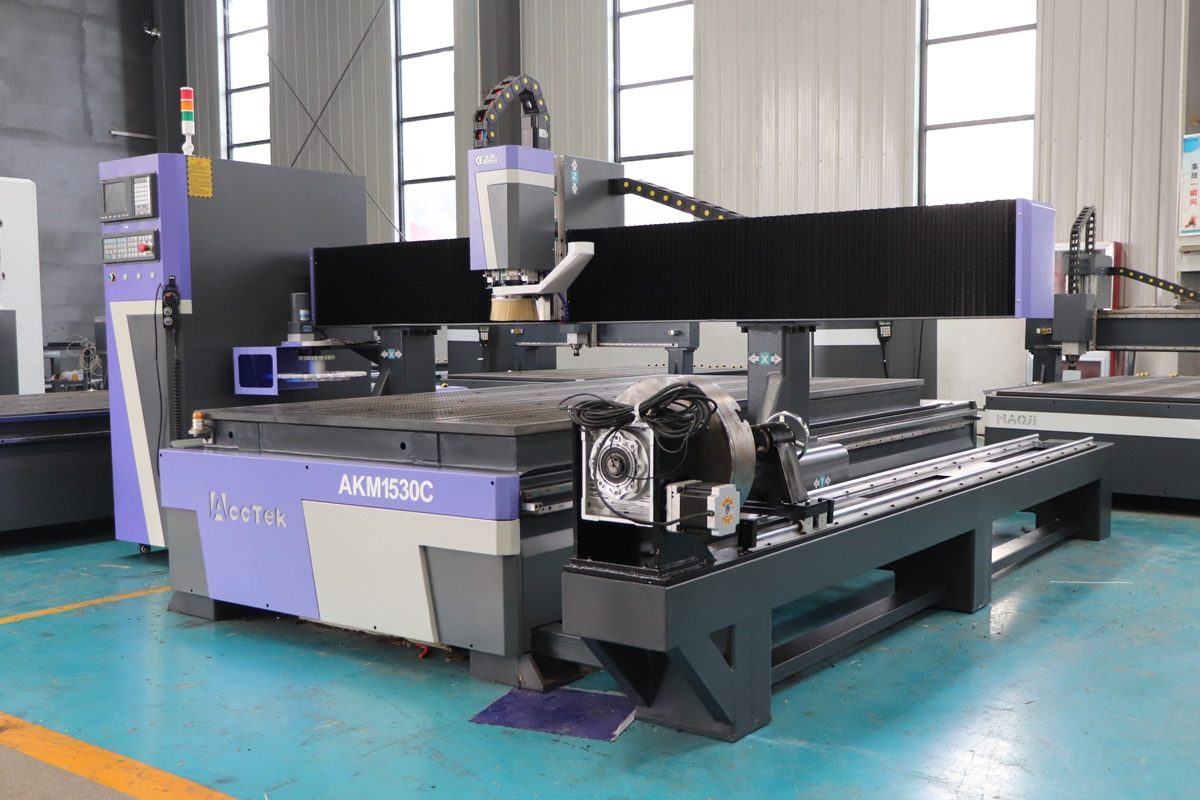
The evolution of CNC technology has revolutionized manufacturing, particularly in industries where precision and customization are essential, such as furniture making and sign production. Among the advancements in CNC technology, the rotary axis CNC router stands out for its ability to perform 3D carving and work on cylindrical or complex surfaces, allowing for the creation of intricate designs and shapes that traditional 3-axis CNC routers cannot achieve.
In the furniture and sign-making industries, the application of rotary axis CNC routers is transforming production processes, enabling manufacturers to deliver more creative, detailed, and customized products. This article explores the diverse applications of rotary axis CNC routers in these fields, delving into how they enhance precision, speed, and efficiency, while also providing a platform for creative innovation. From creating personalized furniture pieces to producing dimensional signage with intricate engravings, rotary axis CNC routers are enabling businesses to meet the growing demand for high-quality, custom products.
Understanding Rotary Axis CNC Routers
To fully appreciate the impact of rotary axis CNC routers in industries like furniture making and sign production, it’s important to first understand the technology behind them. While traditional CNC routers are limited to moving along three linear axes—X, Y, and Z—rotary axis CNC routers introduce an additional rotating axis, which expands their capabilities significantly. This added functionality enables these machines to work on more complex, three-dimensional designs, particularly on cylindrical and curved surfaces, making them invaluable tools in both custom furniture creation and high-end sign production.
What is a Rotary Axis CNC Router?
A rotary axis CNC router is an advanced variation of the traditional CNC router, designed to handle more complex tasks that involve working on curved or cylindrical surfaces. Unlike standard 3-axis CNC routers, which move only along the X, Y, and Z axes, rotary axis models include an additional rotating axis—often referred to as the A-axis, B-axis, or C-axis, depending on the orientation of the rotation. This rotating axis allows the material to spin, enabling the machine to carve or cut 360 degrees around an object, making it ideal for tasks that involve turning or cylindrical shapes.
This additional functionality allows the rotary axis CNC router to perform 3D operations, such as engraving, carving, and shaping on both flat and curved surfaces, with high precision. It’s especially beneficial for producing intricate designs that require a combination of linear and rotary movements, such as sculpted furniture components or three-dimensional signage.
Key Features and Advantages
Rotary axis CNC routers are equipped with features that provide significant advantages over standard CNC routers:
- 3D Carving and Engraving: The ability to create highly detailed, three-dimensional designs on various materials. For example, furniture makers can carve intricate patterns or logos into the legs of tables or chairs, while sign makers can create dimensional lettering and logos for signage.
- Ability to Work on Cylindrical Objects: With the rotating axis, these machines can carve or engrave on cylindrical objects, like columns or rounded furniture parts, that traditional flatbed CNC routers cannot reach. This opens up new possibilities for custom, curved designs in both industries.
- Improved Efficiency: While the added complexity of the rotary axis might suggest longer setup times, the overall process is highly efficient for complex designs. The ability to handle multi-dimensional work reduces the need for manual intervention and post-processing, streamlining production.
The addition of a rotary axis transforms a conventional CNC router into a versatile, multi-dimensional tool capable of executing a range of detailed and complex tasks. By allowing for precision carving, shaping, and engraving on both flat and curved surfaces, rotary axis CNC routers elevate the creative potential of manufacturers in the furniture and sign-making industries. With their unique ability to produce high-quality, customized designs, these machines are becoming indispensable for businesses looking to meet growing demand for personalized products.
Applications in Furniture Making
In the furniture making industry, the demand for custom, high-quality designs is ever-growing, and rotary axis CNC routers have emerged as a game-changing tool to meet these needs. These advanced machines allow manufacturers to craft highly detailed, intricate designs with unparalleled precision, enabling the creation of bespoke furniture pieces that stand out in both function and aesthetics. From ornate carvings to smooth, sculpted profiles, rotary axis CNC routers are transforming how furniture is designed and produced, offering new levels of creativity and efficiency.
Detailed Carving and Engraving
One of the most popular applications of rotary axis CNC routers in furniture making is for intricate carving and engraving. These machines allow artisans to create highly detailed designs on wooden furniture pieces, such as chairs, tables, cabinets, and decorative elements. The rotating axis enables precise 3D carving on furniture surfaces, producing intricate patterns, floral motifs, logos, and even personalized text.
For instance, intricate wood carvings on the legs or backs of chairs, or custom engravings on cabinet doors, are achieved with ease and precision using these machines. This application not only enhances the aesthetic value of the furniture but also helps manufacturers deliver unique, personalized pieces to clients who seek one-of-a-kind designs.
Shaping and Profiling
Rotary axis CNC routers are also highly effective for shaping and profiling curved or rounded furniture components. The rotating axis allows manufacturers to produce complex, smooth curves and profiles on wood pieces that are often challenging to achieve with traditional methods. For example, crafting elegantly curved table legs, rounded chair backs, or sculpted armrests becomes far more efficient and precise with the help of rotary axis technology.
These machines enable the production of intricate, custom shapes that add a sense of luxury and sophistication to furniture pieces. By automating the shaping and profiling process, manufacturers can consistently produce high-quality results without the need for time-consuming handcrafting, ensuring both speed and precision in production.
Precision and Efficiency in Production
The ability of rotary axis CNC routers to handle complex tasks with high precision results in a significant boost in production efficiency. In the past, furniture makers had to rely on manual labor or a combination of machinery to achieve such levels of complexity. With a rotary axis CNC router, the entire process can be automated, reducing labor costs and cutting down production time.
In mass production or batch production environments, this technology ensures uniformity across multiple furniture pieces while maintaining the fine details that make custom furniture. Additionally, with advanced features such as automatic tool changers and optimized cutting paths, these machines are capable of performing a variety of tasks without interruptions, ensuring that production lines remain efficient and cost-effective.
Customization for Clients
The ability to personalize furniture pieces is another powerful application of rotary axis CNC routers in the furniture industry. Whether it’s engraving family names, initials, or custom logos, these machines allow for a level of personalization that was previously impossible with traditional methods. Customization is a key selling point for furniture makers looking to offer unique, high-quality products to their clients.
For example, a company can offer clients the option to have their name engraved on the back of a chair or a custom design carved into a table’s surface. This opens up new revenue streams and helps furniture makers meet the demand for bespoke items, giving them an edge in a competitive market.
The applications of rotary axis CNC routers in furniture making not only enhance the precision and detail of individual pieces but also streamline the production process, offering manufacturers the ability to deliver custom, high-quality products faster and more efficiently. As consumer demand for unique and personalized furniture continues to rise, these machines provide an essential tool for designers and manufacturers looking to push the boundaries of creativity while maintaining consistency and efficiency in their production processes.
Applications in Sign Making
Sign making demands precision, creativity, and the ability to produce visually striking designs on a variety of materials. Rotary axis CNC routers have become a vital tool in this industry, enabling manufacturers to create three-dimensional signage, intricate engravings, and detailed lettering with unmatched accuracy. By combining linear and rotary movements, these machines can work on flat, curved, and cylindrical surfaces, allowing sign makers to push the boundaries of design and offer highly customized, professional-quality products.
3D Signage and Lettering
Rotary axis CNC routers have significantly enhanced the way dimensional signage is created, offering precision and flexibility that is unmatched by traditional methods. The ability to rotate and carve around the contours of a material enables sign makers to produce raised, sculpted lettering that adds depth and visual interest.
For instance, custom-made signs with 3D lettering for storefronts, offices, or event spaces are made easier with a rotary axis CNC router. Whether it’s a logo with a deep relief or stylized text on a curved surface, this technology provides the freedom to craft signs that make a lasting impression.
Precision Engraving for Decorative Signs
Rotary axis CNC routers can engrave detailed, intricate patterns on curved or cylindrical surfaces opens up creative possibilities for sign makers. This capability is particularly useful for creating decorative elements on signs, such as borders, logos, patterns, and artwork.
For example, rotary axis CNC routers can engrave decorative patterns on the surface of wood or acrylic panels, enhancing the aesthetic value of both interior and exterior signage. The high level of control provided by the rotating axis ensures that even fine details are captured with precision, creating beautifully crafted signs that are both functional and visually striking.
Efficiency in Bulk Production of Signs
Rotary CNC routers can replicate the same design across multiple pieces with exact accuracy, ensuring that mass-produced signs maintain high quality and uniformity. This is particularly beneficial for commercial applications that require large quantities of identical signage, such as highway signs, real estate boards, or corporate branding.
By automating the carving, engraving, and finishing processes, rotary axis CNC routers speed up production times while maintaining the consistency and accuracy needed for professional-quality signs. This allows sign makers to deliver large orders on time and within budget, without sacrificing design integrity or craftsmanship.
Versatility in Materials
Rotary axis CNC routers offer unparalleled versatility when it comes to the materials that can be used for signage. Whether it’s wood, plastic, acrylic, or even metal, these machines can handle a wide range of substrates, providing flexibility for sign makers to create custom solutions for various applications. The rotating axis makes it possible to engrave on cylindrical or curved surfaces, such as poles, columns, and rounded signage, which would otherwise be difficult to manage with flatbed routers.
Additionally, sign makers can experiment with different textures, finishes, and depths of carving, adding layers of creativity to the signage. This material versatility and ability to work on both flat and curved surfaces is what allows rotary axis CNC routers to cater to a wide range of signage needs, from small custom signs to large-scale outdoor advertising.
The applications of rotary axis CNC routers in sign making not only enhance the visual appeal and precision of signage but also improve efficiency and consistency, whether for custom one-off signs or larger production runs. With their versatility across materials and ability to handle complex designs, these machines have become indispensable for sign makers seeking to deliver high-quality, visually striking, and fully customized signage that meets the growing demand for creative and professional solutions.
Best Practices for Using Rotary Axis CNC Routers
To fully leverage the capabilities of rotary axis CNC routers, following best practices is essential. These machines are highly versatile and capable of producing intricate designs on a variety of materials, but achieving consistent, high-quality results requires careful attention to setup, tool selection, cutting parameters, and workholding. By understanding and implementing proven strategies, operators can enhance precision, reduce errors, and maximize both efficiency and the lifespan of the equipment.
- Proper Material Preparation: Before starting any project, carefully prepare the material. Ensure that wood, acrylic, metal, or other substrates are clean, flat, and free of defects. For cylindrical or curved pieces, securely mount the workpiece on the rotary axis to prevent slipping or vibration during cutting. Proper preparation reduces the risk of errors and ensures smooth, accurate cuts.
- Tool Selection and Maintenance: Choose the appropriate cutting tools for the material and design complexity. For detailed engraving or carving, fine-end mills or specialized rotary bits may be required, while shaping and profiling may need larger, robust cutters. Regularly inspect and maintain tools to prevent dullness or breakage, which can negatively affect both precision and surface finish.
- Optimized Cutting Parameters: Set the correct spindle speed, feed rate, and depth of cut based on the material and the design. Overly aggressive cuts can damage both the machine and the workpiece, while overly conservative settings may prolong production time. Testing a small section of the material beforehand is a good way to ensure optimal parameters.
- Secure Workholding: Ensure that workpieces are firmly clamped or fixed to the rotary axis. Even minor movement during operation can cause inaccuracies, damage the tool, or create defects in the final product. Using high-quality clamps, jigs, or fixtures helps maintain consistent positioning throughout the process.
- Software and Toolpath Management: Carefully plan toolpaths in your CNC software to minimize unnecessary movements and collisions. For complex 3D designs, verify that the rotary axis movements are correctly synchronized with linear axes. Simulation features in software can help identify potential issues before actual cutting, preventing costly mistakes.
- Regular Machine Maintenance: Perform routine maintenance on the CNC router, including cleaning, lubrication, and inspection of mechanical and electrical components. A well-maintained machine operates more smoothly, delivers higher precision, and has a longer service life.
- Safety Measures: Always follow safety protocols when operating rotary axis CNC routers. Wear appropriate personal protective equipment, ensure the workspace is clear, and never attempt to adjust the workpiece or tooling while the machine is running. Safety not only protects operators but also prevents accidental damage to the machine and materials.
- Training and Operator Skill: Invest in proper training for operators. Understanding the machine’s capabilities, limitations, and software features ensures consistent quality, reduces errors, and allows operators to fully leverage the flexibility of rotary axis CNC routers. Skilled operators can also troubleshoot issues quickly and optimize workflows for efficiency.
Adhering to best practices ensures that rotary axis CNC routers deliver their full potential in precision, speed, and versatility. From proper material preparation and tool selection to optimized cutting parameters and routine maintenance, these strategies help operators achieve consistent, high-quality results while minimizing downtime and material waste. Ultimately, following these practices not only improves productivity but also allows manufacturers to fully harness the creative and technical advantages of rotary axis CNC technology.
Common Problems and Solutions for Rotary Axis CNC Routers
While rotary axis CNC routers offer remarkable precision and versatility, they are not immune to operational challenges. Common problems like inaccurate cuts, tool wear, and rotary axis misalignment can impact the quality of the final product and lead to costly downtime. Understanding these issues and knowing how to address them is beneficial for maintaining consistent performance and maximizing the lifespan of your machine.
Inaccurate or Inconsistent Cuts
This often results in uneven edges, irregular shapes, or parts that don’t fit together as intended. The cause of this issue can typically be traced to several factors, including loose or improperly secured workpieces, worn-out tools, incorrect cutting parameters, or mechanical issues with the machine itself. Here are the solutions:
- Ensure Proper Workholding: Always make sure that the workpiece is securely clamped or fixed to the rotary axis, eliminating any possibility of movement during the cutting process. Use high-quality clamps or fixtures for stable positioning.
- Replace or Sharpen Tools: Regularly inspect tools for wear, and replace or sharpen them as necessary to ensure clean, precise cuts.
- Adjust Cutting Parameters: Test and adjust cutting parameters to match the material type and tool specifications.
- Check for Mechanical Issues: Check the rotary axis and linear axes for backlash or mechanical wear, and perform maintenance as needed.
Tool Breakage or Wear
Over time, tools can become dull or damaged from prolonged use, incorrect settings, or using the wrong type of tool for the material. This issue can result in rough surface finishes, longer processing times, and inaccurate cuts. Here are the solutions:
- Select the Right Tool for the Material: Ensure that the cutting tool is appropriate for the material you’re working with. Different materials require specific tool types with appropriate geometries and coatings to handle the cutting forces effectively.
- Monitor Cutting Parameters: Adjust feed rates, spindle speeds, and cutting depths to match the material and tool. Start with conservative settings and gradually increase if needed.
- Inspect Tools Regularly: Look for dull edges, cracks, or chips, especially when switching between different materials. Replace or sharpen tools before they become excessively worn to avoid costly downtime and material defects.
Excessive Machine Noise or Vibration
Such noise and vibration can be caused by a range of factors, including unbalanced tools, loose components, worn bearings, or improper workholding. These issues not only compromise the precision of the workpiece but also increase wear and tear on machine components, leading to potential downtime and costly repairs. Here are the solutions:
- Check and Tighten All Mechanical Components: Inspect all bolts, screws, and fasteners on the machine to ensure that they are tight and properly secured.
- Balance Tools Properly: Ensure that all tools are correctly balanced and securely mounted in the tool holder.
- Inspect Bearings and Motors: Regularly inspect bearings for signs of wear, corrosion, or damage, and replace them as necessary. Similarly, check the motors for any unusual sounds or irregularities and perform necessary maintenance.
- Secure the Workpiece Firmly: Ensure the workpiece is securely fastened to the machine bed using clamps, fixtures, or vacuum tables as needed.
Rotary Axis Malfunction or Misalignment
This issue occurs when the rotary axis fails to rotate smoothly or is misaligned, causing inconsistencies in 3D carving, engraving, or shaping operations. Misalignment can lead to misfit parts, uneven surfaces, or inaccurate engraving, particularly when working with cylindrical or curved materials. Here are the solutions:
- Check for Mechanical Wear and Tear: Inspect the rotary axis bearings, motor, and drive system for damage.
- Recalibrate the Rotary Axis: Ensure that the rotary axis is properly calibrated according to the manufacturer’s guidelines. This involves checking the machine’s software settings and manually adjusting the axis if necessary to restore correct alignment.
- Lubricate and Clean the Rotary Mechanism: Regularly clean the rotary axis components and lubricate the moving parts to ensure smooth operation and prevent alignment issues due to buildup or lack of proper lubrication.
- Perform Regular Calibration Checks: To prevent misalignment, perform periodic calibration checks on the rotary axis, especially after long production runs or significant machine use.
By recognizing common problems and implementing the suggested solutions, operators can minimize the risk of disruptions and maintain the high precision and reliability of rotary axis CNC routers. Regular maintenance, proper calibration, and attention to cutting parameters can go a long way in preventing issues like tool breakage, misalignment, and material damage. Proactive problem-solving and routine care will help ensure that the machine operates at its best, delivering consistent, high-quality results for both furniture and sign-making applications.
Summarize
Rotary axis CNC routers have become indispensable tools in both furniture making and sign production by enabling precise 3D carving, detailed engraving, and machining on curved or cylindrical surfaces. They enhance creativity, efficiency, and customization, allowing manufacturers to produce high-quality, visually striking products. As technology continues to evolve, rotary axis CNC routers will undoubtedly remain at the forefront of innovation, empowering manufacturers to meet the growing demand for unique, high-end products and expand the possibilities of what can be achieved in both industries. Continue reading “How Do I Choose the Correct Rotary Axis for My CNC Router?” to help you choose the best option for your workflow.
When choosing a reliable CNC router partner, AccTek CNC stands out as a professional and experienced manufacturer dedicated to delivering high-performance solutions for a wide range of industries. We offer a comprehensive lineup of machines, including 3-axis, 4-axis, 5-axis, and rotary axis CNC routers, ensuring that users can select the ideal configuration for applications such as furniture production, sign making, advertising, woodworking, and industrial manufacturing. With professional service and reliable after-sales support, AccTek CNC is a strong choice for businesses looking to enhance productivity, expand creative capabilities, and invest in long-term manufacturing success.