

- 12-17 Min Read
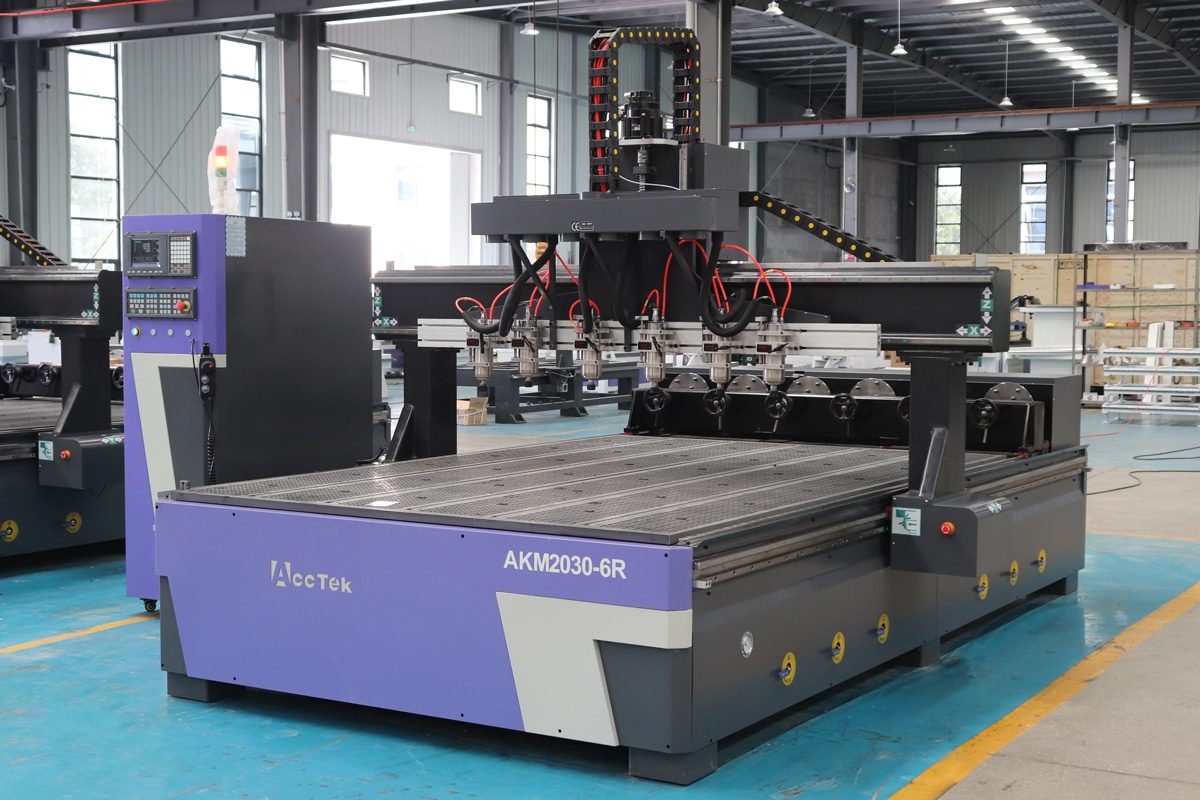
In today’s competitive manufacturing landscape, CNC routers have become indispensable tools for woodworking, plastics, composites, and even light metal industries. At the heart of these machines lies the spindle, which drives the cutting tool and ultimately determines the efficiency, precision, and output of the process. Buyers are often faced with a key decision: should they invest in a single-spindle CNC router or a multi-spindle CNC router? While a single-spindle machine offers simplicity and precision, multi-spindle models—whether synchronous or independent—deliver significant advantages in speed, scalability, and versatility.
A CNC router represents a significant commitment of both capital and time, and choosing the wrong type can lead to inefficiencies, unnecessary costs, or limitations in your workflow. Understanding the differences between these configurations is beneficial for aligning your investment with your production needs. This article compares single-spindle and multi-spindle CNC routers from multiple perspectives, exploring their advantages, limitations, and ideal applications. By the end, you’ll have a clearer picture of which option is best suited for your workshop or manufacturing business.
Understanding CNC Router Spindles
Before exploring which spindle configuration—single-spindle or multi-spindle—is best suited for your CNC router, it’s important to understand the spindle itself and the critical role it plays in the machine. By gaining a clear understanding of how the spindle works and what factors influence its performance, you will be better equipped to evaluate different CNC router configurations and make an informed choice that aligns with your production needs.
Definition and Role of a Spindle in CNC Machining
At the core of every CNC router is the spindle, the rotating component that drives the cutting tool and directly determines the machine’s cutting ability. In simple terms, the spindle is what transfers power from the motor to the tool bit, enabling precise cutting, drilling, or engraving operations. Because it is responsible for speed, torque, and stability, the spindle is one of the most important factors affecting the overall performance of a CNC router. Several key aspects of a spindle influence how well a CNC router performs:
- Cutting Speed (RPM): Determines how fast the tool rotates and how cleanly it can cut through different materials.
- Power Output (kW or HP): Affects the spindle’s ability to handle harder materials or deeper cuts without slowing down.
- Precision and Stability: Impacts the surface finish, accuracy, and repeatability of machining tasks.
- Cooling Method (air- or water-cooled): Plays a role in spindle longevity, operating noise, and efficiency.
How Spindle Count Affects Operation and Performance
When considering CNC routers, the number of spindles becomes a defining characteristic. A single-spindle CNC router uses one spindle to perform all operations, while a multi-spindle CNC router incorporates two or more spindles that can either work synchronously (mirroring the same actions for mass production) or independently (operating on separate toolpaths for greater flexibility). This difference in spindle configuration directly impacts machining efficiency, production volume, and the range of applications each type of router can handle.
The spindle is the heart of a CNC router, impacting everything from cutting accuracy and efficiency to the range of materials that can be machined. Understanding key aspects such as power, speed, torque, precision, and spindle configuration provides a foundation for comparing single-spindle and multi-spindle routers. With this knowledge, we can now move on to examine the differences between these configurations, their advantages and limitations, and how to determine which option is the best fit for your workshop or manufacturing business.
Single-Spindle CNC Routers
A single-spindle CNC router features a single cutting head that performs all cutting, engraving, or carving operations. Because there is only one spindle, which means it can execute only one toolpath at a time, each part or operation must be completed sequentially. This is the most common type of CNC router and is often chosen for its simplicity, precision, and versatility in small- to medium-scale production.
Advantages
Single-spindle CNC routers are widely used due to their simplicity, precision, and versatility. Some of the main advantages include:
- High Precision and Accuracy: Fewer moving components and simpler mechanics result in higher accuracy. With only one spindle in operation, there is less vibration, ensuring consistent cuts and better surface finish.
- Simplicity and Ease of Use: Simpler setup and calibration compared to multi-spindle routers, easier for operators with limited technical experience to manage.
- Lower Maintenance Requirements: Less mechanical complexity translates to fewer parts that can wear out or fail. Maintenance is straightforward and generally less costly compared to multi-spindle machines.
- Cost-Effective for Small to Medium Production: Lower initial investment compared to multi-spindle machines. Operates efficiently for small-batch orders without the need for multiple spindles.
Limitations
While single-spindle CNC routers offer precision and flexibility, they have inherent limitations, especially when it comes to high-volume or specialized production needs:
- Lower Production Efficiency: Can only machine one part at a time, which may reduce throughput for high-volume operations.
- Limited Parallel Operations: Unlike multi-spindle routers, a single spindle cannot perform simultaneous operations on multiple workpieces, potentially increasing production time.
- Time-Consuming for Repetitive Tasks: Repeating identical parts requires multiple cycles, which can slow down production compared to multi-spindle alternatives.
Best Use Cases
Single-spindle CNC routers are ideal for workshops and businesses that prioritize precision, flexibility, and customization over high-volume production. Some of the most common use cases include:
- Custom woodworking, furniture making, or decorative panel production.
- Small to medium-sized workshops with varied project requirements.
- Projects requiring high precision, detailed engraving, or intricate cutting patterns.
- Producing detailed signs, nameplates, and logos projects.
- Artisan Crafts and Decorative Items allow creative designs without the need for multiple spindles.
- Single-spindle machines are simpler to operate and maintain, making them ideal for educational or training purposes.
Single-spindle CNC routers offer a balanced combination of precision, flexibility, and simplicity, making them suitable for custom projects, intricate designs, and small to medium batch production. While they may not provide the high-volume efficiency of multi-spindle machines, their reliability, ease of operation, and lower maintenance requirements make them a practical choice for workshops that prioritize quality and versatility. With a clear understanding of their structure, capabilities, and ideal applications, you can assess whether a single-spindle configuration aligns with your workflow and production goals.
Synchronous Multi-Spindle CNC Routers
A synchronous multi-spindle CNC router is designed with multiple spindles that operate simultaneously along the same toolpath. Each spindle mirrors the actions of the others, cutting or engraving identical parts in perfect synchronization. This configuration significantly boosts production efficiency when large quantities of the same design are required.
Advantages
Synchronous multi-spindle CNC routers are designed to maximize efficiency when producing large batches of identical parts. Their key advantages include:
- High Productivity: Multiple spindles work simultaneously on different workpieces, multiplying output without increasing cycle time.
- Uniform Quality and Consistency: Since all spindles follow the same toolpath, each part is identical in dimension, finish, and quality. Reduces the risk of variation between parts compared to separate single-spindle operations.
- Cost Efficiency in Mass Production: Producing multiple parts per cycle reduces labor costs, setup time, and machine idle time. Shorter production cycles improve overall return on investment.
- Simplified Programming: Only one toolpath needs to be created and loaded into the CNC controller. Reduces programming errors and shortens preparation time.
- Better Use of Workshop Time: Operators can manage larger production runs with less intervention, freeing time for other tasks.
Limitations
While synchronous multi-spindle CNC routers deliver speed and uniformity, they also come with certain drawbacks that affect flexibility and usability:
- Limited Flexibility: All spindles must follow the same toolpath, and cannot process parts of different shapes or sizes in a single run. This makes the machine unsuitable for custom jobs or varied designs.
- Increased Initial Investment: Higher upfront cost compared to single-spindle CNC routers. It may not be economical for workshops with low or irregular production volumes.
- Higher Space Requirements: Requires a larger worktable and more workshop space to accommodate multiple workpieces simultaneously. It may not fit well in smaller workshops or production areas.
- Underutilization in Mixed Orders: If a batch requires fewer identical parts than the number of spindles, some spindles remain idle, reducing efficiency.
- Complex Setup for Workholding: Ensuring multiple workpieces are securely fixed in place can be time-consuming. Any misalignment may affect the quality and uniformity of the output.
Best Use Cases
Synchronous multi-spindle CNC routers are highly efficient for applications that demand large quantities of identical parts with consistent quality. Some of the most suitable use cases include:
- Furniture Manufacturing: Production of doors, cabinet panels, chair backs, and other repeated components.
- Decorative Panels and Wall Art: Carving or engraving repeating patterns across multiple panels, useful in interior design or architectural applications.
- Signage and Advertising: Mass production of identical signs, logos, or display boards ensures uniformity across batches while saving production time.
- Wooden Crafts and Souvenirs: Replicating the same design across multiple workpieces, such as ornaments or plaques.
Synchronous multi-spindle CNC routers are best suited for high-volume, standardized production, where speed and uniformity are top priorities. They sacrifice flexibility in design for significant gains in efficiency, making them a smart investment for businesses producing large batches of identical parts. In contrast, independent multi-spindle configurations offer greater versatility, which will be explored in the next section.
Independent Multi-Spindle CNC Routers
While synchronous multi-spindle CNC routers focus on producing identical parts in parallel, independent multi-spindle CNC routers take flexibility to the next level. These machines allow each spindle to follow its own toolpath, enabling multiple operations or different designs to be completed in a single production cycle. This makes them highly versatile and well-suited for workshops that handle varied projects or custom orders.
Advantages
Independent multi-spindle CNC routers are valued for their versatility and adaptability, offering unique benefits compared to single-spindle and synchronous configurations:
- Greater Flexibility: Each spindle can follow a different toolpath, allowing multiple designs or operations to be executed in a single production cycle.
- Higher Productivity: Performs multiple tasks in one cycle, such as cutting, drilling, and engraving. Reduces downtime between setups and shortens overall production cycles.
- Reduced Equipment Needs: Combines the capabilities of several single-spindle machines into one system, saving space and investment in separate machines.
- Scalable Operation: Operators can choose to run spindles independently or synchronize them when needed, offering dual benefits in one machine.
- Cost Efficiency Over Time: While the initial investment is higher, the ability to handle multiple varied tasks at once can significantly lower long-term operating costs.
Limitations
While independent multi-spindle CNC routers offer flexibility and efficiency, they also present challenges that may not suit every workshop or production environment:
- Higher Initial Investment: More expensive than single-spindle or synchronous multi-spindle routers due to advanced control systems and multiple motors. It may not be cost-effective for small workshops with low production needs.
- Complex Programming and Setup: Requires separate toolpaths for each spindle, which can increase programming time and preparation effort. Operators must carefully manage coordination to avoid errors or collisions.
- Greater Operator Skill Requirement: Demands greater technical knowledge for effective programming, setup, and troubleshooting.
- Maintenance and Repair Costs: More spindles and motors mean more components that can wear out or require servicing.
- Shared Frame Limitations: Even with independent control, spindles may still share certain axis movements, limiting full freedom compared to running multiple standalone machines.
Best Use Cases
Independent multi-spindle CNC routers are ideal for businesses that require a balance of efficiency, flexibility, and customization. Their ability to handle different toolpaths simultaneously makes them valuable in diverse production settings:
- Custom Furniture and Woodworking: Producing varied parts of the same project, such as chair legs, table panels, or decorative carvings, in one cycle.
- Prototyping and Small-Batch Production: Quickly creating diverse parts without multiple machine setups.
- Mixed Signage and Engraving Orders: Handling varied designs for customers in one production cycle.
- Workshops with Diverse Product Lines: Ideal for businesses balancing custom orders with small-scale batch production.
Independent multi-spindle CNC routers strike a balance between efficiency and versatility, making them an excellent choice for businesses with diverse production needs. They offer the flexibility to run varied toolpaths at the same time, boosting productivity without sacrificing customization. While they require a higher investment and skilled operation, their adaptability makes them a valuable asset for workshops aiming to expand capabilities beyond the limitations of single-spindle or synchronous multi-spindle routers.
Factors to Consider When Choosing a CNC Router
Selecting the right CNC router requires careful evaluation of multiple factors to ensure the machine aligns with your production needs, budget, and long-term goals. Key considerations include:
Production Scale
The scale of your production plays a pivotal role in determining the most suitable CNC router configuration. Understanding your current and anticipated production volume ensures that the machine you invest in meets your operational needs efficiently.
- Small-Scale Production: Single-spindle CNC routers are typically the best fit, offering precision, flexibility, and lower costs without overcomplicating operations.
- Medium-Scale Production: Both single-spindle and independent multi-spindle CNC routers can be effective. An independent multi-spindle model allows operations to be completed simultaneously, increasing throughput while maintaining flexibility.
- Large-Scale Production: Synchronous multi-spindle CNC routers are highly efficient here, processing multiple parts simultaneously with uniform quality.
Workpiece Size and Complexity
The size and complexity of the workpieces you intend to machine significantly influence which CNC router configuration is best suited for your production needs.
- Workpiece Size: Single-spindle CNC routers handle small and medium-sized parts efficiently, providing precise control for detailed cuts. Multi-spindle routers, particularly synchronous types, can manage multiple large panels or components simultaneously, improving throughput for uniform parts.
- Design Complexity: Single-spindle CNC routers are sufficient for straightforward designs, offering reliability and precision. Independent multi-spindle CNC routers excel when multiple operations or varied designs are needed in one cycle, reducing setup time and improving workflow efficiency.
- Flexibility and Variety of Workpieces: If you regularly produce varied designs or handle multiple materials, independent multi-spindle or single-spindle CNC routers provide the most flexibility. Synchronous multi-spindle machines are best for repetitive, identical parts.
Budget Constraints
Your budget is one of the most important factors when selecting a CNC router, as it influences not only the machine type but also long-term operational costs.
- Initial Investment: Single-spindle CNC routers typically have the lowest purchase cost. Multi-spindle CNC routers require a higher upfront investment due to multiple spindles, larger worktables, and more robust frame construction.
- Operational Costs: Consider electricity consumption, maintenance, tooling, and consumables. Multi-spindle machines may consume more power and require more frequent maintenance.
- Return on Investment (ROI): Single-spindle CNC routers may be more economical for low-volume or custom work, while multi-spindle routers achieve faster ROI in mass production scenarios.
Operator Skill and Training Requirements
Different configurations demand varying levels of technical expertise, which can impact productivity, quality, and safety.
- Single-Spindle CNC Routers: Relatively easy to operate, with straightforward setup and programming. This is ideal for workshops with fewer or less experienced operators.
- Synchronous Multi-Spindle CNC Routers: Operators must understand how to set up multiple workpieces and ensure proper alignment. Moderate training is needed to manage larger workpieces and coordinate multiple spindles efficiently.
- Independent Multi-Spindle CNC Routers: Requires advanced operator skills due to multiple spindles executing separate toolpaths simultaneously. But the increased versatility can significantly improve productivity and efficiency.
Future Growth and Scalability Needs
When selecting a CNC router, it’s important to consider not only your current production requirements but also potential growth and evolving business demands. Choosing a machine that can scale with your operations ensures long-term efficiency and minimizes the need for frequent upgrades.
- Anticipated Production Volume Growth: If your business expects to increase output, multi-spindle CNC routers may provide the capacity needed without requiring additional machines. Single-spindle routers may suffice initially, but could become a bottleneck as demand rises.
- Long-Term Cost Efficiency: Machines that can scale with production help avoid frequent replacement and reduce the total cost of ownership over time. Investing in a more capable machine upfront may be more economical than purchasing multiple smaller machines later.
Choosing the right CNC router involves balancing production needs, precision, flexibility, cost, and operator capability. By carefully evaluating these factors, you can select a machine that not only meets current requirements but also supports long-term growth and efficiency. In the following sections, we will discuss the user groups for single-spindle, synchronized multi-spindle, and independent multi-spindle CNC routers.
Which CNC Router Is Right for You?
Choosing the right CNC router requires matching your production needs with the machine’s capabilities. Each type of CNC router offers distinct advantages depending on the application. Understanding these best use cases helps clarify which configuration aligns with your workflow and business goals.
Single-Spindle CNC Routers
Single-spindle CNC routers excel in scenarios where precision, flexibility, and customization are key priorities. Their applications span multiple industries and suit a variety of users, from small workshop owners to designers and prototypers.
- Prototyping and Product Development: Ideal for creating one-off or small-batch prototypes. Enables designers to test and refine complex shapes, intricate details, and new concepts efficiently.
- Small Workshop Owners: Single-spindle CNC routers are easy to operate, maintain, and integrate into limited workspace environments. Require lower investment than multi-spindle machines, making them accessible to small businesses.
- Designers and Engineers: Provide flexibility for experimentation and prototyping without the complexity of multi-spindle programming. Allow for precise adjustments during the design process, ensuring accurate final products.
- Custom Production Specialists: Best suited for users who need to create unique, high-quality, or small-batch products. Offer control and precision that multi-spindle systems may not provide for customized designs.
Synchronous Multi-Spindle CNC Routers
Synchronous multi-spindle CNC routers are optimized for high-volume, repeatable production, where multiple identical parts need to be machined simultaneously. Their strength lies in efficiency and uniformity, making them ideal for production environments focused on speed and consistency.
- Mass Production of Identical Parts: Produces large batches of repeated signs or furniture components efficiently. Ensures every part is identical in dimensions and quality, reducing errors and post-processing.
- Large-Scale Manufacturers: Users focused on high-volume output benefit from reduced cycle times and lower labor requirements. They are suitable for operations where speed and consistency are more important than flexibility.
- Workshops Producing Uniform Products: Small to medium-sized businesses that produce repeated designs can increase efficiency without compromising quality.
Independent Multi-Spindle CNC Routers
Independent multi-spindle CNC routers offer high versatility, allowing each spindle to operate on its own toolpath. This capability makes them ideal for workshops that require flexibility, varied production, and efficiency for multiple simultaneous operations.
- Mixed or Small-Batch Production: Handles different designs or operations on multiple workpieces in the same production cycle. They are ideal for custom furniture, signage, or parts with varied designs.
- Multi-Step Operations: Can perform different processes—cutting, drilling, engraving—on separate spindles at the same time. Reduces setup time and improves workflow efficiency.
- Skilled Operators and Designers: Advanced users can fully leverage independent spindles for simultaneous, multi-step operations. Increases productivity while maintaining precision across varied designs.
The right CNC router depends on your production volume, workpiece complexity, and operational priorities. Single-spindle routers are the choice for low-volume, highly detailed, or custom projects. Synchronous multi-spindle routers maximize efficiency for high-volume, repetitive production. Independent multi-spindle routers offer the flexibility to handle multiple designs or operations simultaneously, ideal for mixed-batch and customized workflows. By considering these best use cases, you can select the machine that not only meets your current needs but also supports your long-term growth and productivity objectives.
Summarize
Choosing between a single-spindle and a multi-spindle CNC router comes down to aligning the machine’s capabilities with your specific production needs. Single-spindle routers are the best fit for precision-driven, custom, or small-scale projects, while synchronous multi-spindle machines shine in high-volume, repetitive production, and independent multi-spindle systems offer unmatched flexibility for diverse or mixed-batch workflows. By weighing factors such as production scale, workpiece complexity, budget, and long-term growth, you can confidently select the CNC router that delivers the right balance of efficiency, versatility, and value for your business.
If you’re considering investing in a CNC router, AccTek CNC is a trusted partner to meet your needs. As a professional CNC router manufacturer, AccTek offers not only high-quality machines but also the flexibility of customization—ensuring each CNC router is tailored to your specific production requirements. Whether you need a single-spindle model for precision work, a multi-spindle solution for high-volume output, or a specialized configuration for unique applications, AccTek provides reliable technology backed by expertise and service. Choosing AccTek means choosing efficiency, precision, and long-term value for your business.