

- 15-20 Min Read
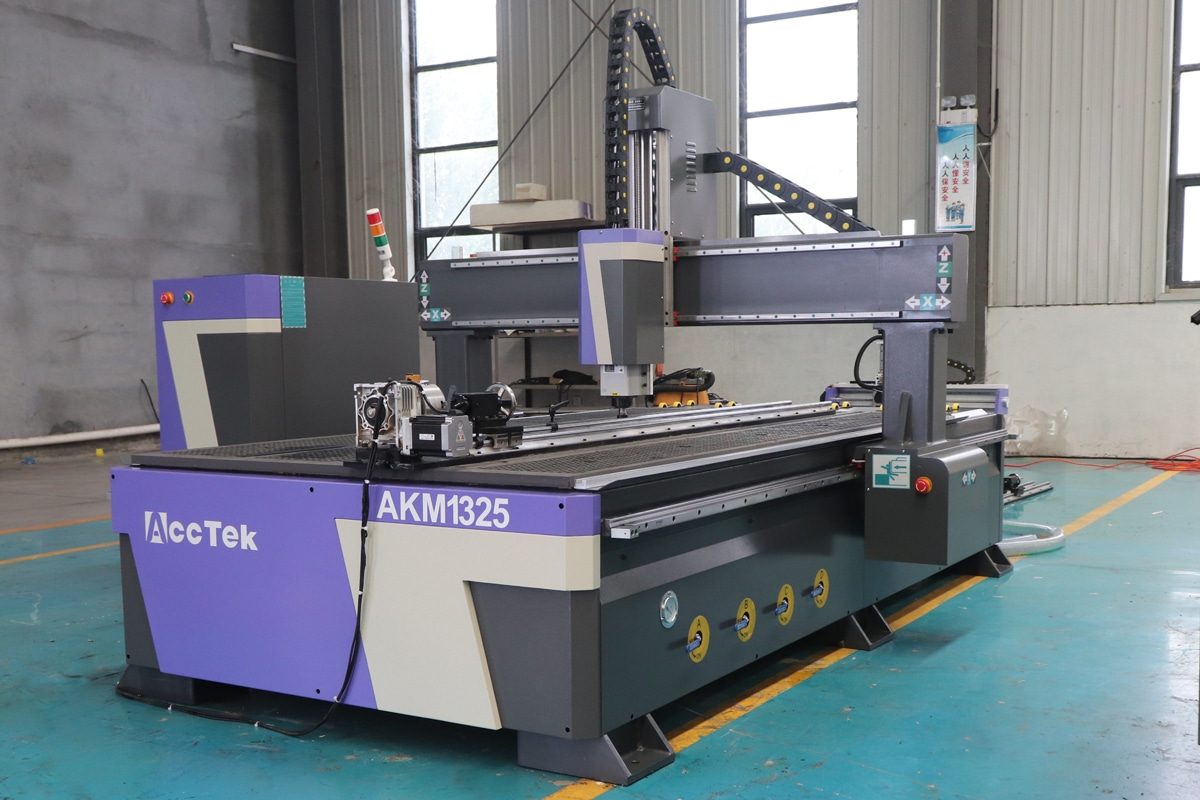
In today’s competitive market, consumers increasingly seek products that are unique, personalized, and tailored to their specific needs. Consumers and businesses alike are seeking solutions that go beyond standard, mass-produced items, whether it’s custom furniture, detailed signage, or innovative prototypes. Achieving this level of detail and individuality using traditional methods can be time-consuming, labor-intensive, and costly. CNC routers, with their computer-controlled precision and versatility, have revolutionized the way designers and manufacturers approach these challenges.
Beyond precision, CNC routers offer unmatched flexibility and customization options. Designers can easily modify digital plans, switch materials, and produce one-off or small-batch products efficiently, all while minimizing waste and reducing production time. This adaptability not only speeds up the creative process but also allows businesses to meet the growing expectation for personalized products without sacrificing quality. In this article, we will explore how CNC routers enhance design flexibility and empower customization, transforming the way products are conceived, crafted, and brought to market.
Understanding CNC Routers
CNC routers have become an essential tool in modern manufacturing and design, bridging the gap between digital creativity and physical production. By combining computer-controlled precision with versatile cutting capabilities, these machines allow designers and manufacturers to execute projects with accuracy and consistency that would be difficult or impossible to achieve manually. Understanding how CNC routers work—and the advantages they offer over traditional methods—is key to appreciating their role in enhancing design flexibility and customization.
Definition and Core Functionality
A CNC router, short for Computer Numerical Control router, is a machine that automates cutting, carving, drilling, and shaping tasks by following programmed digital instructions. Unlike manual tools, which rely heavily on operator skill and repetitive effort, CNC routers operate with precision dictated by software, allowing for consistent results even on complex designs. Essentially, a CNC router translates a digital design file into precise movements of the cutting tool across multiple axes, producing highly accurate and repeatable outcomes. The core functionality of a CNC router revolves around three main components:
- The Control System: This interprets CAD/CAM designs and sends instructions to the machine’s motors and spindles, ensuring each cut matches the digital blueprint.
- The Motion System: Typically composed of linear rails, gantries, and stepper or servo motors, this guides the cutting tool along the X, Y, and Z axes, and sometimes additional rotational axes for more complex projects.
- The Spindle and Cutting Tools: The spindle rotates cutting bits at high speeds to shape, carve, or engrave materials ranging from wood and plastic to metals and composites.
Traditional vs. CNC Manufacturing
Traditional manufacturing relies heavily on manual tools and human skill to cut, carve, or shape materials. While experienced craftsmen can produce high-quality results, this approach has several limitations: it is time-consuming, prone to human error, and often struggles to replicate complex or highly detailed designs consistently. Changes to a design require retooling or starting over, which can increase production time and costs. Additionally, producing small batches or one-off custom items can be inefficient and labor-intensive.
CNC manufacturing, on the other hand, leverages computer-controlled precision to overcome these challenges. With CNC routers, digital designs can be translated directly into machine movements, allowing for exact replication of intricate patterns, complex 3D shapes, and detailed engravings. Design changes can be implemented quickly by updating the digital file rather than retooling physical equipment, making prototyping and customization far more efficient. CNC routers also reduce waste by optimizing cutting paths and minimizing errors, enabling cost-effective production of both single items and large batches. CNC technology transforms manufacturing from a labor-intensive, rigid process into a flexible, precise, and scalable operation.
By mastering the fundamentals of CNC routers, it becomes clear why these machines are transforming industries. Unlike traditional manufacturing, CNC routers provide unmatched precision, repeatability, and adaptability, laying the foundation for more intricate designs, faster production cycles, and highly customized products. With this understanding, the next step is to explore exactly how CNC routers enhance design flexibility and empower creative innovation.
Enhancing Design Flexibility
CNC routers are revolutionizing the way manufacturers and designers approach product development by providing an unmatched level of design flexibility. Through their multi-axis capabilities, automatic tool changes, and ability to handle diverse materials, these machines allow for a broad range of creative possibilities, from intricate detailing to large-scale, personalized production. The flexibility of CNC routers extends beyond the machine itself, offering significant advantages in both design iteration and material versatility, enabling faster customization and adaptation to evolving design requirements.
Multi-Axis Movement
Multi-axis movement is a fundamental feature that gives CNC routers exceptional design flexibility. By controlling motion across multiple axes, operators can achieve complex geometries and intricate designs that traditional machines cannot replicate.
- 3-Axis Motion: The standard 3-axis CNC router moves along the X, Y, and Z axes, making it suitable for flat surfaces, panels, and moderate contours. It allows precise cutting, engraving, and shaping on a single plane but is limited when it comes to angled surfaces or undercuts.
- 4th-Axis Motion: A 4th-axis CNC router adds rotational movement, typically around the X or Y axis. This enables the machine to work on cylindrical or curved objects and produce designs with undercuts or angled details without manually repositioning the workpiece. It is especially useful for decorative carvings, columns, and complex furniture components.
- 5-Axis Motion: The 5-axis CNC router introduces rotation around a second axis, giving the spindle virtually unlimited access to the workpiece from multiple angles. This capability allows operators to machine highly intricate, three-dimensional geometries all in a single setup, reducing time and increasing accuracy.
Tool-Changing and Adaptability
The ability to quickly change tools is another critical feature that enhances the flexibility and efficiency of CNC routers. CNC machines can be equipped with automatic or manual tool changers, allowing operators to perform multiple types of operations in one setup.
- Automatic Tool Changers (ATC): Automatic tool changers enable seamless transitions between different cutting, drilling, engraving, or carving tools without the need for manual intervention. This feature is especially useful for high-volume production or intricate designs that require a range of different tools.
- Manual Tool Changing: In contrast, manual tool changers require the operator to physically swap out tools as needed. While this offers less automation, it can still be effective for smaller-scale operations or designs requiring less frequent tool changes.
Material Versatility
One of the standout features of CNC routers is their ability to work with a wide range of materials, making them highly versatile for different industries and applications. The ability to switch between materials without requiring extensive retooling or machine adjustments further enhances design flexibility and efficiency.
- Adapting Settings for Different Materials: The versatility of CNC routers lies in their ability to adapt to various materials through programming adjustments. Operators can change the machine’s speed, feed rate, and cutting depth to optimize performance for different material types, ensuring the best finish and reducing material waste.
Rapid Iteration
CNC routers streamline the design-to-production process by allowing operators to easily adapt and refine digital models without the need for extensive machine reconfiguration.
- Digital Design Flexibility: CNC routers rely on CAD and CAM software to transform digital models into machine-readable instructions. If a design needs to be adjusted, operators can quickly modify the digital file, making tweaks to dimensions, shapes, or patterns without the need to physically alter the machine setup.
- Simulation and Testing: Before executing a new design, CNC routers often use simulation software to run a virtual model of the machine’s movements. This allows operators to test for potential issues without wasting material or machine time, such as tool collisions, incorrect tool paths, or inefficient cutting strategies.
CNC routers significantly enhance design flexibility by offering a combination of precision, adaptability, and versatility that traditional manufacturing methods simply cannot match. Whether it’s creating intricate patterns, experimenting with new materials, or iterating on design concepts quickly, CNC routers provide the tools necessary for achieving highly flexible and unique designs. As technology continues to evolve, the scope for even greater creative freedom will expand, ensuring that CNC routers remain at the forefront of modern manufacturing and design innovation.
Enhancing Customization
One of the primary advantages of CNC routers is their ability to deliver highly customized results that meet specific design needs. CNC routers operate based on digital design files, allowing for precise control over every aspect of the production process. This level of control enables the creation of unique, tailored products without the constraints of traditional manufacturing processes. From personalized engravings to fully customized shapes, the precision of CNC routers allows operators to achieve the exact specifications demanded by customers, enhancing the customization potential across a variety of industries.
Precision and Repeatability
Precision and repeatability are the foundational aspects of CNC routers that elevate their ability to produce highly customized designs. These qualities enable manufacturers to tailor each product to specific customer needs while ensuring consistent, high-quality results.
- Ensuring Exact Specifications for Custom Designs: Precision allows CNC routers to follow complex digital designs with incredible accuracy. Whether it’s carving intricate logos, engraving personalized messages, or crafting custom shapes, the router can replicate the exact design every time.
- Repeatability for Consistent Custom Batches: The CNC router can replicate the design exactly across all units, maintaining consistency in quality and detail, even with personalization.
Personalized Engraving and Detailing
CNC routers excel at adding personalized engravings and intricate detailing, making them a go-to solution for custom designs across a wide range of industries. The ability to engrave deeply or etch surface-level details ensures that the customization possibilities are nearly endless.
- Custom Designs for Unique Products: CNC routers allow for full customization of products by engraving bespoke designs or intricate details tailored to the customer’s preferences. Operators can quickly input digital design files into the CNC router, allowing for custom patterns, logos, and artwork to be etched into a range of materials.
- Depth Control for Varied Effects: CNC routers offer the ability to control engraving depth, enabling designers to create varied effects in the engraving process. Shallow etching can be used for subtle surface designs, while deeper cuts can create more pronounced reliefs or 3D effects.
Batch Customization
The precision and flexibility of CNC routers make them ideal for batch customization, allowing businesses to offer personalized options to customers without the need for costly manual processes or significant time delays.
- Customizing Multiple Items Simultaneously: The digital nature of CNC programming allows for easy modifications to the toolpaths, so each item can be personalized, while still benefiting from the speed and efficiency of automated manufacturing.
- Reducing Setup Time for Small-Batch Customization: With digital programming, the machine can be reprogrammed quickly to accommodate new designs or customization requests. This ability to make swift changes means that companies can more easily accommodate small-batch orders or create custom editions of items.
Integration with Digital Design Tools
The seamless integration between CNC routers and digital design tools is one of the primary factors that enable enhanced customization and efficiency in modern manufacturing. This integration streamlines the entire design-to-production process, allowing for quick adjustments, easy customizations, and seamless transitions between different designs.
- Direct Design-to-Machine Workflow: The digital files produced by CAD software are directly fed into the CNC router, allowing operators to focus on fine-tuning the production process instead of worrying about technical setup.
- Real-Time Design Adjustments: With CNC routers, operators can quickly modify digital designs in CAD software to meet customer specifications or address production challenges.
Through their exceptional precision, repeatability, and integration with digital design software, CNC routers enable businesses to quickly adapt to customer demands and offer a diverse range of personalized products. With the flexibility to handle complex designs and intricate details, these machines ensure that every custom product meets high standards of quality and accuracy. As the demand for personalized goods continues to grow across industries, CNC routers remain essential tools in enabling manufacturers to meet these expectations efficiently.
Operator's Role in Maximizing Flexibility and Customization
While CNC routers are powerful machines capable of executing highly customized designs with precision, it is the operator’s expertise that maximizes their potential. From setting up the machine to fine-tuning design files, operators have a direct impact on the overall success of the project. Their ability to make adjustments, troubleshoot issues, and optimize settings enables CNC routers to perform at their highest capacity and achieve personalized results that meet or exceed expectations.
- Understanding Material Characteristics: One of the key responsibilities of an operator is understanding the characteristics of the materials being used. Each material requires specific cutting parameters, including feed rate, spindle speed, and cutting depth. Operators must be able to adjust these settings to achieve optimal results. For example, cutting wood requires different speed and depth settings than cutting acrylic or aluminum, and a skilled operator knows how to tweak these parameters to ensure clean cuts, avoid material damage, and achieve the best finish for each material.
- Customizing Digital Design Files: CNC routers rely on CAD and CAM software to turn digital designs into actionable instructions for the machine. The operator needs to modify design files, adjust tool paths, and ensure that each design element is executed accurately. Whether it’s resizing, repositioning, or adding unique features such as engravings or cutouts, operators must understand how to work with the design software to ensure that the final result matches the client’s vision.
- Tool Selection and Changeover: CNC routers often require different tool types—such as end mills, ball nose cutters, or engraving bits—depending on the task. Operators must understand which tools are best suited for each specific customization, and they need to be able to perform quick tool changeovers when moving between tasks.
- Fine-Tuning and Adjusting Machine Settings: Operators must also be able to fine-tune and adjust machine settings during the production process to achieve optimal results. This includes adjusting cutting speeds, feed rates, and spindle rotations to adapt to different materials, thicknesses, or design complexities. In some cases, operators might need to make adjustments on the fly if they notice issues like tool wear, material movement, or an unintended finish
- Problem-Solving and Troubleshooting: Even with the best setups, issues can sometimes arise during the machining process. A skilled operator’s problem-solving abilities are key in overcoming these challenges quickly to avoid downtime and wasted material. Whether it’s correcting a misaligned toolpath, managing a material that’s shifting during the cut, or adjusting for minor design flaws, operators are responsible for troubleshooting and finding solutions.
- Ensuring Quality Control and Consistency: Customization often requires producing highly detailed, intricate designs, and operators must carefully monitor the machine to ensure each piece meets precise specifications. This includes checking that cutting depths are correct, ensuring that engraving details are crisp, and verifying that the material is being cut consistently. Operators often use measurement tools to verify tolerances and ensure that each customized piece is produced with the same level of accuracy and quality.
The operator’s role is indispensable in maximizing the flexibility and customization capabilities of CNC routers. By leveraging their technical knowledge and problem-solving skills, operators are able to translate creative ideas into precise, high-quality custom products. Whether adjusting machine parameters, optimizing tool selections, or making real-time changes to design files, the operator ensures that every customization is executed to perfection. As the demand for personalized products continues to grow, the operator’s expertise will remain at the heart of efficient, flexible, and high-quality CNC production.
Challenges and How to Solve
While CNC routers offer remarkable capabilities for design flexibility and customization, achieving the full potential of these features can be challenging. Operators and manufacturers must navigate various hurdles that can impact the quality, efficiency, and scope of custom production. Addressing these challenges effectively requires a combination of technical expertise, optimized equipment, and effective operational strategies. Below are some key challenges that businesses face when seeking to maximize design flexibility and customization with CNC routers.
Complex and Time-Consuming Design Files
Designing custom pieces for CNC routers requires high levels of precision, and complex designs often necessitate detailed CAD models and CAM toolpaths. While CNC routers are capable of executing intricate designs, preparing the right files for the machine can be time-consuming and error-prone. Here is the solution:
To overcome this challenge, businesses should invest in advanced CAD/CAM software that is optimized for CNC machining. These tools offer integrated features such as design error detection and simulation capabilities, which help operators identify and fix issues before production begins. Moreover, operators should be well-trained in design best practices and equipped with the ability to adapt designs to the machine’s specific capabilities to avoid costly mistakes.
Material Handling and Compatibility
Different materials have distinct properties that influence how they are machined. This presents a challenge in achieving consistent quality across a wide range of materials, especially when working with complex or multi-material designs. Here is the solution:
To address material handling challenges, operators should have a thorough understanding of material properties and be able to adjust machine settings accordingly. Using material-specific presets or tool libraries can help standardize machine settings, ensuring consistency across different materials. Additionally, using high-quality material that meets manufacturing specifications can reduce variability and enhance customization results.
Balancing Speed and Quality in Customization
Design flexibility and customization often require intricate and time-consuming processes, which can conflict with the need for speed in production. Achieving a high level of detail in custom designs may result in longer machining times, making it difficult to balance speed and quality, especially in batch production scenarios. Here is the solution:
The key to balancing speed and quality is optimizing machine settings, tool selection, and operation strategies. Operators can use multi-pass strategies for intricate cuts or use high-speed machining techniques for simple geometries to maintain faster production rates without compromising on quality. Regular tool maintenance and high-precision calibration can help reduce errors, ensuring that high-quality custom designs can still be achieved efficiently.
Tool Selection and Changeover Time
Customization often requires frequent tool changes, as different parts of the design may need different cutting tools. In custom jobs with multiple variations, frequent tool changeovers can lead to increased setup time, reducing overall efficiency. Here is the solution:
To streamline tool changeovers, operators can create pre-programmed tool change routines that minimize the time spent switching between tools. Using tool holders that are quick to swap and maintaining a well-organized tool library can also speed up the process. Additionally, optimizing designs to reduce the number of tool changes required can help minimize downtime.
Overcoming Design Limitations
Despite their flexibility, CNC routers have certain limitations in terms of the complexity of designs they can handle, particularly when it comes to 3D shapes or very fine details. Here is the solution:
To overcome design limitations, manufacturers can invest in multi-axis CNC routers, such as 4-axis or 5-axis machines, which can handle more complex geometries, including 3D shapes and multi-surface designs. Additionally, employing advanced software that allows for 3D modeling and toolpath optimization can help extend the machine’s capabilities, allowing for more intricate and detailed custom designs.
Enhancing design flexibility and customization with CNC routers presents a range of challenges, from material handling to machine calibration and cost control. However, by leveraging advanced software tools, optimizing workflows, and implementing effective maintenance strategies, these challenges can be overcome. With the right approach, businesses can maximize the benefits of CNC technology to deliver high-quality, personalized products while maintaining operational efficiency.
Best Practices for Enhancing Design Flexibility and Customization
To fully unlock the potential of CNC routers for design flexibility and customization, operators and manufacturers must go beyond standard operation. Implementing best practices across design preparation, machine operation, and workflow management ensures precision, efficiency, and adaptability. The following best practices can help maximize the advantages of CNC technology while minimizing errors and production delays.
- Optimize CAD/CAM Workflow: Operators should use advanced software that supports parametric modeling and real-time simulation, allowing for quick design modifications and error detection before machining. Proper file preparation reduces machining errors and material waste. It’s also beneficial to create digital templates for frequently customized designs, enabling faster adjustments for future projects.
- Standardize Cutting Parameters and Tool Libraries: Establishing standardized cutting parameters for different materials helps maintain consistency across projects. Operators should also maintain a well-organized tool library with detailed records of tool types, materials, and performance data. This allows for quick tool selection and minimizes setup time for custom projects. Consistent documentation of successful cutting parameters can also serve as a valuable reference for future customization work.
- Implement Real-Time Monitoring and Feedback Systems: Real-time feedback allows operators to detect tool wear, cutting resistance, or potential machine malfunctions before they affect production quality. By integrating monitoring data into workflow decisions, operators can make precise adjustments that maintain accuracy and consistency across customized designs.
- Emphasize Operator Training and Skill Development: Well-trained operators understand how to adjust parameters, interpret simulation data, and make on-the-fly decisions that optimize machining performance. Continuous skill development through workshops, certification programs, or in-house training ensures that operators can adapt to new materials, complex designs, and evolving CNC technologies.
- Maintain Regular Machine Calibration and Preventive Maintenance: Regular calibration of axes, tool changers, and sensors ensures accuracy in cutting and engraving operations. Preventive maintenance prevents mechanical issues that could compromise quality. A consistent maintenance routine not only enhances performance but also extends the machine’s service life.
Following these best practices, manufacturers can fully harness the flexibility and customization potential of CNC routers. From optimized digital workflows and real-time monitoring to operator training and preventive maintenance, every aspect of the process contributes to greater efficiency and precision. As CNC technology continues to advance, integrating these best practices will enable businesses to remain competitive, deliver superior custom products, and continually expand their creative and manufacturing capabilities.
Summarize
CNC routers greatly enhance design flexibility and customization by combining precision, versatility, and digital control. Their ability to execute complex geometries, adapt to different materials, and integrate seamlessly with design software allows manufacturers to transform creative concepts into high-quality, customized products with exceptional accuracy. Supported by skilled operators and optimized workflows, CNC routers make it possible to achieve both individuality and efficiency in production. Continue reading “Best Practices for Operating Industrial CNC Routers Safely and Efficiently”; these guidelines will help you achieve safer and more reliable machining performance.
AccTek CNC is a professional CNC router manufacturer dedicated to helping businesses achieve greater design flexibility and production efficiency. With a full range of 3-axis, 4-axis, 5-axis, and custom CNC router solutions, AccTek provides reliable machines to handle complex and customized production needs. Each machine is built with precision engineering, durable components, and advanced control systems to ensure accuracy, efficiency, and reliability. Combined with comprehensive technical support and customization options, AccTek CNC provides manufacturers with the tools they need to turn innovative designs into reality—empowering them to achieve superior quality, faster production, and greater creative freedom in every project.