

Introduction
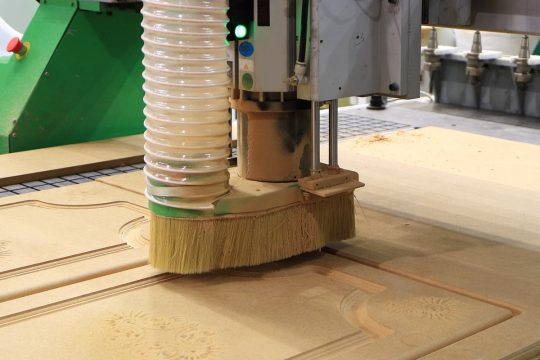
Le choix judicieux des outils est essentiel pour obtenir des résultats impeccables. Les fraises à compression sont souvent utilisées pour limiter l'écaillage sur les deux faces, tandis que les outils à coupe montante ou descendante peuvent être sélectionnés en fonction de l'évacuation des copeaux et des exigences de finition. L'avance, la vitesse de broche, la profondeur de passe et l'affûtage de l'outil doivent être parfaitement équilibrés afin d'éviter les brûlures, les vibrations excessives, les arêtes vives et l'usure prématurée de l'outil. Un maintien fiable du matériau est tout aussi important, car les panneaux de contreplaqué peuvent se soulever, se déplacer ou vibrer pendant l'usinage. Les tables à vide, les brides et les martyrs adaptés contribuent à stabiliser le panneau et à garantir des dimensions précises. Une aspiration efficace des poussières élimine les copeaux et les particules fines, améliore la visibilité, protège l'outil de coupe et maintient la zone de travail propre. La programmation numérique permet également de modifier, de mettre à l'échelle, d'imbriquer et de répéter rapidement les conceptions. Les routeurs CNC contribuent à améliorer la productivité, à réduire les erreurs manuelles, à minimiser le gaspillage de matériaux et à produire des composants en contreplaqué précis et reproductibles, avec des détails nets et une qualité constante.
Types adaptés au fraisage CNC
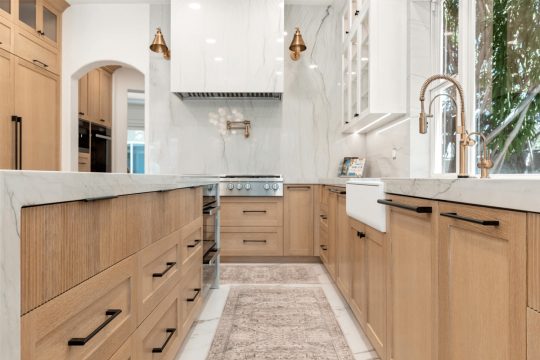
- Portes de vitrines
- Panneaux d'armoire
- Unités de rayonnage
- Tableaux
- Sièges
- Cadres de lit
- Éléments de garde-robe
- Pièces de tiroir
- Panneaux muraux décoratifs
- Diviseurs de pièce
- Panneaux acoustiques
- Stands d'exposition
- Affiche de détail
- Enseignes publicitaires
- Boîtes de rangement
- Caisses d'emballage
- Jouets en bois
- Plateaux de puzzle
- Modèles éducatifs
- Modèles architecturaux
Industries et applications


Procédés de fraisage CNC utilisés
Coupe de précision
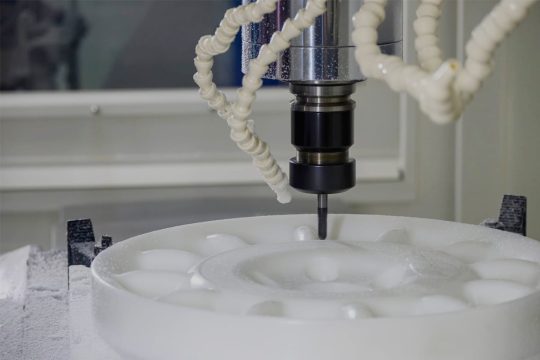
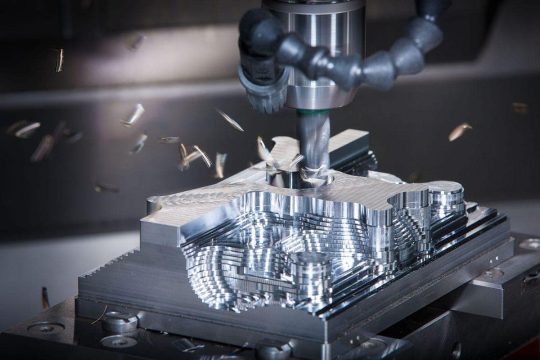
Les fraiseuses CNC découpent les panneaux de contreplaqué avec une grande précision dimensionnelle. Les trajectoires d'outils programmées permettent de réaliser des arêtes droites, des courbes, des ouvertures internes et des pièces répétitives, tout en réduisant les erreurs manuelles et en garantissant des résultats constants quelle que soit la taille et l'épaisseur des panneaux.
Découpe de contour
La découpe de contours suit des tracés complexes pour créer des pièces de mobilier, des panneaux décoratifs, des enseignes, des jouets et des éléments architecturaux. La commande numérique par ordinateur (CNC) permet de garantir des courbes harmonieuses, des angles précis et des profils constants tout au long du processus d'usinage.
Gravure
Les fraiseuses CNC gravent textes, logos, motifs, textures et détails décoratifs sur des surfaces en contreplaqué. La profondeur de gravure est réglable pour obtenir des marquages discrets, des graphismes précis ou des motifs en relief, tout en préservant le placage environnant.
Forage Horizontaux
Le perçage CNC permet de réaliser des trous parfaitement positionnés pour les vis, les goujons, les charnières, les raccords, les câbles et les éléments de fixation. Le positionnement automatisé garantit un espacement et un diamètre constants, simplifiant ainsi l'installation et réduisant les problèmes d'alignement lors de l'assemblage du produit.
Empochage
Le fraisage par évidement consiste à retirer de la matière à des endroits précis sans découper la totalité du panneau. Ce procédé crée des cavités pour les raccords, les joints, la quincaillerie, les éléments décoratifs, les logements de composants et les sections structurelles légères.
Gorges
Les fraiseuses CNC produisent des rainures droites ou courbes pour les assemblages de panneaux, les fonds de tiroirs, les étagères, les lignes décoratives et les goulottes de câbles. Le contrôle précis de la profondeur et de la largeur garantit un ajustement précis et une qualité d'assemblage constante.
Découpe de menuiserie
Les fraiseuses CNC permettent de réaliser des rainures, des feuillures, des mortaises, des tenons, des assemblages à entures multiples et des connexions emboîtables. La précision de l'assemblage améliore la rapidité de montage, la régularité structurelle et l'alignement des composants dans la fabrication de meubles, d'armoires, de présentoirs et de produits préfabriqués.
Chanfreiner
Le chanfreinage permet d'obtenir des bords de contreplaqué biseautés pour un rendu décoratif, un meilleur ajustement ou des transitions plus harmonieuses entre les composants. La commande numérique garantit un angle et une largeur constants, même sur des profils droits, courbes ou irréguliers.
Profilage des bords
Des fraises spécialisées permettent de façonner les chants du contreplaqué en profils arrondis, chanfreinés, étagés ou décoratifs. Ce procédé améliore l'aspect, la sécurité, l'ajustement et la qualité de la finition, tout en réduisant le besoin d'un façonnage manuel important des chants.
Sculpture 3D
Les fraiseuses CNC permettent de réaliser des motifs tridimensionnels en relief, en creux et profilés dans du contreplaqué épais. Ce procédé convient à la fabrication de panneaux décoratifs, d'œuvres d'art en relief, de maquettes, de signalétique, de moules et de composants sur mesure de profondeurs variables.
Nesting
Le logiciel d'imbrication permet d'organiser efficacement plusieurs pièces sur une feuille de contreplaqué. Les agencements optimisés réduisent les pertes de matière, raccourcissent les parcours de découpe, maîtrisent les coûts de production et permettent la fabrication simultanée de composants de formes et de dimensions différentes.
Production par lots
Les fraiseuses CNC répètent avec une précision constante les opérations programmées de découpe, de perçage, de gravure et de rainurage. Elles sont ainsi parfaitement adaptées à la production en grande série de composants en contreplaqué, tout en réduisant les besoins en main-d'œuvre et en garantissant une qualité de produit stable.
Défis communs
Éclatement du placage
Les surfaces en contreplaqué peuvent s'écailler lorsque l'outil de coupe entre ou sort du panneau. Un mauvais choix de fraise, un sens de coupe inapproprié, une vitesse d'avance excessive ou des outils émoussés peuvent endommager le placage supérieur ou inférieur et nuire à la qualité des bords.
Déchirer le bord
L'arrachement se produit lorsque les fibres du bois sont arrachées au lieu d'être coupées net. Ce problème est particulièrement fréquent dans les angles, les profils courbes et les coupes transversales, ce qui augmente la nécessité de poncer, de mastiquer ou de remplacer certaines pièces.
Vides internes
Le contreplaqué de qualité inférieure peut présenter des interstices ou des irrégularités entre ses couches internes. Ces vides cachés peuvent engendrer une résistance à la coupe irrégulière, des bords rugueux, des zones fragiles et des résultats imprévisibles lors du perçage, du fraisage ou du contournage.
Dommages superficiels
Les surfaces en contreplaqué peuvent être rayées, cabossées ou marquées par des serre-joints, des copeaux, des débris de machines ou une manipulation brutale. Les placages décoratifs nécessitent une protection soignée, car même des dommages mineurs peuvent rester visibles après la finition.
Mouvement du panneau
Lors de l'usinage, les grandes plaques de contreplaqué peuvent se déplacer, se soulever ou vibrer si le système de fixation est inadéquat. L'instabilité du matériau peut entraîner des dimensions inexactes, des coupes irrégulières, la casse d'outils et un mauvais alignement entre les trous percés et les éléments d'assemblage.
Brûlures et décoloration
Une vitesse de broche excessive, une avance lente, des passes profondes ou des fraises émoussées peuvent générer une chaleur excessive. Ceci peut laisser des marques sombres, des bords brûlés, des odeurs désagréables et des dépôts de résine sur l'outil de coupe.
Accumulation de poussière et de copeaux
Le fraisage du contreplaqué génère d'importantes quantités de copeaux et de poussières fines. Une mauvaise aspiration peut réduire la visibilité, gêner la coupe, augmenter la chaleur, contaminer les composants de la machine et créer un environnement de travail moins efficace et moins confortable.
Accumulation d'adhésif
Lors d'un usinage prolongé, les adhésifs entre les couches de contreplaqué peuvent se coller aux fraises. Cette accumulation réduit l'efficacité de coupe, augmente la chaleur, détériore la qualité des arêtes et peut réduire la durée de vie de l'outil si celui-ci n'est pas nettoyé régulièrement.
Variante de matériau
La qualité, la densité, l'épaisseur du placage, le taux d'humidité et la structure du noyau du contreplaqué peuvent varier d'une feuille à l'autre. Ces différences peuvent affecter la vitesse de coupe, l'état de surface, la stabilité dimensionnelle et l'usure des outils, nécessitant ainsi des ajustements des paramètres d'usinage.
Comment le fraisage CNC résout les problèmes
Découpe de placage propre
Les fraiseuses CNC utilisent des fraises à compression ou à coupe descendante pour limiter les éclats sur les surfaces en contreplaqué. Un contrôle précis de la direction de coupe, des vitesses d'avance adaptées et des outils affûtés contribuent à protéger les placages décoratifs et à obtenir des bords supérieurs et inférieurs plus nets.
Déchirure des bords réduite
Les trajectoires d'outil programmées guident la fraise avec précision dans les angles, les courbes et les sections transversales. Les passes de finition et les directions de coupe optimisées réduisent l'arrachement des fibres, améliorant ainsi la régularité des bords et limitant le besoin de ponçage ou de réparation.
Stockage de matériaux stables
Les tables à vide, les pinces et les martyrs maintiennent les panneaux de contreplaqué en place pendant l'usinage. Un bridage fiable empêche les déplacements, les soulèvements et les vibrations, contribuant ainsi à garantir des dimensions précises, des coupes nettes et un alignement correct entre les trous et les éléments d'assemblage.
Paramètres de coupe contrôlés
Les fraiseuses CNC permettent un réglage précis de la vitesse de broche, de l'avance et de la profondeur de coupe. Des réglages équilibrés réduisent la surchauffe, les brûlures, la décoloration et les contraintes sur l'outil, tout en garantissant des performances stables pour différentes qualités et épaisseurs de contreplaqué.
Extraction efficace de la poussière
Les systèmes d'aspiration intégrés éliminent les copeaux et les poussières fines de la zone de coupe. Un meilleur contrôle des poussières améliore la visibilité, réduit l'accumulation de chaleur, protège les composants de la machine et crée un environnement de production plus propre et plus efficace.
Précision constante de la trajectoire d'outil
Le mouvement contrôlé par ordinateur assure un positionnement précis pour la découpe, le perçage, le rainurage et l'usinage des poches. Cette constance permet de compenser les variations de matériaux et garantit un assemblage correct des pièces de contreplaqué.
Gestion améliorée des outils
La production CNC permet aux opérateurs de sélectionner les outils adaptés à chaque opération et de contrôler leur état. L'inspection régulière, le nettoyage et le remplacement opportun des outils réduisent l'accumulation de colle, maintiennent l'efficacité de coupe et améliorent la qualité des arêtes de coupe.
Utilisation optimisée des matériaux
Le logiciel d'imbrication permet d'organiser efficacement les pièces de contreplaqué sur chaque feuille. Une meilleure disposition réduit les surfaces inutilisées, évite les défauts visibles et les vides internes, diminue les coûts des matériaux et favorise une production accrue avec moins de déchets.
Routeurs CNC recommandés
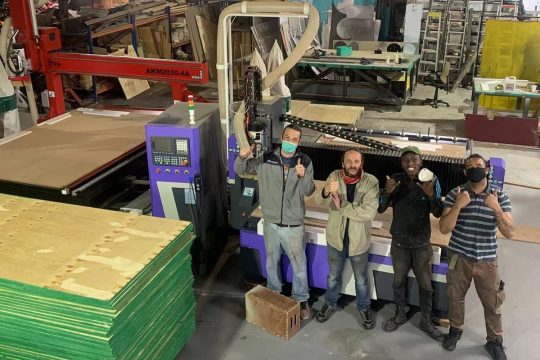
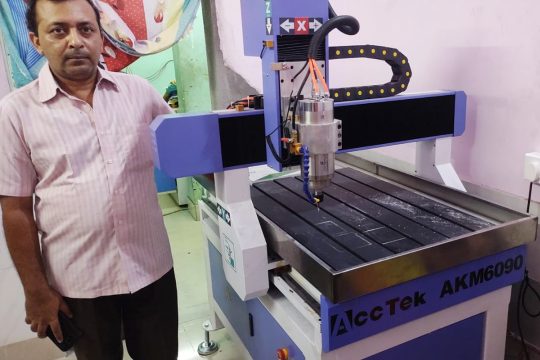
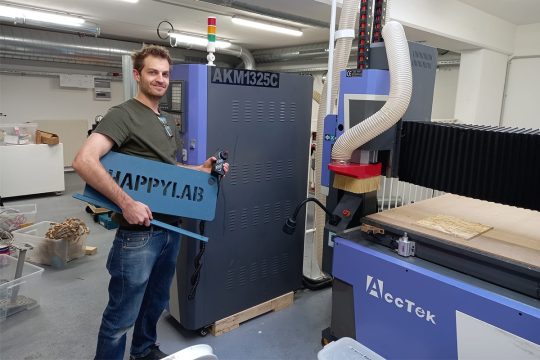
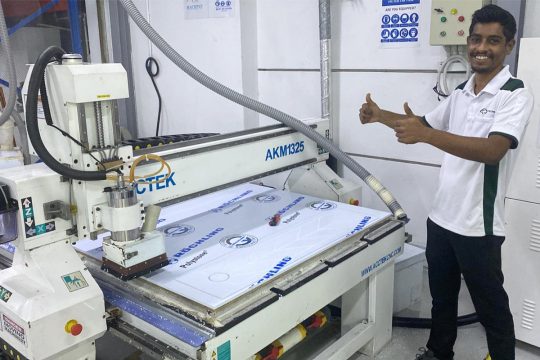
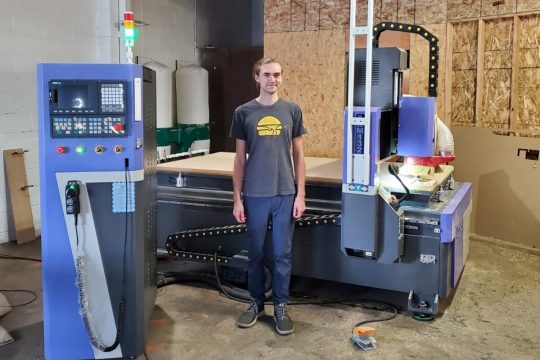
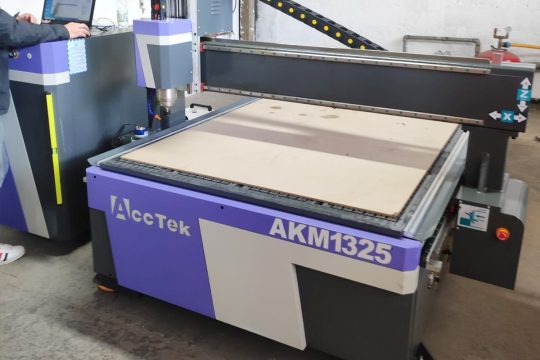
Les routeurs CNC à changeur d'outils automatique sont idéaux pour les projets nécessitant plusieurs opérations. Ils permettent de passer facilement des outils de coupe, de perçage, de gravure et de finition sans interventions manuelles fréquentes, réduisant ainsi les temps d'arrêt et améliorant la régularité de la production. Les fabricants de panneaux d'armoires ou de meubles modulaires peuvent également tirer profit de machines équipées d'unités de perçage et de systèmes d'alignement. Les routeurs CNC à axe rotatif sont recommandés pour les composants cylindriques ou rotatifs en contreplaqué. Les routeurs CNC 4 et 5 axes sont particulièrement adaptés aux surfaces tridimensionnelles complexes, aux contours profonds, aux pièces courbes et à l'usinage de pièces multifaces. Quelle que soit la configuration, la machine choisie doit offrir un châssis rigide, un contrôle précis des mouvements, un système d'aspiration puissant, une extraction efficace des poussières, un logiciel CAO/FAO compatible et des fraises adaptées. Ces caractéristiques contribuent à réduire les éclats, les vibrations, les brûlures et les erreurs dimensionnelles, tout en garantissant une qualité de production stable.


Obtenez des solutions de routage CNC
Notre équipe vous aidera à évaluer vos matériaux à usiner, les dimensions de vos pièces, l'épaisseur de coupe, le volume de production, les exigences de précision et les conditions de votre atelier. En fonction de ces informations, nous pourrons vous recommander le modèle de machine le plus adapté, la puissance de broche, le type de table, le système de commande, le système de transmission, l'outillage et les accessoires optionnels tels que les tables à vide, les dispositifs rotatifs, les changeurs d'outils automatiques, les unités de perçage et les systèmes d'aspiration des poussières.
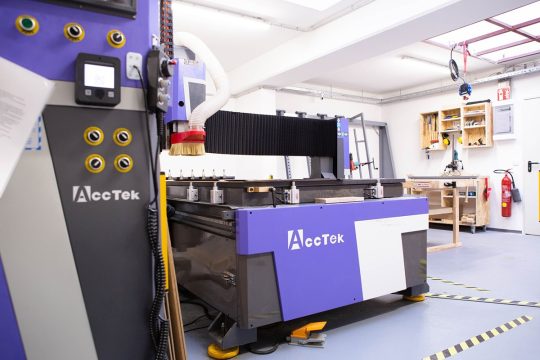
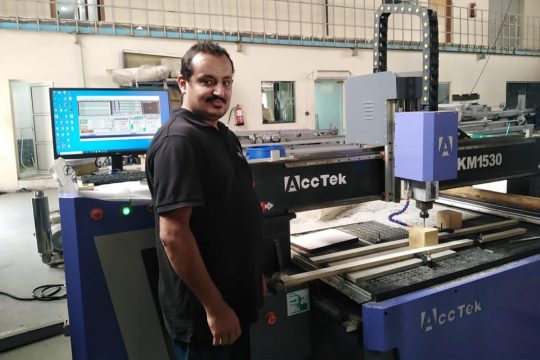
AccTek CNC s'engage à fournir bien plus que de simples fraiseuses CNC. Nous proposons un accompagnement professionnel avant l'achat, la personnalisation des machines, l'assistance à l'installation, la formation à l'utilisation, le support technique et le service après-vente pour permettre à nos clients d'utiliser leur équipement en toute confiance. Des petits ateliers aux grandes usines de production, nos fraiseuses CNC sont conçues pour améliorer l'efficacité, réduire le travail manuel et élargir les possibilités de traitement.
Si vous recherchez une fraiseuse CNC fiable pour votre entreprise, contactez AccTek CNC dès aujourd'hui et obtenez une solution adaptée à vos objectifs de production.