

- 10318 Min Read
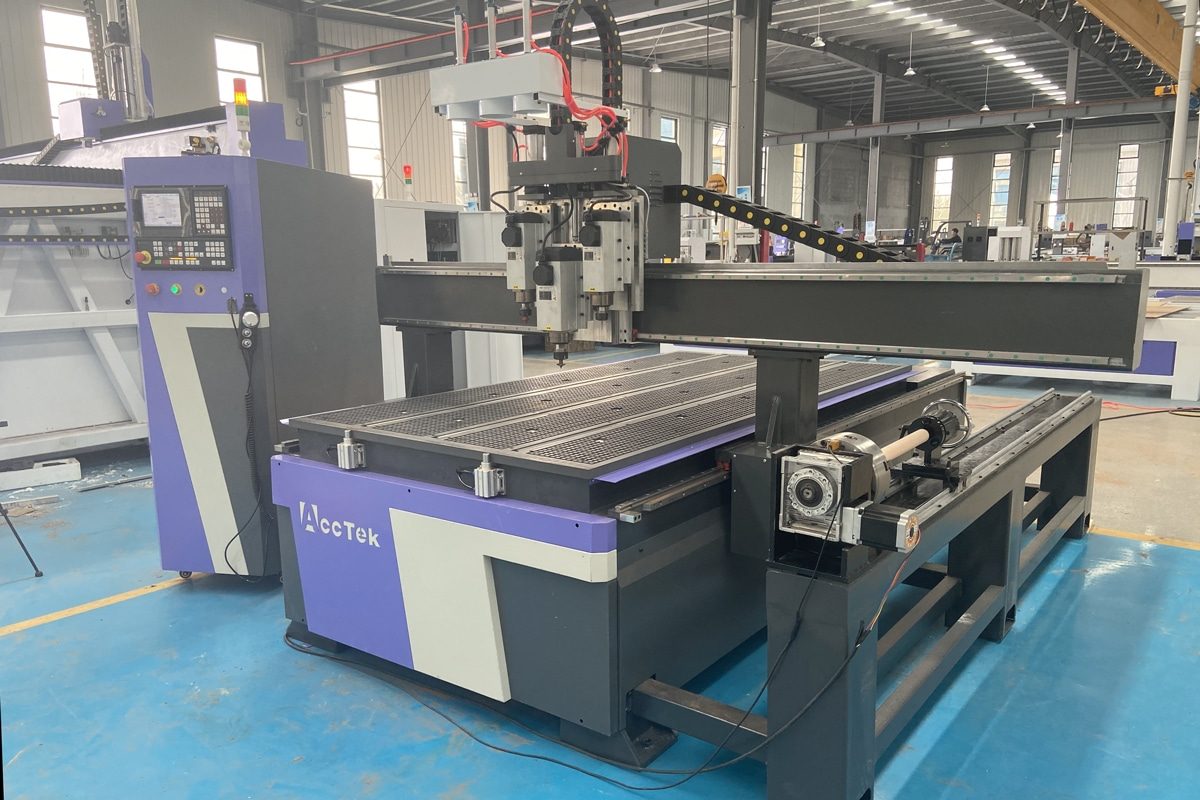
In today’s increasingly competitive manufacturing environment, CNC routers must deliver not only accuracy, but also speed, flexibility, and consistent productivity. As workshops and factories seek to minimize downtime and optimize multi-process machining, two advanced solutions are often considered: the ATC CNC router and the independent multi-spindle CNC router. Both are designed to reduce manual intervention and improve efficiency, yet they achieve these goals in fundamentally different ways.
Choosing between these two options can significantly impact production workflow, operating costs, and long-term return on investment. This article provides a clear, side-by-side comparison of ATC CNC routers and independent multi-spindle CNC routers. By examining their working principles, performance differences, cost considerations, and ideal application scenarios, we aim to help manufacturers determine which solution best aligns with their production needs and business goals.
What Is an ATC CNC Router?
An ATC CNC router represents a significant step forward in CNC machining automation. As manufacturing processes become more complex and production cycles shorter, the ability to perform multiple machining operations without manual intervention has become increasingly important. Understanding what an ATC CNC router is and how it works provides a solid foundation for evaluating its advantages, limitations, and suitability for different production environments.
How an ATC CNC Router Works
An ATC CNC router is a computer-controlled machining system equipped with an automatic tool changer that stores multiple tools in a tool magazine. During machining, the CNC control system automatically selects the required tool based on the programmed tool path, exchanges it with the current tool in the spindle, and resumes cutting. The entire tool change process typically takes only a few seconds, minimizing downtime between operations.
Key Features of an ATC CNC Router
An ATC CNC router is designed to maximize automation, efficiency, and machining flexibility. Its key features make it especially suitable for complex and multi-process production environments.
- Automatic Tool Changing: The ability to quickly and precisely switch tools during the machining process eliminates manual tool changes and reduces downtime.
- High Machining Flexibility: An ATC CNC router can perform cutting, drilling, slotting, and engraving in a single setup, making it ideal for processing complex parts that require multiple machining operations.
- Improved Productivity: Fast tool change times significantly shorten cycle times, so overall production efficiency and output are greatly improved.
- High Precision and Repeatability: The automated tool-changing process ensures consistent tool positioning, leading to higher accuracy and reliable results across repeated production runs.
- Reduced Labor Dependence: ATC CNC routers reduce the need for constant operator intervention, which lowers labor intensity and minimizes human error.
Common ATC System Types
Automatic Tool Changer (ATC) systems can be configured in several ways to suit different machining requirements, production scales, and workshop layouts. The most common types of ATC systems used on CNC routers include the following:
- Linear ATC: This system arranges tools in a straight line, usually mounted along the side of the machine bed or on the gantry. Linear ATC has a simple structure, fast tool change speed, and is easy to maintain, but it has limited tool capacity. They are suitable for small to medium-sized production workshops with moderate tool requirements.
- Carousel ATC: This system uses a rotating circular magazine to store tools and present them to the spindle during tool changes. The carousel system is compact, offers a larger tool capacity than linear tool magazines, and utilizes space efficiently, but its mechanical structure is slightly more complex. It is suitable for medium to high-mix production requiring several different tools.
Typical Applications
ATC CNC routers are widely used in industries that require high efficiency, machining flexibility, and consistent precision, especially where multiple tools are needed within a single machining cycle. Typical application areas include:
- Cabinet and Furniture Manufacturing: ATC CNC routers are ideal for cutting, drilling, grooving, and pocketing cabinet panels and furniture components. For customized furniture and panel-based production, Automatic tool changes can easily handle frequent design changes and complex machining paths.
- Sign Making and Advertising Industry: ATC CNC routers are commonly used for engraving, cutting, and shaping materials such as wood, acrylic, PVC, and aluminum composite panels, enabling detailed designs and fast job completion.
- 3D Carving and Artistic Engraving: Complex 3D relief carving and artistic projects benefit from automatic tool changes, allowing different cutter sizes and shapes to be used without manual interruption.
An ATC CNC router is a highly automated machining solution designed to handle multi-tool operations efficiently and accurately. By integrating an automatic tool changer with a powerful CNC control system, it enables faster production, greater machining flexibility, and consistent results. For manufacturers facing frequent tool changes, complex part designs, or growing production demands, an ATC CNC router offers a reliable and scalable solution that supports long-term efficiency and business growth.
What Is an Independent Multi-Spindle CNC Router?
Unlike ATC systems that rely on automatic tool changers, Independent multi-spindle CNC routers feature multiple spindles, each equipped with a dedicated tool and independently controlled. This design allows manufacturers to complete multiple operations quickly and efficiently without frequent tool changes, making them ideal for standardized production and batch processing. Understanding how independent multi-spindle CNC routers work and their key characteristics helps businesses evaluate their suitability for specific manufacturing needs.
How an Independent Multi-Spindle CNC Router Works
An independent multi-spindle CNC router is a CNC machining system equipped with two or more spindles. Each spindle on the machine is permanently fitted with a specific cutting tool, such as a drill, end mill, or engraving bit. During machining, the CNC control system switches between spindles rather than changing tools. The machine automatically positions the required spindle to the working location and operates, then moves to the next spindle as programmed. This eliminates tool change time while maintaining a relatively simple mechanical structure.
Key Characteristics
Independent multi-spindle CNC routers are designed to provide high efficiency and reliability for repetitive or batch production tasks. Their defining characteristics distinguish them from ATC CNC routers and standard multi-spindle machines:
- Independently Controlled Spindles: Each spindle operates with its own motor and control system, allowing it to start, stop, or adjust speed independently. This flexibility enables simultaneous or sequential machining without the limitations of a single drive system.
- No Tool Changer Required: Unlike ATC CNC routers, independent multi-spindle routers do not require a tool changer. Each spindle is pre-fitted with a dedicated tool, which reduces mechanical complexity and lowers maintenance requirements.
- Fast Spindle Switching: The machine can quickly switch between spindles during operation, minimizing idle time and increasing production efficiency, particularly for repetitive tasks.
- Stable and Robust Structure: With fewer moving parts compared to ATC systems, independent multi-spindle CNC routers offer greater rigidity and stability.
- Simplified Programming and Operation: Since each spindle holds a dedicated tool, programming is straightforward. Operators do not need to manage tool changes, reducing the learning curve.
Typical Applications
Independent multi-spindle CNC routers are widely used in manufacturing environments where repetitive, high-volume machining is required and a fixed set of tools can handle most operations. Their design makes them especially effective for batch production and processes that demand speed and stability. Typical applications include:
- Panel Furniture: Independent spindles enable rapid processing of door panels, frames, and decorative patterns without frequent tool changes, improving overall production throughput.
- Woodworking Lines and Batch Production: For medium- to large-scale workshops producing uniform parts, multi-spindle routers reduce cycle time by machining multiple features in a single pass.
- Simple Engraving and Drilling Operations: They are suitable for repetitive drilling, slotting, and shallow engraving tasks where the same tool configuration is used across multiple parts.
An independent multi-spindle CNC router offers a reliable, efficient, and cost-effective solution for repetitive or high-volume production tasks. By keeping tools permanently mounted on individually controlled spindles, these machines minimize downtime, simplify operation, and maintain consistent precision across large production runs. For manufacturers focused on standardized components and streamlined workflows, independent multi-spindle CNC routers provide a powerful alternative to more complex ATC systems.
ATC CNC Router vs. Independent Multi-Spindle CNC Router: Core Differences
Choosing the right CNC router for your production needs requires a clear understanding of how different machine types operate and perform. ATC CNC routers and independent multi-spindle CNC routers both aim to improve efficiency and reduce manual intervention, but they achieve this in fundamentally different ways. Comparing their core differences helps manufacturers determine which solution best aligns with their workflow, production volume, and part complexity.
Tool Changing and Spindle Switching
- ATC CNC Router: Utilizes an automatic tool changer (ATC) to switch tools within a single spindle. The CNC control system selects the required tool from a magazine, exchanges it with the current tool, and resumes machining. This allows a single spindle to handle multiple operations in one setup.
- Independent Multi-Spindle CNC Router: Features multiple independently controlled spindles, each permanently fitted with a dedicated tool. The machine switches between spindles rather than changing tools, eliminating tool change time but limiting the number of tool types that can be used simultaneously.
Machining Flexibility
- ATC CNC Router: Offers high flexibility and can perform a wide range of operations in one cycle. Ideal for complex parts requiring multiple tool types, such as furniture with intricate designs, molds, or detailed 3D carvings.
- Independent Multi-Spindle CNC Router: More suitable for standardized or repetitive tasks. Flexibility is limited because each spindle holds a specific tool, making it less adaptable to jobs requiring frequent changes in tool types.
Production Efficiency
- ATC CNC Router: Tool change takes a few seconds per operation, which slightly adds to cycle time. However, for multi-tool, high-mix production, ATC routers reduce overall downtime compared to manual tool changes.
- Independent Multi-Spindle CNC Router: Spindle switching is nearly instantaneous, maximizing efficiency for batch production or repetitive processes where the same set of tools is used.
Precision and Stability
- ATC CNC Router: Maintains high precision for complex operations, but the moving components in the tool changer can introduce slight vibration during high-speed machining.
- Independent Multi-Spindle CNC Router: With fewer moving parts, it offers higher rigidity and stability, ensuring consistent quality during long, repetitive production runs.
Programming Complexity and Operation
- ATC CNC Router: Requires more advanced CNC programming to manage multiple tools, tool paths, and machining operations. Operators need specialized training to fully utilize the system’s capabilities.
- Independent Multi-Spindle CNC Router: Programming is simpler because each spindle has a fixed tool, reducing setup time and the risk of errors. Operator training requirements are lower.
ATC CNC routers and independent multi-spindle CNC routers each offer distinct advantages depending on the production scenario. ATC machines provide superior flexibility and are ideal for complex, multi-tool operations, while independent multi-spindle routers excel in repetitive, high-volume tasks with a fixed set of tools. Understanding these core differences enables manufacturers to make informed decisions, ensuring that their CNC router investment maximizes productivity, efficiency, and long-term return.
Cost and Investment Analysis
When evaluating CNC routers for your manufacturing operation, understanding the financial implications of each machine type is as important as assessing performance. Both ATC CNC routers and independent multi-spindle CNC routers offer productivity advantages, but their cost structures, operating requirements, and long-term ROI differ significantly. A detailed analysis helps manufacturers align machine choice with business goals, production volume, and budget.
Initial Purchase Cost
- ATC CNC Router: Generally requires a higher initial investment. The primary reason is the automatic tool changer mechanism, which involves a tool magazine, a tool selection system, and additional control electronics. Advanced CNC controllers capable of managing multi-tool operations and complex machining paths also contribute to higher costs.
- Independent Multi-Spindle CNC Router: Independent multi-spindle routers typically have a lower purchase price because they do not require a tool changer. Each spindle is fixed with a dedicated tool, and the mechanical design is simpler.
Operating and Maintenance Costs
- ATC CNC Router: ATC systems involve more moving parts and mechanical complexity, which increases maintenance demands. Tool changer components, such as magazines, grippers, and actuators, require regular inspection, lubrication, and occasional replacement. The cost of specialized tool holders and potential downtime for maintenance should also be considered.
- Independent Multi-Spindle CNC Router: Maintenance is generally simpler and less expensive. With fewer moving parts, there is less risk of mechanical failure. Spindle motors, bearings, and cutting tools are the main maintenance items. Overall, the ongoing operating costs are lower compared to an ATC system.
Long-Term Return on Investment (ROI)
- ATC CNC Router: The ability to automatically change tools reduces manual labor, shortens production cycles, and increases throughput for high-mix, low- to medium-volume production. For businesses producing parts with multiple machining operations or requiring frequent design changes, the ATC system can significantly improve productivity and quality, justifying the investment.
- Independent Multi-Spindle CNC Router: Provides excellent ROI for standardized, repetitive production where speed and stability are prioritized. Lower purchase and maintenance costs, combined with high reliability and consistent output, make independent multi-spindle routers a cost-effective solution for high-volume production.
Scalability and Future Costs
- ATC CNC Router: Easier to integrate with advanced automation. Additional features, such as automatic loading/unloading systems, larger tool magazines, or smart factory connectivity, can be added to further improve productivity. This scalability ensures that the machine remains valuable as production requirements evolve, though these upgrades involve additional investment.
- Independent Multi-Spindle CNC Router: While highly efficient for repetitive tasks, these machines have limited flexibility for handling highly varied jobs or future production expansions requiring multiple tool types. If production needs change significantly, additional machines or retrofits may be necessary.
ATC CNC routers involve higher initial and maintenance costs but excel in flexible, multi-tool production, while independent multi-spindle CNC routers offer lower upfront costs and maintenance, delivering efficiency in repetitive, high-volume tasks. Evaluating these financial factors alongside production needs ensures a well-informed investment decision that balances cost with long-term productivity.
Which CNC Router Is Better for Different Production Scenarios?
Selecting the right CNC router is not about choosing the most advanced machine, but about choosing the one that best fits your production scenario. ATC CNC routers and independent multi-spindle CNC routers are designed to meet different manufacturing demands, from highly customized projects to large-scale, repetitive production. By examining how each machine performs across various production scenarios, businesses can better understand which solution delivers the greatest efficiency, flexibility, and return on investment.
Custom and High-Mix Production
In custom and high-mix production environments, manufacturers frequently handle a wide variety of part designs with differing features, shapes, sizes, and tooling requirements. These settings are common in bespoke furniture shops and architectural millwork studios, where ATC CNC routers are better.
- Automatic Tool Changer Enables Multi-Tool Operations: Automatic tool changer allows the machine to switch between different tools automatically during a machining cycle. This means you can complete multiple operations in one setup without manual intervention.
- Ideal for Complex Part Designs: High-mix jobs often involve complex geometries and diverse machining requirements. The tool magazine of ATC CNC routers’ large capacity means you won’t be limited by the number of tools a job requires.
- Better Support for Software-Driven Design Changes: Custom and high-mix jobs often depend on CAD/CAM workflows. ATC CNC routers work seamlessly with advanced CNC programming, enabling quick updates to part programs without compromising tool arrangements.
Mass Production and Repetitive Tasks
In mass production environments where the same parts are manufactured repeatedly, efficiency and consistency are top priorities. Industries such as panel furniture production, door manufacturing, and standardized components for assembly lines typically fall into this category. For these scenarios, an independent multi-spindle CNC router is often the more suitable choice.
- Fast Spindle Switching Without Tool Changes: The independent multi-spindle CNC routers switch between spindles to perform different operations. This eliminates tool-change time and results in higher throughput when producing the same part repeatedly.
- Excellent for Repetitive Operations: In repetitive machining tasks, independent multi-spindle routers can perform successive operations quickly without pauses for tool changes.
- Stable and Robust Mechanical Design: Because independent multi-spindle machines don’t require a tool changer mechanism, their structure is more rigid and less prone to vibration during long production runs. This stability translates to consistent quality in repetitive, high-volume machining.
Small Workshops
Small workshops typically operate with limited space, budget, and manpower, while handling a wide variety of customer orders. Production volumes are usually low to medium, and job requirements may change frequently. For small workshops, the ideal CNC router depends on the job mix.
- Custom or Mixed Work: ATC CNC routers are the best choice. They offer high flexibility, automatic tool changing, and the ability to complete multiple operations in one setup, making it ideal for custom orders and small-batch production.
- Repetitive Work: Independent multi-spindle CNC routers are the best choice. They provide faster cycle times, simpler operations, and lower investment when producing standardized parts in batches.
Industrial Manufacturers
Industrial manufacturers typically run high-volume production, require consistent quality, and often integrate machines into automated workflows. They have dedicated teams for programming, maintenance, and production optimization. Industrial manufacturers benefit from matching the machine type to production demands.
- Complex and Varied Production: ATC CNC Router is the best choice. Its automatic tool changer and multi-tool capability support diverse part designs and reduce manual intervention, making it ideal for flexible manufacturing and mixed product lines.
- Large-Scale Repetitive Production: An Independent multi-spindle CNC router is the best choice. With multiple fixed spindles and minimal downtime from tool changes, it delivers high throughput, stability, and lower operating costs for standardized parts.
There is no single CNC router that is ideal for every production environment. ATC CNC routers excel in high-mix, complex, and custom production where flexibility and automation are essential, while independent multi-spindle CNC routers are better suited for high-volume, repetitive tasks that prioritize speed, stability, and cost efficiency. By matching the CNC router type to specific production requirements, manufacturers can optimize workflow, reduce costs, and achieve long-term operational success.
Key Factors to Consider Before Making a Decision
Before investing in a CNC router, it is essential to look beyond basic machine specifications and focus on how the equipment will perform in your actual production environment. ATC CNC routers and independent multi-spindle CNC routers each offer distinct advantages, but the right choice depends on factors such as production volume, job complexity, budget, and long-term business goals. Understanding these key considerations helps ensure that your investment delivers maximum efficiency, reliability, and return over time.
- Production Volume and Job Mix: Consider whether your production focuses on custom, high-mix jobs or large-scale, repetitive output. ATC CNC routers are better for varied work, while independent multi-spindle routers excel in batch production.
- Number of Tools Required per Job: Jobs requiring frequent tool changes or many different cutters benefit from an ATC system. If most operations can be completed with a fixed set of tools, a multi-spindle router is often more efficient.
- Part Complexity: Complex parts with multiple machining steps, fine details, or 3D contours typically require the flexibility of an ATC CNC router. Simpler, standardized parts are well-suited to independent multi-spindle machines.
- Budget and Investment Planning: ATC CNC routers usually involve higher initial and maintenance costs but offer greater flexibility. Independent multi-spindle CNC routers have lower upfront costs and are more cost-effective for repetitive production.
- Operator Skill and Programming Requirements: ATC systems require more advanced programming and operator training. Multi-spindle CNC routers are easier to operate and maintain, which may be important for smaller teams.
- Production Efficiency and Downtime: Evaluate where downtime occurs in your process. ATC routers reduce manual tool-change downtime, while independent multi-spindle routers eliminate tool changes entirely for repetitive tasks.
- Future Expansion and Automation Needs: If you plan to expand production, add automation, or handle more complex jobs in the future, ATC CNC routers offer better scalability. Multi-spindle machines are more limited but highly efficient within their designed scope.
The best CNC router choice balances current production demands with future growth plans. By aligning machine capabilities with production requirements, operator skill levels, and future expansion plans, businesses can avoid unnecessary costs and ensure long-term productivity. Carefully considering these factors will help you select a machine that maximizes productivity, controls costs, and supports sustainable business development.
Summarize
There is no single “better” CNC router, only the one that best matches your production needs. ATC CNC routers excel in flexibility, automation, and complex multi-tool operations, making them ideal for custom, high-mix, and evolving manufacturing environments. Independent multi-spindle CNC routers, on the other hand, deliver outstanding efficiency, stability, and cost-effectiveness for high-volume, repetitive production with fixed tooling requirements. By applying the comparison methods and evaluation criteria discussed in this article, you can make a more confident and informed choice. Continue reading “Linked Multi-Head CNC Routers VS Independent Multi-Head CNC Routers” to learn about the differences between these two configurations.
AccTek CNC is a professional CNC router manufacturer specializing in the design and production of a wide range of CNC routing solutions to meet diverse manufacturing needs. With strong technical expertise and extensive industry experience, AccTek CNC offers multiple machine configurations, ensuring optimal performance for different materials and application scenarios. Whether serving small workshops seeking flexibility or industrial manufacturers pursuing high-volume production, AccTek CNC delivers reliable and future-ready CNC router solutions, backed by professional technical support and comprehensive after-sales service. For manufacturers looking to invest in a CNC router that truly fits their production goals, AccTek CNC is a trusted and capable partner.