

Application of CNC router

CNC router applications across materials and industries, including precision cutting, drilling, engraving, carving, nesting, and customized solutions for efficient, repeatable production.
Home » Application » Page 4

Introduction

CNC routers are computer-controlled machining systems designed to cut, carve, engrave, drill, mill, groove, and shape materials with speed and precision. By converting digital designs into programmed toolpaths, these machines can produce complex parts consistently while reducing manual labor, processing errors, and material waste. Their flexibility makes them suitable for custom projects, prototyping, small-batch manufacturing, and continuous industrial production. Depending on the machine structure, spindle power, tooling, and workholding system, CNC routers can process wood, plywood, MDF, plastics, acrylic, foam, composites, aluminum, copper, brass, and certain types of stone. Manufacturers can use the same machine for profile cutting, pocketing, hole drilling, surface machining, decorative carving, lettering, relief engraving, and three-dimensional contouring. Optional features such as automatic tool changers, vacuum tables, rotary axes, oscillating knives, vision systems, and automatic loading equipment can further expand the range of possible applications.
CNC routers are widely used in furniture production, cabinetmaking, woodworking, sign making, advertising, packaging, aerospace, automotive, marine, construction, electronics, mold manufacturing, and product development. Typical products include cabinet panels, doors, decorative screens, signs, display stands, foam inserts, plastic components, aluminum parts, molds, models, and prototypes. The right CNC router application depends on the material, workpiece dimensions, thickness, required accuracy, surface finish, production volume, and part complexity. Understanding these factors allows manufacturers to select an appropriate machine configuration and achieve reliable results.

Find CNC Router Solutions by Material

Choosing the right CNC router solution begins with understanding the material to be processed. Each material responds differently to cutting forces, heat, tool geometry, spindle speed, feed rate, and workholding, so the machine configuration and process parameters must be matched carefully. Wood, plywood, MDF, and similar panels require effective chip removal, reliable dust collection, and tooling selected for clean edges and minimal tear-out. Acrylic and other plastics need balanced speeds and feeds to prevent melting, chipping, or cloudy edges. Foam and soft materials benefit from secure holding and cutting methods that limit deformation and surface damage. Composite materials may require wear-resistant tools and controlled machining to reduce fraying, delamination, and excessive dust. Stone and other rigid mineral-based materials require suitable machine structures, specialized tools, and appropriate cooling or dust-control measures. Evaluating material type, thickness, density, surface requirements, part geometry, and production volume helps determine the appropriate spindle, tool, table, motion system, and auxiliary equipment.
Cork

Cork

Felt

Felt

Gasket Materials

Gasket Materials

EVA Foam

EVA Foam

Polyurethane Foam

Polyurethane Foam

Tooling Board

Tooling Board

Electrical Insulation Board

Electrical Insulation Board

Find CNC Router Solutions by Industry

CNC router requirements vary by industry because every production environment has different standards for accuracy, throughput, flexibility, finishing quality, and automation. In furniture and cabinet manufacturing, CNC routers support panel sizing, drilling, joinery, carving, nesting, and customized production. Sign-making and advertising operations use them for lettering, logos, dimensional graphics, display components, and decorative details. Packaging businesses rely on CNC routing for prototypes, cutting dies, protective inserts, and short-run packaging development. Within automotive, aerospace, marine, and transportation production, CNC routers help create patterns, molds, interior components, prototypes, and precisely shaped parts. Construction and interior decoration companies use them for architectural panels, doors, wall features, partitions, and customized ornaments. CNC routers also support electronics, model making, education, product development, and general manufacturing where repeatability and design flexibility are essential. The right solution depends on part dimensions, required tolerances, production volume, workflow, and automation goals. Options such as automatic tool changing, nesting software, rotary axes, vacuum tables, vision systems, and loading equipment can be selected to match specific operational needs.
Model-Making Industry

Model-Making Industry

Acoustic Panel Industry

Acoustic Panel Industry

Kitchen Cabinet Industry

Kitchen Cabinet Industry

CNC Router Processes and Capabilities

CNC routers combine programmable multi-axis motion with precise spindle and tool control to perform a broad range of subtractive manufacturing operations. Their capabilities extend beyond basic cutting, allowing one machine to create detailed features, accurate joints, dimensional surfaces, decorative elements, and production-ready components. CAD/CAM software converts two-dimensional drawings or three-dimensional models into controlled toolpaths, while optimized feeds, speeds, cutting depths, and tool selection determine machining quality and efficiency. The available processes depend on machine construction, axis configuration, spindle performance, control accuracy, tooling, workholding, and optional accessories. The rigid frame supports stable machining, while vacuum tables, clamps, and custom fixtures keep workpieces positioned throughout the cycle. Automatic tool changers, rotary devices, multi-head systems, probing, and vision-assisted positioning can further expand production flexibility. By combining multiple operations within a single digital workflow, CNC routers reduce manual handling, maintain dimensional consistency, and support both one-off craftsmanship and repeatable batch manufacturing.

Precision Profile Cutting

CNC routers follow programmed contours to create straight edges, curves, internal openings, and complex external shapes. Lead-ins, tabs, ramping paths, and finishing passes can be incorporated to maintain part stability, improve dimensional accuracy, and produce cleaner finished edges.

Drilling, Boring, and Countersinking

Programmed drilling creates individual holes, repeated patterns, countersinks, counterbores, and assembly points at defined coordinates. Dedicated drill banks or boring units can increase productivity while maintaining consistent hole diameter, depth, spacing, and alignment across multiple components.

Pocketing and Recess Machining

Pocketing removes material from selected areas without cutting completely through the workpiece. Controlled depth passes can produce shallow recesses, deep cavities, stepped pockets, mounting areas, and concealed features while maintaining consistent dimensions, flat bottoms, and defined boundaries.

Grooving, Slotting, and Channeling

CNC routers can produce straight or curved grooves, slots, dados, channels, and tracks with controlled widths and depths. These features can support assembly, accommodate inserts, create decorative patterns, or provide pathways for wiring, seals, fasteners, and other integrated components.

Engraving, Lettering, and V-Carving

Fine engraving tools and V-shaped cutters create text, logos, line art, identification marks, and decorative details. Cutting depth, tool angle, spacing, and toolpath strategy control line width, visual depth, corner sharpness, readability, and the overall appearance of the finished design.

Relief Carving and 2.5D Machining

Relief carving uses varying cutting depths to create raised or recessed designs with a dimensional appearance. Roughing passes remove larger volumes efficiently, while finishing tools reproduce fine contours, textures, transitions, and intricate details from a prepared digital model.

Three-Dimensional Contour Machining

Three-dimensional machining creates freeform surfaces, curved forms, models, molds, and sculpted components. Ball-nose or tapered tools follow closely spaced toolpaths across multiple depth levels, producing smooth transitions and complex geometry that cannot be achieved through basic two-dimensional cutting.

Roughing and Finish Machining

Roughing operations remove excess material quickly using efficient toolpaths and deeper passes. Finishing operations use smaller stepovers, shallower cuts, or specialized tools to refine dimensions, reproduce fine details, improve smoothness, and achieve the required final surface quality.

Edge Profiling, Beveling, and Chamfering

Specialized router bits shape exposed edges into bevels, chamfers, radiused corners, decorative profiles, or assembly-ready forms. Consistent tool positioning produces uniform edge geometry, while controlled passes help prevent excessive tool marks and preserve delicate details around the component perimeter.

Joinery and Assembly Features

CNC routers can produce mortises, tenons, dovetails, finger joints, lock joints, slots, alignment holes, and other interlocking features. Digital control improves fit consistency and allows several connection details to be incorporated into a component during the same machining cycle.

Inlays and Precision Fitting

Accurate pocketing and profile cutting support the production of fitted inlays, inserts, plugs, and mating components. Tool compensation, corner-clearance strategies, and controlled finishing passes help achieve precise fits while preserving intricate outlines, narrow sections, and fine decorative details.

Surface Planing and Flattening

Surfacing operations remove a controlled amount from the top of a workpiece or spoilboard to establish a flat, level reference surface. This process can correct unevenness, calibrate thickness, prepare surfaces for later operations, and restore vacuum-table performance.

Nesting and Batch Production

Nesting software arranges multiple components within the available working area to maximize space utilization and reduce waste. The CNC router then processes the nested parts in a programmed sequence, supporting consistent batches, shorter preparation times, part identification, and organized assembly.

Rotary-Axis Machining

The rotary axis turns the workpiece while the cutting tool moves along its length and circumference. This configuration enables fluting, profiling, engraving, and three-dimensional carving around cylindrical or irregular forms without repeated manual repositioning between separate machining operations.

Multi-Sided and Multi-Axis Machining

Four-axis and five-axis systems allow the cutting tool or workpiece to approach geometry from multiple directions. This capability supports angled surfaces, compound curves, side features, and complex contours while reducing manual repositioning and the number of separate fixtures required.

Automatic Tool Changing

The automatic tool changer switches between cutting, drilling, engraving, profiling, roughing, and finishing tools during a programmed cycle. Completing multiple operations without manual tool replacement reduces setup time, limits operator intervention, and improves workflow consistency and overall productivity.

Multi-Head and Simultaneous Processing

Multi-head configurations can operate several tools independently or process repeated components simultaneously. Depending on the machine design, they can increase output, reduce cycle times, create duplicate parts, or complete different operations without repeatedly stopping production for manual adjustments.

Repeatable Custom and Batch Manufacturing

Digital programs allow approved designs and process parameters to be stored, recalled, and reproduced. This repeatability supports one-off customized work as well as larger production batches while maintaining consistent dimensions, machining sequences, feature placement, and finished appearance.

Customer Cases

Customer cases provide a practical view of how CNC routers are configured to address different design, production, and workflow requirements. Each case outlines the customer’s objectives, product characteristics, part dimensions, accuracy expectations, output goals, and operational challenges. It also explains how the selected working area, spindle, tooling, control system, workholding method, dust collection system, and automation options support the required process. The featured projects may include cabinet components, carved doors, dimensional signs, display structures, decorative panels, packaging inserts, foam models, prototypes, molds, and customized products. They may demonstrate profile cutting, drilling, pocketing, grooving, engraving, relief carving, three-dimensional machining, rotary processing, nesting, and automatic tool changing. By connecting application requirements with machine functions, these cases help customers understand how configuration choices affect precision, flexibility, efficiency, and ease of operation. They offer useful references for comparing possible solutions and selecting a CNC router suited to current production needs, future capacity goals, and planned business development.

Sorry, we couldn't find any posts. Please try a different search.

How to Choose CNC Routers

Processing Materials

Processing Materials

Choose CNC routers based on the materials you process most often, such as wood, MDF, acrylic, plastics, foam, or composites. Different materials have different hardness, density, and cutting resistance. These factors affect machine structure, spindle power, cutting speed, tooling selection, and dust control requirements, so material compatibility should be the first consideration.
Working Area

Working Area

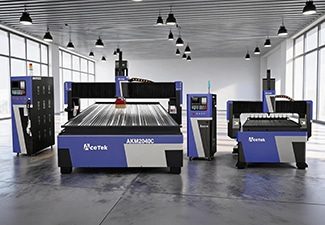
The working area should match your common sheet size, product dimensions, and production workflow. Small CNC routers are suitable for custom parts, samples, signs, and workshops with limited space, while large-format routers are better for furniture panels, doors, cabinets, full-size sheets, and batch production that requires higher efficiency.
Production Volume

Production Volume

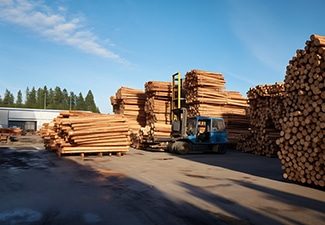
For occasional use, prototyping, or small custom jobs, a basic CNC router may be enough. For daily production or industrial manufacturing, choose a machine with stronger components, faster processing speed, automatic functions, better cooling, and higher structural stability to support continuous operation and maintain consistent machining quality.

Software Compatibility

Software Compatibility

Check whether the CNC router supports your design software, CAM software, and common file formats. Good software compatibility makes drawing import, toolpath generation, parameter setting, and production management easier. It also helps connect design, programming, and machining more smoothly, reducing communication errors and improving overall production efficiency.
Spindle Power

Spindle Power

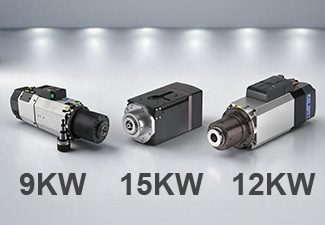
Spindle power affects cutting depth, processing speed, cutting stability, and tool performance. Light engraving or thin material cutting may only require a lower-power spindle, while thick boards, hardwood, dense plastics, and continuous production need a stronger spindle to maintain efficiency, reduce tool stress, and achieve cleaner cutting results.
Machine Structure

Machine Structure

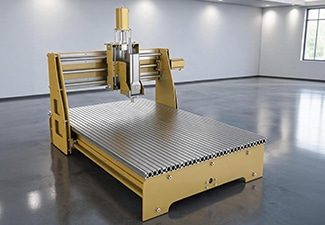
A strong and stable machine structure helps reduce vibration, maintain accuracy, and improve long-term reliability. For heavy cutting, large-format processing, or high-speed production, choose a CNC router with a rigid welded frame, high-quality guide rails, a reliable transmission system, and durable components that can support stable machining over time.
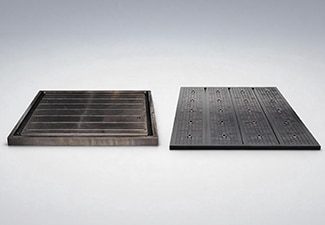
Worktable Type

Worktable Type

Choose the worktable type according to your material size, clamping method, and production needs. T-slot worktables are flexible for fixing small parts, irregular workpieces, and custom jobs, while vacuum tables are better for holding large sheets quickly and firmly, helping reduce loading time and improve production efficiency.
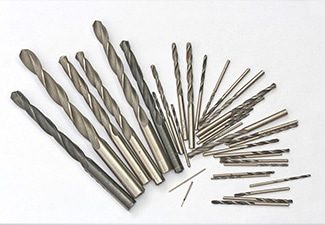
Tool Configuration

Tool Configuration

Different applications require different router bits, engraving tools, drill bits, carving tools, and cutting tools. Proper tool configuration improves cutting quality, reduces edge chipping, extends tool life, and allows the machine to complete more types of processing. Matching the right tools to the material helps achieve more accurate and consistent results.
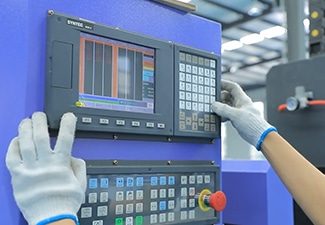
Control System

Control System

The control system affects operation convenience, file compatibility, machining accuracy, and production stability. A user-friendly controller allows operators to set parameters, load programs, manage toolpaths, monitor machine status, and reduce operating errors more easily. A reliable control system can also improve workflow efficiency and support smoother daily production.
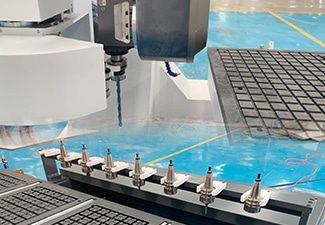
Automatic Tool Changer

Automatic Tool Changer

An automatic tool changer is useful when one job requires multiple operations, such as cutting, engraving, drilling, grooving, and edge trimming. It reduces manual tool changes, saves labor time, improves machining continuity, and increases efficiency for complex designs, customized products, cabinet production, furniture manufacturing, and batch processing.
Dust Collection System

Dust Collection System

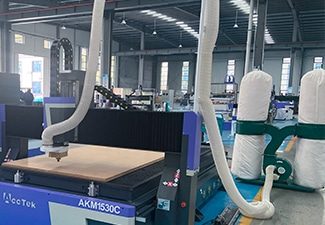
CNC routing often produces dust, chips, shavings, and fine particles during cutting or engraving. A good dust collection system helps keep the workshop cleaner, protects guide rails and machine components, improves operator visibility, reduces cleanup time, and creates a safer and more comfortable working environment for long-term production.
Supplier Support

Supplier Support

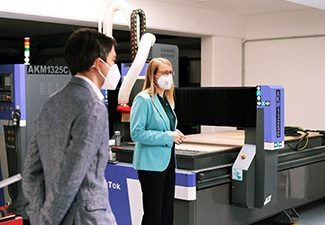
Reliable supplier support is important for machine installation, operator training, troubleshooting, spare parts supply, software guidance, and long-term maintenance. A professional supplier can help you choose the right configuration, solve technical problems faster, reduce downtime, and make the CNC router easier to operate throughout its service life.

Get CNC Routing Solutions

Choosing the right CNC router can make a major difference in production speed, cutting quality, material utilization, and long-term business efficiency. Whether you need a machine for woodworking, cabinet making, furniture production, advertising signs, acrylic processing, foam carving, mold making, or customized product manufacturing, AccTek CNC can provide a suitable CNC routing solution according to your actual needs.
Our team will help you evaluate your processing materials, working size, cutting thickness, production volume, accuracy requirements, and workshop conditions. Based on these details, we can recommend the right machine model, spindle power, table type, control system, transmission system, tooling, and optional accessories such as vacuum tables, rotary devices, automatic tool changers, drilling units, and dust collection systems.
AccTek CNC is committed to providing more than just CNC router machines. We offer professional guidance before purchase, machine customization, installation support, operation training, technical assistance, and after-sales service to help customers use their equipment with confidence. From small workshops to large production factories, our CNC routers are designed to help improve efficiency, reduce manual labor, and expand processing possibilities.
If you are looking for a reliable CNC router for your business, contact AccTek CNC today and get a solution tailored to your production goals.
* We value your privacy. AccTek CNC is committed to protecting your personal information. Any details you provide when submitting the form will be kept strictly confidential and used only to assist with your inquiry. We do not share, sell, or disclose your information to third parties. Your data is securely stored and handled in accordance with our privacy policy.
AccTek Icon
Privacy Overview

This website uses cookies so that we can provide you with the best user experience possible. Cookie information is stored in your browser and performs functions such as recognising you when you return to our website and helping our team to understand which sections of the website you find most interesting and useful.