

Wprowadzenie
One of the main advantages of CNC routing acrylic is its flexibility. Digital designs can be quickly modified, scaled, duplicated, or optimized without the need for complex manual templates. This supports both one-off custom projects and continuous batch production. A suitable cutting tool, stable machine structure, effective vacuum hold-down system, and proper chip evacuation help reduce vibration and prevent the acrylic sheet from shifting during machining. CNC routing can also produce smooth, well-defined edges when the correct parameters are used. Cast acrylic generally provides excellent machining quality, while extruded acrylic may require additional attention to heat control because it can soften more easily. Cooling methods, air assistance, sharp router bits, and appropriate feed rates are important for preventing material buildup around the cutting tool. CNC routers offer a precise, versatile, and cost-effective method for acrylic fabrication. They help manufacturers improve cutting consistency, reduce manual labor, minimize material waste, and produce customized acrylic parts with clean surfaces and accurate details.
Typy odpowiednie do frezowania CNC
- Znaki reklamowe
- Illuminated Letters
- Znaki kierunkowe
- stojaki
- Posiadacze produktów
- Uchwyty na broszury
- Tablice menu
- Tabliczki znamionowe
- Panele z logo
- Dekoracyjne panele ścienne
- Wyświetla detaliczna
- Panele wystawowe
- Pokrywy maszyn
- Strażnicy Ochronni
- Panel sterowania Okna
- Obudowy przezroczyste
- Skrzynki
- Cosmetic Organizers
- Wyświetlacze biżuterii
- Photo Frames
Branże i aplikacje



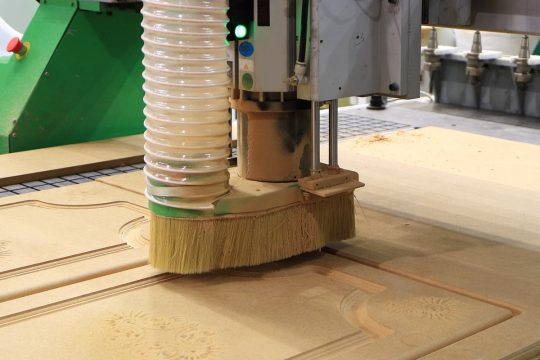
Używane procesy frezowania CNC
Precyzyjne cięcie
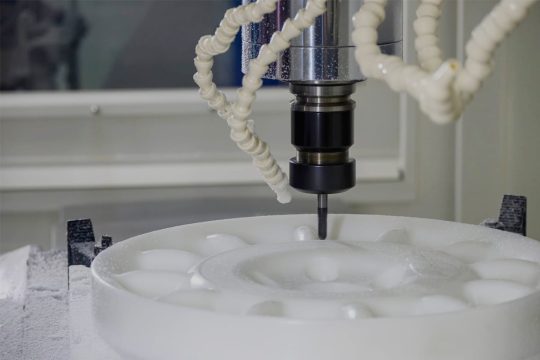
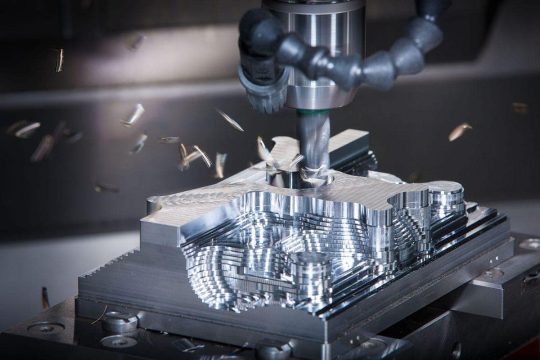
CNC routers cut acrylic sheets and blocks with high dimensional accuracy. Controlled toolpaths help produce clean straight lines, smooth curves, internal cutouts, and detailed shapes while maintaining consistent results across customized parts and repeated production runs.
Cięcie konturowe
Contour cutting allows CNC routers to follow complex outlines and curved profiles. This process is suitable for producing letters, logos, decorative shapes, display components, and custom panels with accurate edges and consistent dimensions.
Rytownictwo
CNC engraving removes a shallow layer from the acrylic surface to create text, patterns, logos, symbols, and decorative details. Different tool shapes and cutting depths can produce fine lines, bold markings, and textured visual effects.
Pheteting
Pocketing removes material from selected areas without cutting through the entire workpiece. It is commonly used to create recessed sections, component seats, decorative cavities, mounting spaces, and fitted areas in acrylic panels and blocks.
Wiercenie
CNC routers can drill accurately positioned holes for screws, fasteners, fittings, cables, and assembly components. Programmed spacing and depth control help ensure that every hole remains consistent, reducing alignment problems during installation or product assembly.
Rowkowanie
Grooving creates straight or curved channels in acrylic surfaces. These channels can be used for joining parts, inserting panels, routing cables, fitting lighting strips, or adding decorative lines to signs, displays, and customized components.
Fazowanie
Beveling cuts angled edges along acrylic parts to improve appearance, simplify assembly, or create decorative transitions. Precise tool control helps maintain a consistent bevel width and angle across straight, curved, and irregular profiles.
Profilowanie krawędzi
Edge profiling shapes the outer edges of acrylic components using specialized router bits. Rounded, chamfered, stepped, and decorative edges can be produced to improve visual quality, safety, fit, and the overall finish of the final product.
Rzeźba 3D
CNC routers can carve raised, recessed, and contoured three-dimensional features in thick acrylic. This process is suitable for decorative panels, molds, models, branded elements, and customized components that require varying depths and smooth surface transitions.
Cięcie intarsji
Inlay cutting produces matching recessed areas and fitted inserts. CNC routers can create precise pockets and corresponding acrylic pieces, allowing different colors, textures, or transparent elements to be combined into logos, decorative panels, and personalized designs.
Zagnieżdżanie
Nesting software arranges multiple parts efficiently across an acrylic sheet before cutting. This process reduces unused space, improves material utilization, lowers production costs, and allows manufacturers to produce different shapes or sizes in a single machining cycle.
Produkcja seryjna
CNC routers repeat the same programmed operations with consistent accuracy. This makes them suitable for producing large quantities of acrylic signs, display parts, covers, panels, and customized components while reducing manual work and maintaining stable product quality.
Wspólne wyzwania
Heat Buildup And Melting
Acrylic can soften or melt when cutting generates excessive heat. Incorrect spindle speed, slow feed rates, or dull tools may cause material to stick to the router bit, producing rough edges and interrupting the machining process.
Wyszczerbienie krawędzi
Acrylic edges may chip when unsuitable cutting tools, excessive cutting depth, or unstable machining conditions are used. Chipping reduces visual quality and may require additional sanding, polishing, or complete replacement of the damaged component.
Pękanie i łamanie
Acrylic can crack under excessive cutting pressure, vibration, or improper clamping. Thin sheets and narrow features are especially vulnerable, making careful toolpath planning and stable material support essential throughout the routing process.
Zarysowania powierzchni
The smooth surface of acrylic is easily scratched by chips, clamps, handling, or machine debris. Surface damage can reduce transparency and appearance, particularly when producing display products, decorative panels, protective covers, or other highly visible components.
Unstable Material Holding
Acrylic sheets may shift, lift, or vibrate during machining if they are not securely held. Poor workholding can cause inaccurate cuts, uneven edges, broken tools, or damaged workpieces, especially when processing small parts and narrow profiles.
Słabe usuwanie wiórów
Acrylic chips can accumulate around the cutting area and router bit. Ineffective chip evacuation increases heat, blocks visibility, scratches the workpiece, and may cause chips to melt and reattach to the machined edge.
Inconsistent Edge Quality
Producing smooth and uniform acrylic edges can be difficult when machining parameters are not properly balanced. Rough surfaces, visible tool marks, burrs, and uneven finishes may increase the need for time-consuming secondary polishing.
Material Type Variations
Cast and extruded acrylic respond differently to routing. Differences in density, thickness consistency, and heat sensitivity require adjustments to cutting speed, spindle speed, tool geometry, and cutting depth to maintain reliable machining results.
Tool Selection And Wear
Choosing the wrong router bit can lead to melting, chipping, poor chip evacuation, and rough finishes. Tool wear also reduces cutting performance over time, making regular inspection and timely replacement necessary for consistent acrylic processing.
Jak frezowanie CNC rozwiązuje wyzwania
Kontrolowane parametry cięcia
CNC routers allow precise adjustment of spindle speed, feed rate, cutting depth, and toolpath strategy. Proper parameter control reduces heat buildup, prevents melting, and helps maintain clean, stable cutting conditions across different acrylic thicknesses.
Efektywne usuwanie wiórów
Air assistance and dust extraction systems remove acrylic chips from the cutting area. Effective chip evacuation reduces heat accumulation, prevents chips from sticking to the router bit, and protects the workpiece surface from scratches.
Secure Material Holding
Vacuum tables, clamps, and customized fixtures keep acrylic sheets stable during routing. Reliable workholding prevents movement, lifting, and vibration, helping maintain accurate dimensions and reducing the risk of cracking or damaged edges.
Specjalistyczne frezy
Sharp single-flute or polished cutting tools are designed to remove acrylic chips efficiently. Correct tool selection reduces cutting pressure, improves edge quality, and minimizes common problems such as chipping, melting, rough surfaces, and material buildup.
Precise Toolpath Control
Computer-controlled toolpaths guide the cutting tool smoothly around curves, corners, holes, and detailed shapes. Consistent movement reduces sudden pressure changes and helps protect narrow features from cracking or breaking during machining.
Poprawiona jakość krawędzi
Optimized cutting directions, finishing passes, and suitable tool geometry help CNC routers produce smoother acrylic edges. Better edge quality reduces visible tool marks and limits the amount of sanding, polishing, or additional finishing required.
Stała powtarzalność
CNC routers repeat programmed operations with reliable accuracy. Once the correct settings are established, manufacturers can produce multiple acrylic parts with consistent dimensions, hole positions, contours, and surface details while reducing manual errors.
Zoptymalizowane wykorzystanie materiałów
Nesting software arranges parts efficiently across acrylic sheets before cutting. Improved layout planning reduces unused space, controls material costs, and limits waste caused by poor positioning, inaccurate cutting, or unnecessary gaps between components.
Polecane routery CNC
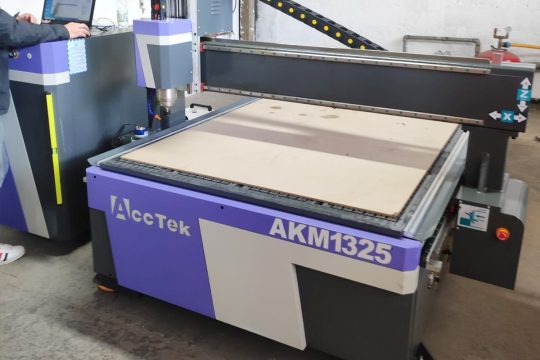
CNC routers equipped with high-speed spindles and polished single-flute tools are especially effective for acrylic because they support efficient chip removal and help reduce heat buildup. Air assistance and suitable extraction systems further improve cutting stability and protect the surface from loose chips. Rotary-axis CNC routers are suitable for cylindrical or curved acrylic components, while four-axis and five-axis machines are better for complex three-dimensional surfaces, deep contours, and multi-sided machining. Regardless of configuration, the recommended machine should provide rigid construction, accurate motion control, adjustable spindle settings, reliable workholding, and compatible control software for consistent, clean, and repeatable acrylic fabrication.


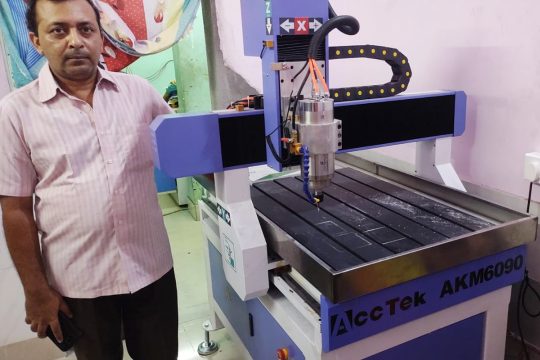
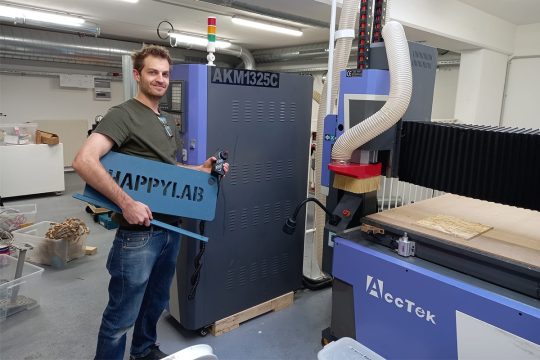
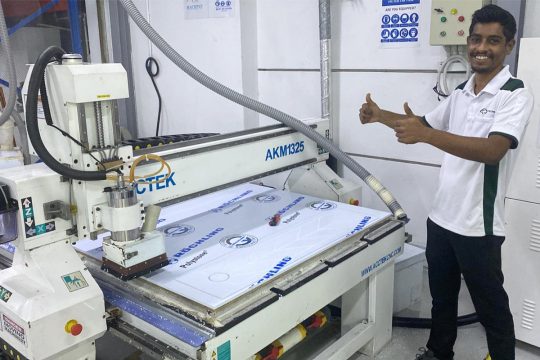
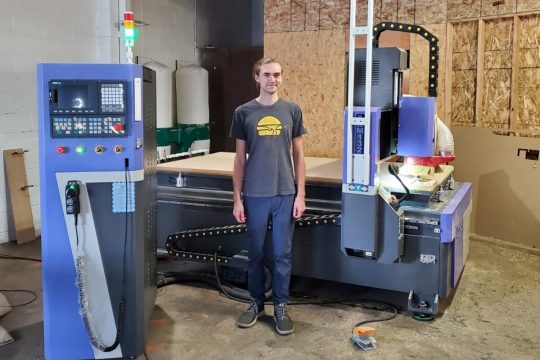
Sprawy klientów
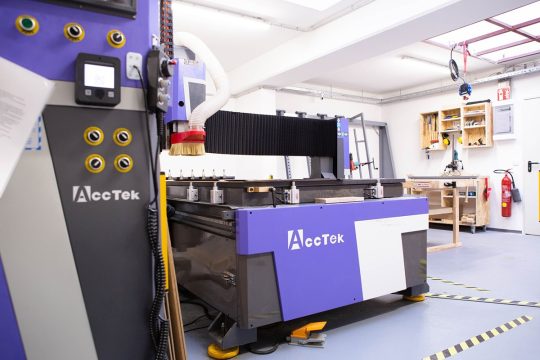
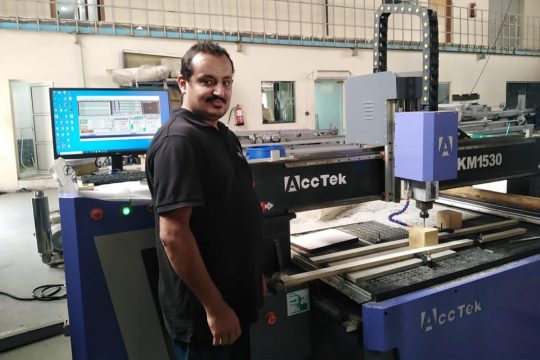
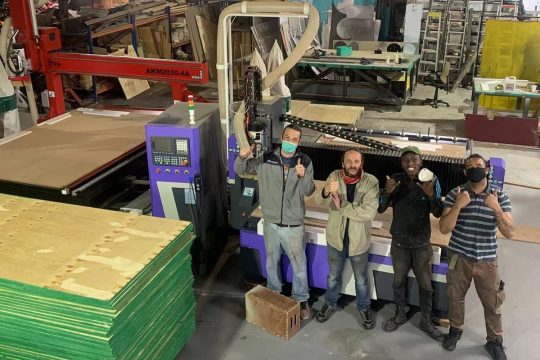
Uzyskaj rozwiązania w zakresie frezowania CNC
Nasz zespół pomoże Państwu ocenić materiały do obróbki, rozmiar roboczy, grubość cięcia, wolumen produkcji, wymagania dotyczące dokładności oraz warunki panujące w warsztacie. Na podstawie tych danych możemy zarekomendować odpowiedni model maszyny, moc wrzeciona, typ stołu, system sterowania, układ przeniesienia napędu, oprzyrządowanie oraz opcjonalne akcesoria, takie jak stoły próżniowe, urządzenia obrotowe, automatyczne zmieniacze narzędzi, jednostki wiertnicze i systemy odpylania.
Firma AccTek CNC oferuje coś więcej niż tylko frezarki CNC. Oferujemy profesjonalne doradztwo przed zakupem, personalizację maszyn, wsparcie instalacyjne, szkolenia z obsługi, pomoc techniczną i serwis posprzedażowy, aby pomóc klientom w korzystaniu z ich sprzętu z pełnym zaufaniem. Od małych warsztatów po duże fabryki, nasze frezarki CNC zostały zaprojektowane tak, aby pomóc w zwiększeniu wydajności, ograniczeniu nakładu pracy ręcznej i poszerzeniu możliwości obróbki.
Jeśli szukasz niezawodnej maszyny CNC do swojej firmy, skontaktuj się z AccTek CNC już dziś i uzyskaj rozwiązanie dostosowane do Twoich celów produkcyjnych.