

Introduction
La réussite du fraisage de l'aluminium repose en grande partie sur l'équilibre entre la vitesse de broche, l'avance, la profondeur de coupe et la géométrie de l'outil. Les fraises en carbure conçues pour l'aluminium sont couramment utilisées en raison de leur bonne résistance à l'usure et de leur capacité d'évacuation efficace des copeaux. Les fraises à une ou deux dents permettent d'éviter l'accumulation de copeaux autour de l'outil, réduisant ainsi la chaleur et améliorant la qualité de surface. Une lubrification appropriée ou un refroidissement par brouillard d'huile peuvent également être utilisés pour contrôler la température de coupe et minimiser l'adhérence du matériau. Un maintien sûr de la pièce est essentiel car les tôles d'aluminium et les composants fins peuvent se déplacer, vibrer ou fléchir pendant l'usinage. Les brides, les montages à ventouses, les plaques sacrificielles et les gabarits sur mesure contribuent à stabiliser la pièce et à maintenir la précision dimensionnelle. Une évacuation efficace des copeaux est tout aussi importante, car le re-usinage des copeaux peut endommager la surface, augmenter la charge sur l'outil et réduire la qualité de coupe. La programmation CNC permet également de modifier, de mettre à l'échelle, d'imbriquer et de répéter efficacement les conceptions. Les routeurs CNC offrent une méthode flexible pour produire des composants en aluminium précis tout en améliorant la répétabilité, en réduisant le travail manuel, en contrôlant le gaspillage de matériau et en prenant en charge à la fois les travaux sur mesure et la production en continu.
Types adaptés au fraisage CNC
- Panneaux de commande d'équipement
- Boîtiers électroniques
- Tableaux de bord
- Plaques signalétiques des machines
- Panneaux d'identification
- Panneaux avant
- Plaques de montage
- Supports
- Plaques de base
- Plaques de montage
- Dissipateurs de chaleur
- Plaques de refroidissement
- Panneaux structuraux
- Panneaux décoratifs
- Signes architecturaux
- Lettres de canal
- Cadres d'affichage
- Panneaux d'armoire
- Couvertures de protection
- Boîtiers d'équipement
Industries et applications





Procédés de fraisage CNC utilisés
Coupe de précision
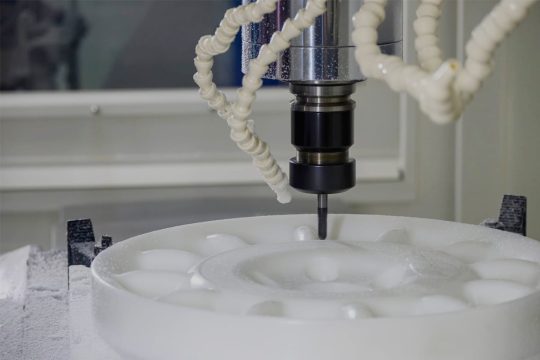
Les fraiseuses CNC découpent les plaques et les blocs d'acrylique avec une grande précision dimensionnelle. Le contrôle précis des trajectoires d'outils permet d'obtenir des lignes droites nettes, des courbes lisses, des découpes internes et des formes détaillées, tout en garantissant des résultats constants pour les pièces sur mesure et les séries de production répétées.
Découpe de contour
La découpe de contours suit des formes complexes pour produire des supports, des panneaux, des enseignes, des couvercles et des pièces sur mesure. Le mouvement fluide de la machine permet de garantir des courbes précises, des angles vifs et des profils uniformes, quelle que soit la forme des composants.
Forage Horizontaux
Les fraiseuses CNC créent des trous positionnés avec précision pour les fixations, les raccords, les câbles et les éléments de montage. Le positionnement automatisé contrôle l'espacement, le diamètre et la profondeur des trous, améliorant ainsi l'alignement et réduisant les erreurs lors de l'installation ou de l'assemblage final.
Empochage
L'usinage par évidement consiste à retirer de la matière de zones sélectionnées sans usiner la pièce entière. Ce procédé permet de créer des cavités encastrées, des logements de composants, des zones allégées, des espaces de montage et des cavités fonctionnelles à profondeur contrôlée et aux contours nets.
Gorges
Les fraiseuses CNC produisent des rainures droites ou courbes pour les joints, le câblage, les éléments d'assemblage, les détails décoratifs et les composants ajustés. Le contrôle précis de la largeur et de la profondeur des rainures garantit un ajustement fiable et une qualité de produit constante.
Gravure
La gravure CNC permet de réaliser des textes, des numéros de série, des logos, des symboles, des échelles et des motifs décoratifs sur des surfaces en aluminium. La profondeur de coupe réglable assure une grande précision pour les marquages fins, les graphismes audacieux et les détails d'identification permanents.
Chanfreinage
Le chanfreinage élimine les angles vifs et crée des bords biseautés autour des composants en aluminium. Ce procédé améliore l'aspect, simplifie l'assemblage, réduit les risques de manipulation et prépare les bords pour des opérations de finition ou d'assemblage ultérieures.
Profilage des bords
Des outils de coupe spécialisés façonnent les bords de l'aluminium en profils arrondis, étagés, biseautés ou décoratifs. La commande numérique assure des dimensions uniformes sur les sections droites et courbes, tout en réduisant le besoin de finitions manuelles importantes.
Fraisage de surface
Le fraisage de surface enlève une couche contrôlée de la pièce en aluminium afin d'améliorer sa planéité, l'homogénéité de son épaisseur et la qualité de sa surface. Il est particulièrement utile pour la préparation des plaques de fixation, des surfaces de montage et des composants nécessitant des zones de contact précises.
Filetage fraisage
Les fraiseuses CNC équipées d'outils adaptés permettent de réaliser des filetages internes ou externes dans des composants en aluminium. Les trajectoires d'outils circulaires programmées garantissent des dimensions de filetage précises et sont utiles pour les perçages, les inserts et les assemblages sur mesure.
Usinage 3D
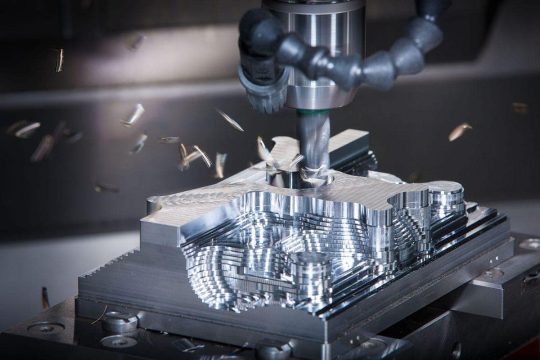
Les fraiseuses CNC produisent des surfaces profilées, des formes en creux, des reliefs et des formes tridimensionnelles complexes. Ce procédé permet de réaliser des prototypes, des moules, des boîtiers, des éléments décoratifs et des produits nécessitant des variations de profondeur progressives ou des surfaces courbes.
Production par lots
Les fraiseuses CNC reproduisent avec une précision constante les opérations programmées de découpe, de perçage, d'usinage de poches, de gravure et de profilage. Elles sont ainsi parfaitement adaptées à la production de composants en aluminium en série, tout en réduisant les besoins en main-d'œuvre et en garantissant une qualité stable pour chaque série de production.
Défis communs
Accumulation de chaleur
Le fraisage de l'aluminium peut générer une chaleur importante au niveau de l'arête de coupe. Une vitesse de broche incorrecte, des avances trop lentes ou un refroidissement insuffisant peuvent entraîner une dilatation du matériau, une mauvaise qualité de surface, une usure prématurée de l'outil et des dimensions imprécises.
Bord construit
Les copeaux d'aluminium tendre peuvent adhérer à l'outil de coupe et former une arête rapportée. Cela modifie la géométrie de l'outil, augmente le frottement, réduit l'efficacité de coupe et peut laisser des marques rugueuses sur la surface usinée.
Mauvaise évacuation des copeaux
Les copeaux d'aluminium peuvent s'accumuler dans les rainures, les cavités et les trajectoires de coupe. Le re-usinage de ces copeaux augmente la chaleur, endommage la surface, accroît la charge sur l'outil et peut entraîner la rupture de la fraise lors d'un usinage continu.
Vibrations excessives
Une rigidité machine insuffisante, un bridage faible, un porte-à-faux d'outil important ou des paramètres de coupe agressifs peuvent engendrer des vibrations. Ces vibrations réduisent la qualité de surface, affectent la précision dimensionnelle et diminuent la durée de vie des outils de coupe.
Usure et casse des outils
Le fraisage de l'aluminium soumet les outils de coupe à des contraintes constantes. Des fraises émoussées, inadaptées ou surchargées peuvent s'user rapidement, s'ébrécher ou se casser, entraînant des arêtes rugueuses, des erreurs dimensionnelles, des retards de production et une augmentation des coûts d'outillage.
Mouvement de la pièce
Les tôles d'aluminium fines et les petites pièces peuvent se déplacer, se soulever ou se déformer lors de l'usinage. Un serrage insuffisant peut entraîner des coupes imprécises, des perçages mal alignés, des arêtes endommagées et un contact potentiel entre l'outil et le dispositif de fixation.
Rayures superficielles
Les copeaux, les fixations, les débris de machines et une manipulation incorrecte peuvent rayer les surfaces en aluminium. Ces défauts sont particulièrement visibles sur les panneaux décoratifs, les enseignes, les boîtiers et les composants nécessitant une finition visuelle impeccable.
Formation de bavures
Le fraisage peut laisser des bavures saillantes le long des arêtes de coupe, des trous et des rainures. Ces bavures affectent l'ajustement, l'aspect et la sécurité de manipulation, tout en augmentant le besoin d'ébavurage, de ponçage, de chanfreinage ou d'autres opérations de finition secondaires.
Variations de matériaux et d'alliages
Les différents alliages d'aluminium présentent des caractéristiques variables en termes de dureté, de résistance, de formation de copeaux et de sensibilité à la chaleur. Un réglage d'usinage optimal pour une nuance donnée peut engendrer des surfaces rugueuses, une usure excessive ou une précision médiocre pour une autre.
Comment le fraisage CNC résout les problèmes
Paramètres de coupe contrôlés
Les fraiseuses CNC permettent un réglage précis de la vitesse de broche, de l'avance, de la profondeur de coupe et de la stratégie de passe. Des réglages équilibrés réduisent la génération de chaleur, améliorent la précision dimensionnelle et évitent une charge excessive sur l'outil lors de l'usinage de l'aluminium.
Évacuation efficace des copeaux
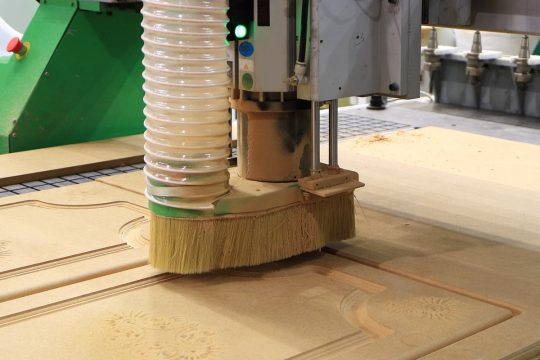
Le sablage, les systèmes de brumisation et l'aspiration des copeaux permettent d'éliminer les particules d'aluminium de la zone de coupe. Une évacuation efficace évite le recoupage des copeaux, réduit l'accumulation de chaleur, protège les surfaces finies et diminue le risque de casse d'outils.
Outils de coupe adaptés
Les fraises en carbure à une ou deux dents assurent une évacuation efficace des copeaux et réduisent l'adhérence du matériau. Une géométrie d'outil appropriée contribue à prévenir la formation d'arêtes rapportées, améliore la qualité de surface et prolonge la durée de vie de l'outil.
Maintien sécurisé
Des pinces, des dispositifs de fixation par le vide, des plaques de calage et des gabarits sur mesure maintiennent fermement les tôles et les composants en aluminium. Un maintien stable réduit les mouvements, les flexions et les vibrations, contribuant ainsi à la précision des coupes, des perçages, des cavités et des profils.
Amélioration de la stabilité de la machine
Des bâtis de machines rigides, des systèmes de mouvement linéaire précis et des outils de coupe correctement supportés réduisent les vibrations lors du fraisage. Une meilleure stabilité améliore la qualité des arêtes, l'état de surface, la régularité dimensionnelle et les performances globales de l'outil.
Refroidissement et lubrification
Le refroidissement par brumisation ou des lubrifiants adaptés réduisent la friction et la température de coupe. Une lubrification contrôlée empêche l'aluminium d'adhérer à l'outil de coupe, minimise les dommages de surface et assure un usinage plus régulier lors des longues séries de production.
Trajectoires d'outils de finition
Les fraiseuses CNC peuvent effectuer des passes de finition légères, le chanfreinage et le profilage des bords après l'ébauche. Ces opérations contrôlées éliminent les bavures, améliorent la régularité de la surface, affinent les dimensions et réduisent le besoin de finitions manuelles importantes.
Programmation répétable
Une fois les paramètres optimaux définis pour un alliage d'aluminium donné, les fraiseuses CNC reproduisent les mêmes opérations avec précision. Cette programmation uniforme permet aux fabricants de garantir la stabilité dimensionnelle, la qualité de surface et l'efficacité de la production, tant pour les prototypes que pour la production en série.
Routeurs CNC recommandés
Les tables à ventouses, associées à des brides mécaniques ou à des dispositifs de fixation sur mesure, permettent de maintenir en place les tôles fines, les plaques et les petites pièces. Un système efficace de sablage et d'évacuation des copeaux est également essentiel pour éviter le recoupage des copeaux et les rayures de surface. Les fraiseuses CNC à axe rotatif peuvent usiner des composants cylindriques en aluminium, tandis que les machines à quatre et cinq axes sont mieux adaptées aux surfaces tridimensionnelles complexes, aux formes courbes et aux pièces à plusieurs faces. La machine choisie doit également être compatible avec des outils en carbure adaptés, offrir des paramètres de coupe réglables, fonctionner avec un logiciel CAO/FAO compatible, assurer la mesure automatique des outils et un positionnement précis pour une production homogène, propre et répétable.


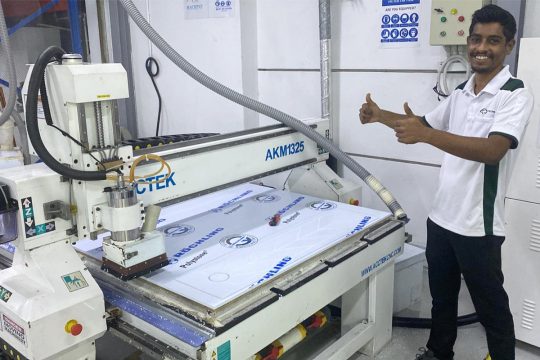
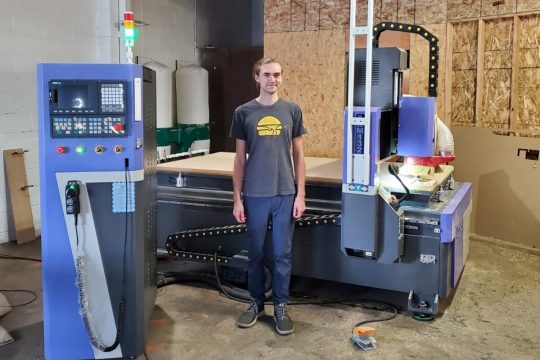
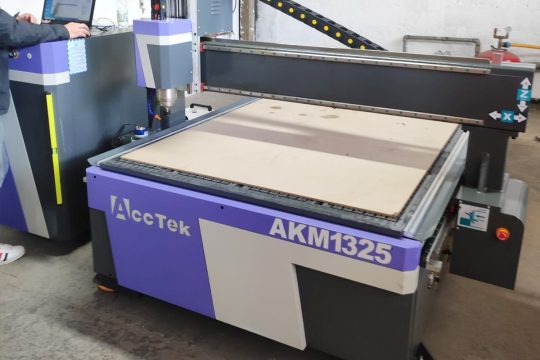
Obtenez des solutions de routage CNC
Notre équipe vous aidera à évaluer vos matériaux à usiner, les dimensions de vos pièces, l'épaisseur de coupe, le volume de production, les exigences de précision et les conditions de votre atelier. En fonction de ces informations, nous pourrons vous recommander le modèle de machine le plus adapté, la puissance de broche, le type de table, le système de commande, le système de transmission, l'outillage et les accessoires optionnels tels que les tables à vide, les dispositifs rotatifs, les changeurs d'outils automatiques, les unités de perçage et les systèmes d'aspiration des poussières.
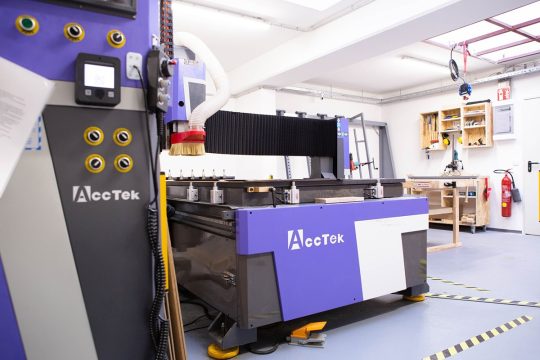
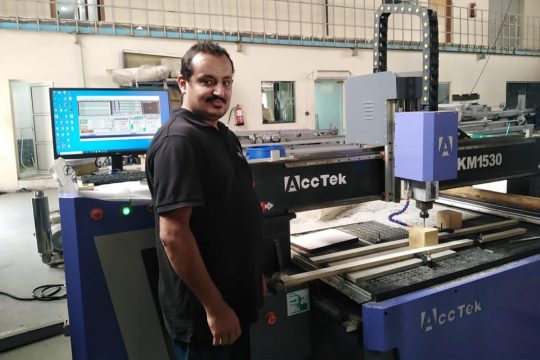
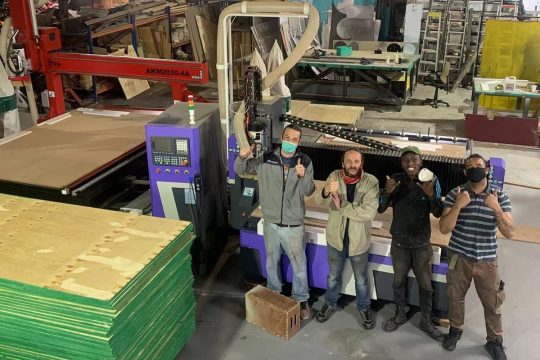
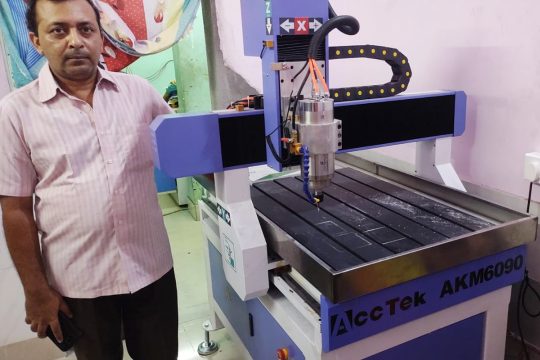
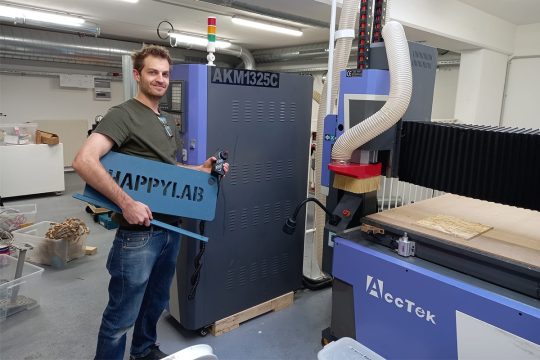
AccTek CNC s'engage à fournir bien plus que de simples fraiseuses CNC. Nous proposons un accompagnement professionnel avant l'achat, la personnalisation des machines, l'assistance à l'installation, la formation à l'utilisation, le support technique et le service après-vente pour permettre à nos clients d'utiliser leur équipement en toute confiance. Des petits ateliers aux grandes usines de production, nos fraiseuses CNC sont conçues pour améliorer l'efficacité, réduire le travail manuel et élargir les possibilités de traitement.
Si vous recherchez une fraiseuse CNC fiable pour votre entreprise, contactez AccTek CNC dès aujourd'hui et obtenez une solution adaptée à vos objectifs de production.