CNC Routers for the OSB

CNC routers cut, drill, groove, engrave, and shape OSB with clean edges, accurate features, efficient production, reliable repeatability, and reduced material waste.

Giới thiệu

OSB, or oriented strand board, is an engineered wood panel manufactured by arranging wood strands in directional layers and bonding them with resin under heat and pressure. Its layered construction provides good strength, dimensional stability, and consistent performance across large sheet sizes. OSB also has a distinctive textured appearance, making it suitable for projects that require both structural reliability and an industrial-style surface. However, its coarse strands and resin-bonded structure can create machining challenges such as edge tear-out, splintering, rough surfaces, dust generation, tool wear, and inconsistent detail quality. CNC routers provide an accurate and efficient method for cutting and shaping OSB panels. Computer-controlled toolpaths allow straight cuts, curved profiles, internal openings, drilling, pocketing, grooving, engraving, beveling, and edge profiling to be completed with repeatable accuracy. Complex shapes and multiple components can be produced from digital designs with less manual measuring and cutting.
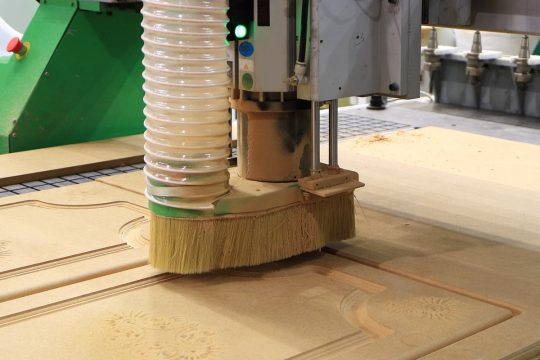
Tool selection has a major influence on machining quality. Compression bits can help reduce breakouts on both panel surfaces, while down-cut bits protect the upper face and up-cut bits support efficient chip removal. Sharp carbide tools are recommended because the resin and compressed wood strands can wear cutters more quickly than softer materials. Feed rate, spindle speed, cutting depth, and pass strategy must be carefully balanced to reduce burning, vibration, edge damage, and excessive tool load. Secure material holding is also important, especially when routing large sheets or narrow components. Vacuum tables, clamps, positioning stops, and suitable spoilboards help prevent shifting and lifting during machining. Effective dust extraction removes loose strands, chips, and fine particles while improving visibility and protecting machine components. CNC programming also supports nesting, scaling, design changes, and repeated production. CNC routers improve OSB machining efficiency, dimensional consistency, material utilization, and production flexibility while reducing manual errors and unnecessary waste.

Các loại phù hợp cho máy phay CNC

CNC routers can process various OSB products, including OSB/1 general-purpose panels, OSB/2 load-bearing boards for dry conditions, OSB/3 moisture-resistant structural panels, and OSB/4 heavy-duty load-bearing boards. Standard, sanded, tongue-and-groove, fire-retardant, coated, laminated, and decorative OSB panels can also be routed when suitable tools and machining parameters are used. Flat panels with consistent thickness, uniform strand distribution, and strong internal bonding generally provide the best cutting accuracy and edge quality. Sharp carbide compression bits help reduce breakout on both surfaces, while down-cut tools protect the upper face and up-cut tools improve chip evacuation. Proper spindle speed, feed rate, cutting depth, workholding, and dust extraction help control splintering, rough edges, resin buildup, burning, and tool wear. CNC routing supports cutting, drilling, pocketing, grooving, engraving, joinery, and edge profiling. Digital programming also enables efficient nesting, design modification, prototyping, and repeat production with improved material utilization. Commonly manufactured products include:

Các ngành và ứng dụng

CNC-routed OSB is widely used in industries that require strong, economical, and precisely shaped panel components. In construction and prefabricated building production, OSB is used for wall panels, roof sheathing, subflooring, partitions, formwork, templates, and modular structural components. CNC routing creates accurate openings, connection points, grooves, and custom profiles for efficient installation. Furniture and interior decoration manufacturers use routed OSB for tables, shelving, cabinets, workbenches, wall coverings, ceiling features, room dividers, and industrial-style decorative panels. Retail and exhibition companies produce display stands, kiosks, booths, product shelves, branded installations, and temporary structures. Packaging and logistics businesses use OSB for shipping crates, protective boxes, pallet components, and reusable transport packaging. Additional applications include stage scenery, event backdrops, acoustic panels, workshop storage, architectural models, and tiny-house components. CNC routing supports cutting, drilling, pocketing, grooving, joinery, engraving, and nesting, helping manufacturers improve dimensional consistency, assembly efficiency, production speed, and material utilization.
Ứng dụng CNC Router trong sản xuất nội thất

Công nghiệp sản xuất nội thất

Ứng dụng của Bộ định tuyến CNC trong ngành Chế tạo Nhựa

Công nghiệp chế tạo nhựa

Ứng dụng của CNC Router trong ngành Thủ công mỹ nghệ

Ngành công nghiệp thủ công mỹ nghệ và quà tặng

Ứng dụng của Bộ định tuyến CNC trong ngành Khuôn mẫu

Ngành công nghiệp chế tạo khuôn mẫu và mẫu

Ứng dụng của Bộ định tuyến CNC trong ngành Quảng cáo

Ngành quảng cáo và làm biển hiệu

Ứng dụng của Bộ định tuyến CNC trong ngành Chế biến gỗ

Công nghiệp chế biến gỗ

Ứng dụng của CNC Router trong ngành xây dựng

Ngành công nghiệp xây dựng

Ngành công nghiệp sản xuất đồ gỗ

Ngành công nghiệp sản xuất đồ gỗ

Các quy trình máy cắt CNC được sử dụng

Cắt chính xác

CNC routers cut OSB sheets with consistent dimensional accuracy. Programmed toolpaths create straight edges, curved profiles, internal openings, and repeated components while reducing manual measurement errors and improving overall production consistency.

Cắt đường viền

Contour cutting follows complex outlines to produce shaped panels, furniture components, decorative elements, signs, and construction parts. Controlled machine movement maintains accurate curves, corners, and profiles across different panel sizes.

Khoan

CNC routers create accurately positioned holes for screws, dowels, fasteners, cables, and assembly hardware. Automated drilling controls hole diameter, spacing, and depth, improving alignment and simplifying installation.

Bỏ túi

Pocketing removes material from selected areas without cutting through the entire panel. This process creates recessed spaces, hardware seats, lightweight sections, connection areas, and decorative features with controlled dimensions.

Rãnh

CNC routers produce straight or curved grooves for panel joints, partitions, shelves, wiring channels, and decorative lines. Precise groove width and depth help components fit securely and support efficient assembly.

Cắt gỗ

CNC routers create dadoes, rabbets, slots, finger joints, and interlocking connections. Accurate joinery improves component alignment, assembly speed, and structural consistency in furniture, displays, storage systems, and prefabricated structures.

khắc

CNC engraving adds lettering, logos, patterns, textures, and identification marks to OSB surfaces. Adjustable cutting depth allows shallow graphics, recessed details, and bold decorative effects to be produced consistently.

Vát

Beveling creates angled edges for improved fitting, decorative appearance, or smoother transitions between panels. CNC control maintains a consistent bevel angle and width across straight, curved, and irregular profiles.

Hồ sơ cạnh

Specialized router bits shape OSB edges into rounded, chamfered, stepped, or decorative profiles. This process improves appearance, handling safety, component fit, and preparation for finishing or assembly.

Gia công cắt

CNC routers produce precise internal openings for doors, windows, vents, fittings, access panels, and structural connections. Programmed cutting paths maintain accurate dimensions and clean boundaries around each cutout.

Làm tổ

Nesting software arranges multiple parts efficiently across each OSB sheet. Optimized layouts reduce unused material, shorten cutting paths, lower production costs, and support mixed-component manufacturing in one machining cycle.

Sản xuất hàng loạt

CNC routers repeat cutting, drilling, grooving, pocketing, and profiling operations with reliable accuracy. This makes them suitable for producing large quantities of OSB components while reducing labor requirements and maintaining consistent quality.

Những thách thức chung

Edge Tear-Out

OSB edges may tear or splinter because the panel contains large, directionally arranged wood strands. Dull tools, unsuitable cutting directions, or aggressive feed settings can pull strands away instead of cutting them cleanly.

Bề mặt thô

The coarse and uneven strand structure can make smooth machining difficult. Routed edges, pockets, and engraved areas may contain loose fibers, visible strand fragments, or uneven textures that require additional sanding or sealing.

Mài mòn dụng cụ nhanh

The dense wood strands, adhesives, and resins in OSB can wear router bits quickly. Dull cutters increase cutting resistance, worsen edge quality, generate heat, and reduce dimensional accuracy during continuous production.

Excessive Dust And Debris

Routing OSB produces fine dust, chips, and loose wood strands. Poor extraction can reduce visibility, contaminate machine components, interfere with cutting, and create a less efficient working environment.

Resin Buildup And Burning

Incorrect spindle speed, slow feed rates, or worn cutters may create excessive friction. Heat can leave dark marks and cause resin or dust to accumulate on the router bit, reducing cutting performance.

Panel Movement

Large OSB sheets may shift, lift, or vibrate if they are not held securely. Unstable workpieces can cause inaccurate cuts, uneven grooves, misaligned holes, damaged edges, and excessive tool stress.

Inconsistent Internal Structure

Strand size, orientation, density, and resin distribution may vary throughout the panel. These differences can create changing cutting resistance, inconsistent groove depths, rough edges, and unpredictable tool loads.

Weak Narrow Features

Small lettering, thin walls, sharp corners, and narrow sections may break or crumble during cutting or handling. Poor toolpath planning, insufficient support, or excessive cutting force can damage delicate components.

Moisture-Related Movement

OSB can absorb moisture and experience swelling, warping, or thickness changes. Panels that are not properly stored or conditioned may produce inaccurate dimensions, uneven surfaces, and inconsistent assembly results.

Làm thế nào máy phay CNC giải quyết được những thách thức?

Cắt cạnh sạch

CNC routers use sharp compression or down-cut bits to reduce strand pullout and edge tear-out. Controlled cutting directions, suitable feed rates, and finishing passes help produce cleaner profiles with fewer loose fibers.

Thông số cắt được tối ưu hóa

Precise control of spindle speed, feed rate, cutting depth, and pass strategy reduces excessive friction. Balanced settings help prevent burning, resin buildup, rough surfaces, and unnecessary stress on cutting tools.

Stable Panel Holding

Vacuum tables, clamps, spoilboards, and positioning stops keep OSB sheets secure during routing. Reliable workholding prevents shifting, lifting, and vibration, improving dimensional accuracy and protecting edges, holes, and grooves.

Hút bụi hiệu quả

Integrated extraction systems remove fine dust, chips, and loose strands from the cutting area. Better debris control improves visibility, protects machine components, reduces heat buildup, and supports cleaner, more efficient production.

Suitable Tool Selection

Durable carbide and compression bits handle the abrasive strands and adhesives in OSB. Correct tool geometry improves chip removal, reduces cutting resistance, limits rapid wear, and maintains more consistent machining quality.

Đường chạy dao được điều khiển

Computer-programmed toolpaths use smooth movements, suitable entry points, and appropriate cutting sequences. These strategies reduce sudden forces on narrow features, sharp corners, and small details, lowering the risk of breakage or crumbling.

Độ chính xác gia công nhất quán

CNC routers maintain programmed cutting depths, hole positions, and component dimensions despite variations in strand orientation and panel density. This consistency improves fitting, assembly, and repeatability across multiple sheets.

Improved Material Planning

Nesting software arranges components efficiently and allows damaged, swollen, or unsuitable areas to be avoided when identified. Better layout planning reduces waste, improves sheet utilization, and supports more consistent production results.

Các máy phay CNC được đề xuất

The most suitable CNC router for OSB depends on panel size, component complexity, production volume, and required edge quality. Standard three-axis CNC routers are suitable for cutting, drilling, grooving, pocketing, engraving, joinery, beveling, and edge profiling. It is a practical choice for construction panels, furniture components, packaging parts, displays, partitions, templates, and customized products. For continuous full-sheet production, nesting CNC routers with a large vacuum table are recommended. Zoned vacuum suction keeps OSB panels stable, while nesting software arranges multiple parts efficiently to reduce offcuts and shorten machining paths. Automatic loading, unloading, positioning, and labeling systems can further improve productivity.
Automatic tool changer CNC routers are ideal for projects requiring several processes. It can switch between compression bits, drilling tools, engraving cutters, and profiling tools without frequent manual changes. Sharp carbide tools are recommended because OSB strands, adhesives, and resins can accelerate tool wear. Rotary-axis CNC routers can process cylindrical or rotating OSB-based components, while 4-axis and 5-axis CNC routers are suitable for complex three-dimensional surfaces and multi-sided parts. Regardless of configuration, the machine should provide a rigid frame, accurate motion control, strong vacuum holding, automatic tool measurement, and efficient dust extraction. Compatible CAD/CAM software should support nesting, joinery design, toolpath optimization, and repeatable batch production.
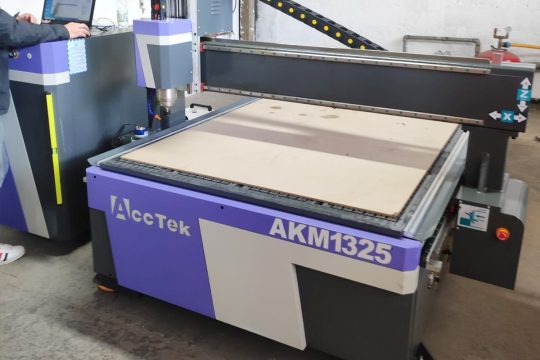
Bộ định tuyến CNC AKM1325

Bộ định tuyến CNC AKM1325

Bộ định tuyến CNC AKM1530

Bộ định tuyến CNC AKM1530

Bộ định tuyến CNC AKM2030

Bộ định tuyến CNC AKM2030

Bộ định tuyến CNC AKM2040

Bộ định tuyến CNC AKM2040

Bộ định tuyến CNC AKM-C1

Bộ định tuyến CNC AKM-C1

Bộ định tuyến CNC AKM-C2

Bộ định tuyến CNC AKM-C2

Bộ định tuyến CNC AKM-C3

Bộ định tuyến CNC AKM-C3

Bộ định tuyến CNC AKM1325C

Bộ định tuyến CNC AKM1325C

Trường hợp khách hàng

Bộ định tuyến CNC AKM1325 ở Áo

Bộ định tuyến CNC AKM1325 ở Áo

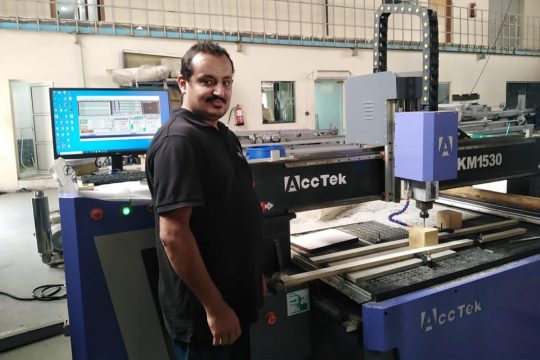
Bộ định tuyến CNC AKM1530 ở Nam Phi

Bộ định tuyến CNC AKM1530 ở Nam Phi

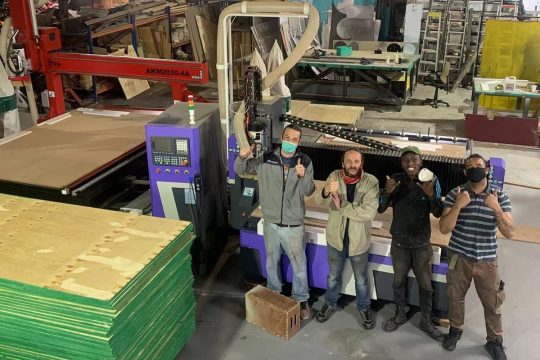
Bộ định tuyến CNC AKM2030C-4A ở Nam Phi

Bộ định tuyến CNC AKM2030C-4A ở Nam Phi

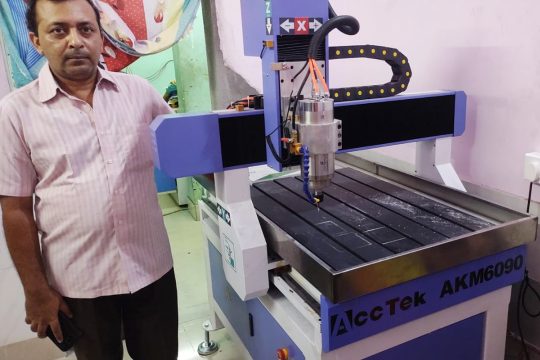
Bộ định tuyến CNC AKM6090 ở Ấn Độ

Bộ định tuyến CNC AKM6090 ở Ấn Độ

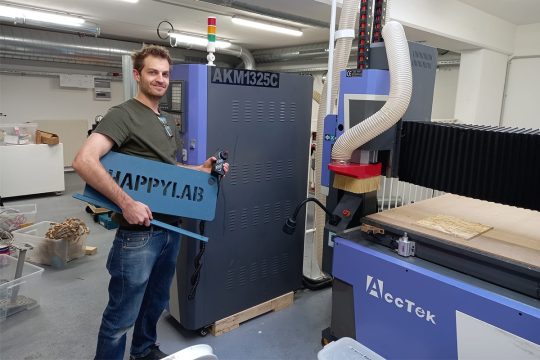
Bộ định tuyến CNC AKM1325C ở Áo

Bộ định tuyến CNC AKM1325C ở Áo

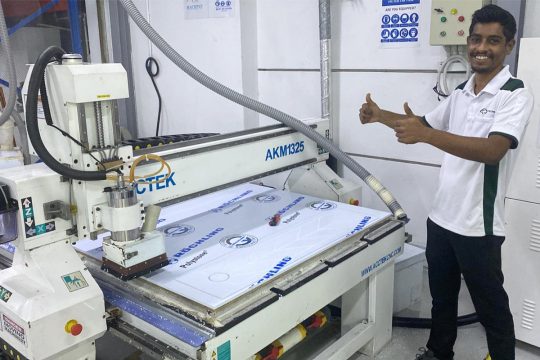
Bộ định tuyến CNC AKM1325 tại Singapore

Bộ định tuyến CNC AKM1325 tại Singapore

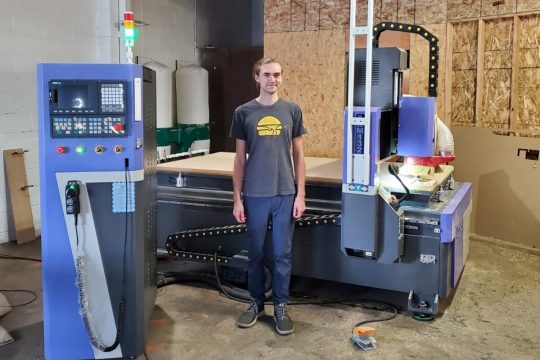
Bộ định tuyến CNC AKM1325C tại Hoa Kỳ

Bộ định tuyến CNC AKM1325C tại Hoa Kỳ

Bộ định tuyến CNC AKM1325 ở Ý

Bộ định tuyến CNC AKM1325 ở Ý

Nhận giải pháp định tuyến CNC

Việc lựa chọn máy CNC phù hợp có thể tạo ra sự khác biệt lớn về tốc độ sản xuất, chất lượng cắt, hiệu quả sử dụng vật liệu và hiệu quả kinh doanh lâu dài. Cho dù bạn cần máy cho chế biến gỗ, làm tủ, sản xuất đồ nội thất, biển quảng cáo, gia công acrylic, khắc xốp, làm khuôn mẫu hay sản xuất sản phẩm theo yêu cầu, AccTek CNC đều có thể cung cấp giải pháp máy CNC phù hợp với nhu cầu thực tế của bạn.
Đội ngũ của chúng tôi sẽ giúp bạn đánh giá vật liệu gia công, kích thước phôi, độ dày cắt, khối lượng sản xuất, yêu cầu độ chính xác và điều kiện xưởng. Dựa trên những thông tin này, chúng tôi có thể đề xuất mô hình máy phù hợp, công suất trục chính, loại bàn máy, hệ thống điều khiển, hệ thống truyền động, dụng cụ và các phụ kiện tùy chọn như bàn hút chân không, thiết bị xoay, bộ thay dao tự động, bộ khoan và hệ thống hút bụi.
AccTek CNC cam kết cung cấp nhiều hơn chỉ là máy phay CNC. Chúng tôi cung cấp tư vấn chuyên nghiệp trước khi mua hàng, tùy chỉnh máy móc, hỗ trợ lắp đặt, đào tạo vận hành, hỗ trợ kỹ thuật và dịch vụ hậu mãi để giúp khách hàng sử dụng thiết bị của mình một cách tự tin. Từ các xưởng nhỏ đến các nhà máy sản xuất lớn, máy phay CNC của chúng tôi được thiết kế để giúp nâng cao hiệu quả, giảm thiểu lao động thủ công và mở rộng khả năng gia công.
Nếu bạn đang tìm kiếm một máy phay CNC đáng tin cậy cho doanh nghiệp của mình, hãy liên hệ với AccTek CNC ngay hôm nay để nhận được giải pháp phù hợp với mục tiêu sản xuất của bạn.
* Chúng tôi coi trọng quyền riêng tư của bạn. AccTek CNC cam kết bảo vệ thông tin cá nhân của bạn. Mọi chi tiết bạn cung cấp khi điền vào biểu mẫu sẽ được giữ bí mật tuyệt đối và chỉ được sử dụng để hỗ trợ giải đáp thắc mắc của bạn. Chúng tôi không chia sẻ, bán hoặc tiết lộ thông tin của bạn cho bên thứ ba. Dữ liệu của bạn được lưu trữ và xử lý an toàn theo chính sách bảo mật của chúng tôi.
Mở khóa sự chính xác với các giải pháp AccTek CNC!
Bạn đã sẵn sàng nâng trải nghiệm định tuyến CNC của mình lên một tầm cao mới chưa? Tại AccTek CNC, chúng tôi không chỉ là nhà sản xuất mà còn là cửa ngõ đưa bạn đến với các giải pháp tiên tiến giúp xác định lại độ chính xác và hiệu quả. Vui lòng để lại thông tin chi tiết của bạn bên dưới và đội ngũ chuyên nghiệp của chúng tôi sẽ cung cấp các giải pháp được cá nhân hóa và báo giá cạnh tranh. Dù là tạo nguyên mẫu hay sản xuất số lượng lớn, chúng tôi đều hỗ trợ bạn.
Để lại thông tin chi tiết của bạn để có giải pháp phù hợp
*Tại AccTek CNC, chúng tôi coi trọng và tôn trọng quyền riêng tư của bạn. Hãy yên tâm rằng mọi thông tin bạn cung cấp đều được bảo mật nghiêm ngặt và sẽ chỉ được sử dụng để cung cấp các giải pháp và báo giá được cá nhân hóa.
Biểu tượng AccTek
Tổng quan về quyền riêng tư

Trang web này sử dụng cookie để chúng tôi có thể cung cấp cho bạn trải nghiệm người dùng tốt nhất có thể. Thông tin cookie được lưu trữ trong trình duyệt của bạn và thực hiện các chức năng như nhận ra bạn khi bạn quay lại trang web của chúng tôi và giúp nhóm của chúng tôi hiểu những phần nào của trang web bạn thấy thú vị và hữu ích nhất.