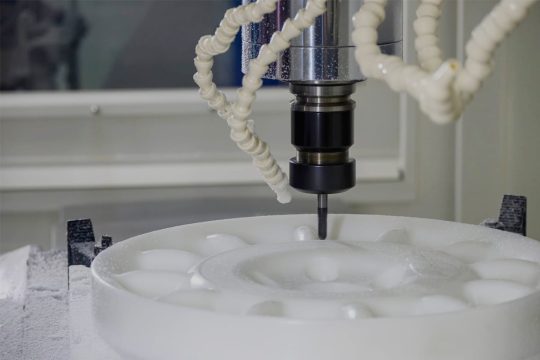
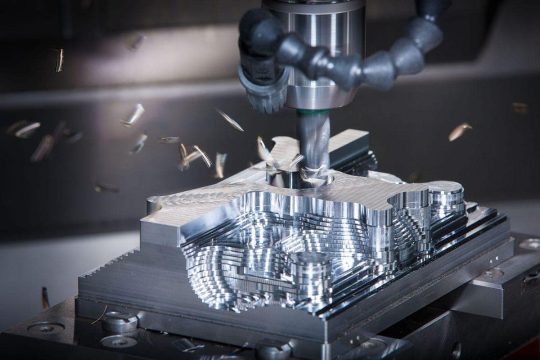
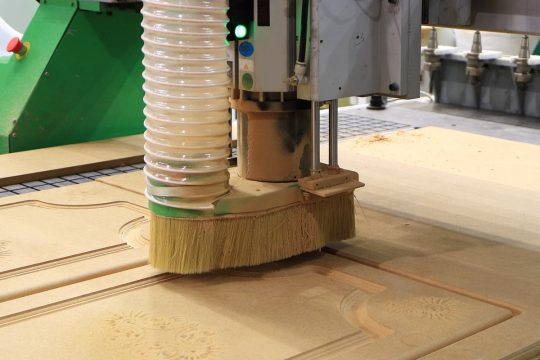
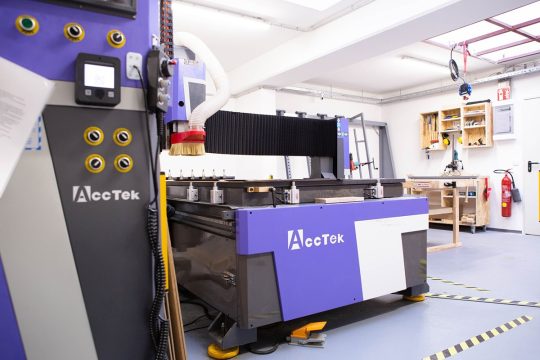
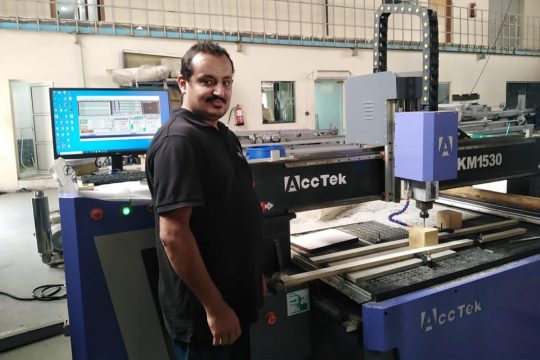
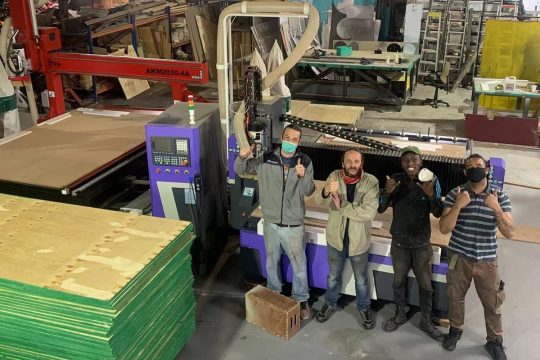
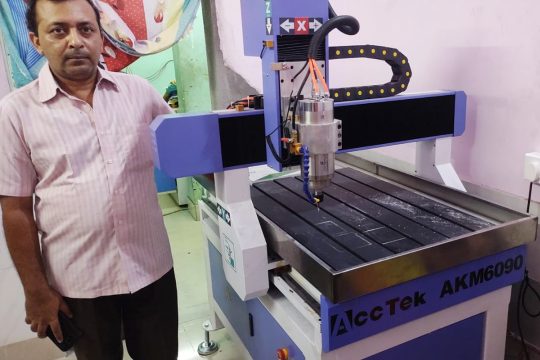
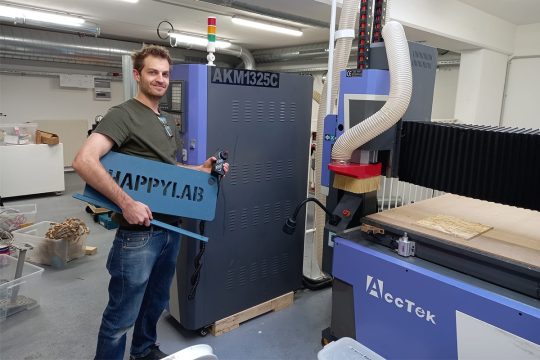
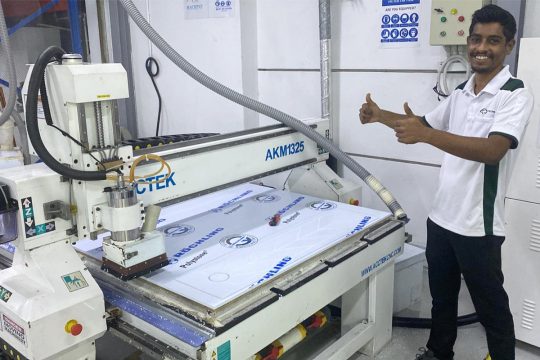
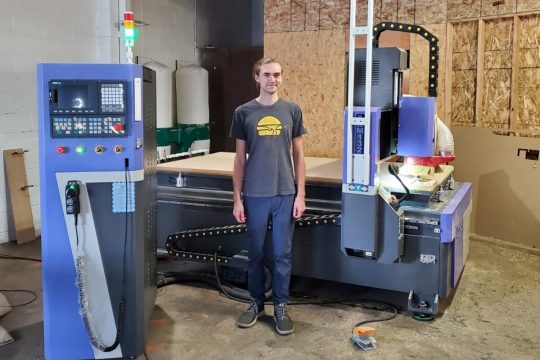
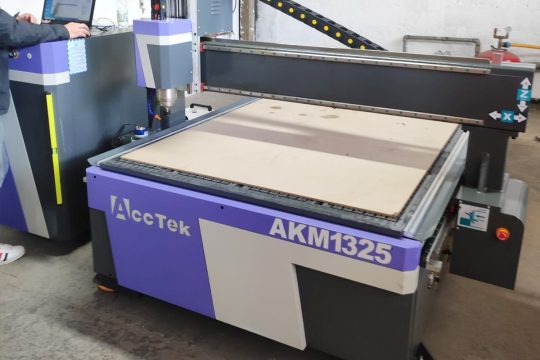
เครื่องตัด CNC สามารถตัดแผ่นและบล็อกอะคริลิกได้อย่างแม่นยำสูง การควบคุมเส้นทางการตัดช่วยให้ได้เส้นตรงที่คมชัด เส้นโค้งที่เรียบเนียน การเจาะช่องภายใน และรูปทรงที่ซับซ้อน ในขณะเดียวกันก็รักษาความสม่ำเสมอของผลลัพธ์ทั้งในชิ้นส่วนที่ปรับแต่งเองและในการผลิตซ้ำหลายครั้ง
การตัดตามรูปทรงช่วยให้เครื่องเราเตอร์ CNC สามารถตัดตามโครงร่างที่ซับซ้อนและรูปทรงโค้งได้ กระบวนการนี้เหมาะสำหรับการผลิตตัวอักษร โลโก้ รูปทรงตกแต่ง ชิ้นส่วนแสดงผล และแผงแบบกำหนดเองที่มีขอบแม่นยำและขนาดสม่ำเสมอ
การแกะสลักด้วยเครื่อง CNC จะขจัดชั้นผิวบางๆ ออกจากพื้นผิวอะคริลิกเพื่อสร้างข้อความ ลวดลาย โลโก้ สัญลักษณ์ และรายละเอียดตกแต่งต่างๆ รูปทรงของเครื่องมือและความลึกในการตัดที่แตกต่างกันสามารถสร้างเส้นบางๆ รอยขีดเขียนที่หนา และเอฟเฟ็กต์ภาพที่มีพื้นผิวได้
การเจาะแบบ Pocketing คือการกำจัดวัสดุออกจากบริเวณที่เลือกโดยไม่ต้องตัดผ่านชิ้นงานทั้งหมด วิธีนี้มักใช้ในการสร้างส่วนที่เว้าเข้าไป เบาะรองชิ้นส่วน ช่องว่างตกแต่ง ช่องสำหรับติดตั้ง และพื้นที่ติดตั้งในแผ่นและบล็อกอะคริลิก
เครื่องเราเตอร์ CNC สามารถเจาะรูที่มีตำแหน่งแม่นยำสำหรับสกรู ตัวยึด ข้อต่อ สายเคเบิล และชิ้นส่วนประกอบต่างๆ การควบคุมระยะห่างและความลึกที่ตั้งโปรแกรมไว้จะช่วยให้มั่นใจได้ว่าทุกรูมีความสม่ำเสมอ ลดปัญหาการจัดแนวระหว่างการติดตั้งหรือการประกอบผลิตภัณฑ์
การเซาะร่องจะสร้างช่องตรงหรือโค้งในพื้นผิวอะคริลิก ช่องเหล่านี้สามารถใช้สำหรับการเชื่อมต่อชิ้นส่วน การใส่แผง การเดินสายเคเบิล การติดตั้งแถบไฟ หรือการเพิ่มเส้นตกแต่งให้กับป้าย จอแสดงผล และชิ้นส่วนที่ออกแบบเองได้
การตัดขอบเฉียงเป็นการตัดขอบเอียงตามชิ้นส่วนอะคริลิกเพื่อปรับปรุงรูปลักษณ์ ลดความยุ่งยากในการประกอบ หรือสร้างการเปลี่ยนผ่านที่สวยงาม การควบคุมเครื่องมืออย่างแม่นยำช่วยรักษาความกว้างและมุมของขอบเฉียงให้สม่ำเสมอทั้งในรูปทรงตรง โค้ง และไม่สม่ำเสมอ
การขึ้นรูปขอบเป็นการปรับแต่งรูปทรงขอบด้านนอกของชิ้นส่วนอะคริลิกโดยใช้ดอกกัดแบบพิเศษ สามารถสร้างขอบโค้งมน ขอบเฉียง ขอบขั้นบันได และขอบตกแต่งต่างๆ เพื่อเพิ่มคุณภาพด้านรูปลักษณ์ ความปลอดภัย การประกอบ และความสวยงามโดยรวมของผลิตภัณฑ์ขั้นสุดท้าย
เครื่องแกะสลัก CNC สามารถแกะสลักรูปทรงสามมิติแบบนูน เว้า และโค้งมนในวัสดุอะคริลิกหนาได้ กระบวนการนี้เหมาะสำหรับแผ่นตกแต่ง แม่พิมพ์ โมเดล ชิ้นส่วนตราสินค้า และชิ้นส่วนสั่งทำพิเศษที่ต้องการความลึกที่แตกต่างกันและการเปลี่ยนผ่านของพื้นผิวที่ราบเรียบ
การตัดแบบฝังทำให้ได้พื้นที่เว้าที่เข้ากันและชิ้นส่วนที่พอดี เครื่องตัด CNC สามารถสร้างช่องที่แม่นยำและชิ้นส่วนอะคริลิกที่เข้ากัน ทำให้สามารถผสมผสานสี พื้นผิว หรือองค์ประกอบโปร่งใสต่างๆ เข้าด้วยกันเพื่อสร้างโลโก้ แผงตกแต่ง และการออกแบบเฉพาะบุคคลได้
ซอฟต์แวร์การจัดเรียงชิ้นงานจะจัดเรียงชิ้นส่วนหลายชิ้นอย่างมีประสิทธิภาพบนแผ่นอะคริลิกก่อนทำการตัด กระบวนการนี้ช่วยลดพื้นที่ที่ไม่ได้ใช้งาน เพิ่มประสิทธิภาพการใช้ประโยชน์จากวัสดุ ลดต้นทุนการผลิต และช่วยให้ผู้ผลิตสามารถผลิตชิ้นงานที่มีรูปทรงหรือขนาดแตกต่างกันได้ในรอบการตัดเฉือนเพียงครั้งเดียว
เครื่องเราเตอร์ CNC สามารถทำซ้ำการทำงานตามโปรแกรมเดิมได้อย่างแม่นยำสม่ำเสมอ ทำให้เหมาะสำหรับการผลิตป้ายอะคริลิก ชิ้นส่วนแสดงผล ฝาครอบ แผง และชิ้นส่วนสั่งทำพิเศษจำนวนมาก ในขณะเดียวกันก็ช่วยลดงานด้วยมือและรักษาคุณภาพของผลิตภัณฑ์ให้คงที่
อะคริลิกอาจอ่อนตัวหรือละลายได้เมื่อตัดด้วยความร้อนสูงเกินไป ความเร็วรอบของแกนหมุนที่ไม่ถูกต้อง อัตราการป้อนที่ช้า หรือเครื่องมือที่ไม่คม อาจทำให้วัสดุติดกับดอกกัด ทำให้เกิดขอบที่ไม่เรียบและขัดจังหวะกระบวนการตัดเฉือน
ขอบของอะคริลิกอาจบิ่นได้เมื่อใช้เครื่องมือตัดที่ไม่เหมาะสม ความลึกในการตัดมากเกินไป หรือสภาวะการตัดที่ไม่เสถียร การบิ่นจะลดคุณภาพทางด้านภาพ และอาจต้องทำการขัด การขัดเงา หรือเปลี่ยนชิ้นส่วนที่เสียหายทั้งหมดเพิ่มเติม
อะคริลิกอาจแตกได้หากใช้แรงตัดมากเกินไป การสั่นสะเทือน หรือการยึดที่ไม่เหมาะสม แผ่นบางและชิ้นส่วนที่มีขนาดเล็กจะมีความเสี่ยงเป็นพิเศษ ดังนั้นการวางแผนเส้นทางการตัดอย่างรอบคอบและการรองรับวัสดุที่มั่นคงจึงเป็นสิ่งสำคัญตลอดกระบวนการตัด
พื้นผิวเรียบของอะคริลิกนั้นเกิดรอยขีดข่วนได้ง่ายจากเศษวัสดุ การหนีบ การจับต้อง หรือเศษชิ้นส่วนจากเครื่องจักร ความเสียหายของพื้นผิวอาจลดความโปร่งใสและรูปลักษณ์ โดยเฉพาะอย่างยิ่งในการผลิตสินค้าสำหรับจัดแสดง แผงตกแต่ง ฝาครอบป้องกัน หรือชิ้นส่วนอื่นๆ ที่มองเห็นได้ชัดเจน
แผ่นอะคริลิกอาจเลื่อน ยกตัว หรือสั่นสะเทือนระหว่างการตัดเฉือนหากไม่ได้ยึดไว้อย่างแน่นหนา การยึดชิ้นงานที่ไม่ดีอาจทำให้การตัดไม่แม่นยำ ขอบไม่เรียบ เครื่องมือหัก หรือชิ้นงานเสียหาย โดยเฉพาะอย่างยิ่งเมื่อทำการแปรรูปชิ้นส่วนขนาดเล็กและรูปทรงแคบ
เศษอะคริลิกอาจสะสมอยู่รอบบริเวณที่กำลังตัดและดอกเราเตอร์ การระบายเศษที่ไม่ efektif จะทำให้เกิดความร้อนสูงขึ้น บดบังทัศนวิสัย ทำให้ชิ้นงานเป็นรอย และอาจทำให้เศษละลายและกลับไปติดกับขอบที่ผ่านการกลึงอีกครั้ง
การผลิตขอบอะคริลิกที่เรียบและสม่ำเสมออาจทำได้ยากหากพารามิเตอร์การตัดเฉือนไม่สมดุลอย่างเหมาะสม พื้นผิวที่หยาบ ร่องรอยเครื่องมือที่มองเห็นได้ ครีบ และผิวสำเร็จที่ไม่เรียบ อาจทำให้ต้องเสียเวลาในการขัดเงาเพิ่มเติม
อะคริลิกแบบหล่อและแบบอัดขึ้นรูปมีการตอบสนองต่อการตัดแต่งแตกต่างกัน ความแตกต่างในด้านความหนาแน่น ความสม่ำเสมอของความหนา และความไวต่อความร้อน ทำให้จำเป็นต้องปรับความเร็วในการตัด ความเร็วรอบของแกนหมุน รูปทรงของเครื่องมือ และความลึกของการตัด เพื่อให้ได้ผลลัพธ์การตัดเฉือนที่เชื่อถือได้
การเลือกดอกเราเตอร์ที่ไม่เหมาะสมอาจทำให้เกิดการหลอมละลาย การบิ่น การระบายเศษวัสดุไม่ดี และผิวงานหยาบ นอกจากนี้ การสึกหรอของเครื่องมือยังลดประสิทธิภาพการตัดลงเมื่อเวลาผ่านไป ทำให้จำเป็นต้องตรวจสอบอย่างสม่ำเสมอและเปลี่ยนเครื่องมือให้ทันเวลาเพื่อให้ได้ผลลัพธ์ที่สม่ำเสมอในการแปรรูปอะคริลิก
เครื่องเราเตอร์ CNC ช่วยให้สามารถปรับความเร็วรอบแกนหมุน อัตราการป้อน ความลึกของการตัด และกลยุทธ์การสร้างเส้นทางการตัดได้อย่างแม่นยำ การควบคุมพารามิเตอร์ที่เหมาะสมจะช่วยลดความร้อนสะสม ป้องกันการหลอมละลาย และช่วยรักษาความสะอาดและเสถียรภาพของสภาพการตัดในวัสดุอะคริลิกที่มีความหนาแตกต่างกัน
ระบบเป่าลมและระบบดูดฝุ่นช่วยกำจัดเศษอะคริลิกออกจากบริเวณการตัด การระบายเศษวัสดุอย่างมีประสิทธิภาพช่วยลดการสะสมความร้อน ป้องกันไม่ให้เศษวัสดุติดกับดอกเราเตอร์ และปกป้องพื้นผิวชิ้นงานจากรอยขีดข่วน
โต๊ะดูดสุญญากาศ ตัวหนีบ และอุปกรณ์ยึดแบบกำหนดเอง ช่วยให้แผ่นอะคริลิกคงที่ระหว่างการตัด การยึดชิ้นงานที่เชื่อถือได้ช่วยป้องกันการเคลื่อนไหว การยกตัว และการสั่นสะเทือน ช่วยรักษาขนาดที่แม่นยำและลดความเสี่ยงของการแตกร้าวหรือขอบเสียหาย
เครื่องมือตัดแบบคมเดี่ยวหรือแบบขัดเงา ออกแบบมาเพื่อกำจัดเศษอะคริลิกได้อย่างมีประสิทธิภาพ การเลือกเครื่องมือที่ถูกต้องจะช่วยลดแรงกดในการตัด ปรับปรุงคุณภาพของขอบ และลดปัญหาทั่วไป เช่น การบิ่น การหลอมละลาย พื้นผิวหยาบ และการสะสมของวัสดุ
ระบบควบคุมการตัดด้วยคอมพิวเตอร์จะนำทางเครื่องมือตัดอย่างราบรื่นไปตามส่วนโค้ง มุม รู และรูปทรงที่ซับซ้อน การเคลื่อนที่ที่สม่ำเสมอช่วยลดการเปลี่ยนแปลงแรงกดอย่างฉับพลัน และช่วยปกป้องชิ้นงานที่มีขนาดเล็กจากการแตกร้าวหรือแตกหักระหว่างการตัดเฉือน
การกำหนดทิศทางการตัด การตกแต่งขั้นสุดท้าย และรูปทรงของเครื่องมือที่เหมาะสม ช่วยให้เครื่องตัด CNC ผลิตขอบอะคริลิกที่เรียบเนียนยิ่งขึ้น คุณภาพขอบที่ดีขึ้นช่วยลดร่องรอยของเครื่องมือที่มองเห็นได้ และลดปริมาณการขัด การขัดเงา หรือการตกแต่งเพิ่มเติมที่จำเป็น
เครื่องเราเตอร์ CNC สามารถทำซ้ำการทำงานตามโปรแกรมได้อย่างแม่นยำเชื่อถือได้ เมื่อตั้งค่าได้อย่างถูกต้องแล้ว ผู้ผลิตสามารถผลิตชิ้นส่วนอะคริลิกหลายชิ้นที่มีขนาด ตำแหน่งรู รูปทรง และรายละเอียดพื้นผิวที่สม่ำเสมอ พร้อมทั้งลดข้อผิดพลาดจากการทำงานด้วยมือได้
ซอฟต์แวร์จัดเรียงชิ้นส่วนช่วยจัดวางชิ้นส่วนต่างๆ บนแผ่นอะคริลิกได้อย่างมีประสิทธิภาพก่อนทำการตัด การวางแผนผังที่ดีขึ้นช่วยลดพื้นที่ที่ไม่ได้ใช้งาน ควบคุมต้นทุนวัสดุ และลดของเสียที่เกิดจากการจัดวางที่ไม่ดี การตัดที่ไม่แม่นยำ หรือช่องว่างที่ไม่จำเป็นระหว่างชิ้นส่วนต่างๆ
เว็บไซต์นี้ใช้คุกกี้เพื่อให้เราสามารถมอบประสบการณ์การใช้งานที่ดีที่สุดให้แก่คุณ ข้อมูลคุกกี้จะถูกเก็บไว้ในเบราว์เซอร์ของคุณและทำหน้าที่ต่างๆเช่นการจดจำคุณเมื่อคุณกลับมาที่เว็บไซต์ของเราและช่วยทีมงานของเราเพื่อทำความเข้าใจว่าส่วนใดของเว็บไซต์ที่คุณสนใจและน่าสนใจที่สุด
คุกกี้ที่จำเป็นอย่างเคร่งครัดควรเปิดใช้งานอยู่ตลอดเวลาเพื่อให้เราสามารถบันทึกค่ากำหนดสำหรับคุกกี้ของคุณได้
เว็บไซต์นี้ใช้ Google Analytics เพื่อรวบรวมข้อมูลที่ไม่ระบุตัวตนเช่นจำนวนผู้เยี่ยมชมเว็บไซต์และหน้าเว็บที่ได้รับความนิยมสูงสุด
การเปิดใช้งานคุกกี้นี้ช่วยให้เราสามารถปรับปรุงเว็บไซต์ของเรา